Hydration Vests That Won’t Bounce on Long Runs
Salomon’s ADV Skin 12 Set tops the list for its bounce-free fit and included soft flasks. Nathan’s Pinnacle 12L offers the best value for ultra distances. AONIJIE’s Windrunner Hydration Vest covers shorter runs on a tighter budget.
Salomon’s ADV Skin 12 Set is the hydration vest most trail runners should buy, since its sensifit wrap locks it to the torso. Runners needing more organized storage for long events do better with the Nathan Pinnacle 12L. Both solve different problems on race day.
Hydration vests are hard to choose because sizing runs on chest measurement rather than shirt size. A vest that feels fine standing still can bounce badly at race pace. We compared stated capacities, front pocket layouts, adjustment systems, included flasks or bladders, and fabric breathability. Owner reports on chafing over long distances factored in too.
What we recommend

Salomon ADV Skin 12 Set
Stretch mesh wraps the ribcage on the ADV Skin rather than hanging off the shoulders, which keeps it still on downhill sections. Two included 500ml soft flasks sit in front pockets reachable without breaking stride. Twelve liters covers mandatory kit at most mountain races without feeling like a pack.
Pros
- Exceptionally stable at pace
- Front flasks easy to reach mid-run
- Breathable stretch mesh body
Cons
- Sizing runs small, check chest measurement first
- Bladder sold separately

Nathan Pinnacle 12L Hydration Vest
Nathan builds organized storage into the Pinnacle: a separate pole attachment, a zipped valuables pocket, and rear compartments reachable on the move. The propulsion harness spreads load across the chest, so a full mandatory-kit load skips pulling on the shoulders. Owners report it handles a hundred-kilometer race with room left over.
Pros
- Excellent pocket organization
- Proper pole carry system
- Comfortable under heavy loads
Cons
- Slightly warmer against the back
- More straps to set up initially

CamelBak Zephyr Pro 11
CamelBak knows reservoirs, and the Zephyr Pro pairs a rear bladder sleeve with front flask pockets so both work together. An air-mesh back panel leaves channels for airflow in heat. Based on specifications, this suits runners who prefer sipping continuously from a hose over pulling flasks.
Pros
- Best-in-class reservoir system
- Good airflow across the back
- Runs flasks and bladder together
Cons
- Bladder adds weight high on the back
- Hose routing takes practice

Osprey Duro 6
A thin mesh body keeps the Duro 6 minimal, drying fast and shedding heat quickly. Six liters covers a half day on trail with a jacket and food, and the included reservoir uses a magnetic hose keeper on the chest. Owners report noticeably less sweat buildup than on heavier vests in summer conditions.
Pros
- Very cool in hot conditions
- Reservoir included
- Light on the shoulders
Cons
- Too small for full mandatory kit
- Thin mesh needs careful washing
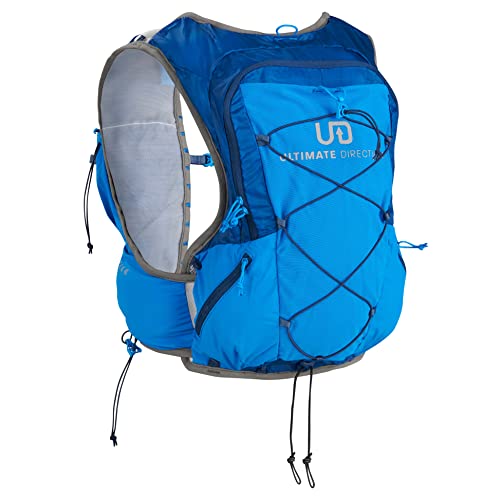
Ultimate Direction Ultra Vest 6.0
Ultimate Direction sized this vest’s pockets around the mandatory kit lists mountain races publish, fitting a jacket, a phone, and poles. The comfort cinch system tightens the whole vest evenly rather than pulling at one point. Runners who regularly stand in kit-check queues get the most from it.
Pros
- Sized around real race kit lists
- Even tensioning across the body
- Flexible pole carry
Cons
- Rear access needs practice on the move
- Fabric is less stretchy than rivals

Salomon Active Skin 8 Set
This one strips the ADV Skin down to a simpler, lighter package with a single sternum adjustment. Eight liters covers a two to three hour trail run with a jacket and gels, and two soft flasks come included. It delivers the Salomon fit without the price of race-grade features.
Pros
- Very light and simple
- Same stable Salomon fit
- Flasks included
Cons
- Less adjustment range
- Not enough space for full mountain kit

AONIJIE Windrunner Hydration Vest
AONIJIE covers the essentials at the lowest outlay here: front flask pockets, adjustable sternum straps, and enough rear space for a light shell. Fabrics run less refined and stitching heavier, so expect more chafe risk on very long efforts. Runs under a couple of hours suit it well.
Pros
- Low outlay entry into vests
- Adequate pocket layout
- Light for its size
Cons
- Flasks usually sold separately
- Seams can chafe on long runs
How they compare
| # | Model | Capacity | Best for | Score | Price |
|---|---|---|---|---|---|
| 1 | Salomon ADV Skin 12 Set | 12 liters | Best overall | 9.4 | Check price |
| 2 | Nathan Pinnacle 12L Hydration Vest | 12 liters | Best value | 9.2 | Check price |
| 3 | CamelBak Zephyr Pro 11 | 11 liters | Best for bladder use | 9.0 | Check price |
| 4 | Osprey Duro 6 | 6 liters | Best for hot weather | 8.8 | Check price |
| 5 | Ultimate Direction Ultra Vest 6.0 | About 10.4 liters | Best for mandatory kit | 8.6 | Check price |
| 6 | Salomon Active Skin 8 Set | 8 liters | Best for shorter runs | 8.3 | Check price |
| 7 | AONIJIE Windrunner Hydration Vest | About 5 liters | Best budget | 8.0 | Check price |
Before you buy
What matters most when choosing a hydration vest, fit or capacity? A hydration vest should sit on the ribcage like a second layer, not hang off the shoulders like a rucksack. Manufacturers size by chest circumference, so measure rather than assume a shirt size, and note that several brands run small. Load the vest with the water and kit actually carried, then jog in place. Bounce means the vest runs too large or the sternum straps sit too low.
Soft flasks or a bladder, which is better for trail running? Front soft flasks show exactly how much water remains and refill quickly at aid stations, and their weight sits on the chest where it moves least. A rear bladder holds more, allows hands-free sipping, and keeps the front clear, but hides the remaining volume and requires removing the vest to refill. Many runners combine both, flasks for electrolyte drink and a bladder for plain water.
How much pocket access do you need on the move? Only the pockets reachable while running matter for gels, a phone, and a soft flask. Count the front pockets and check whether they close with stretch mesh, a zip, or a cord. A stretch pocket works faster, but a zip secures a phone better. Rear pockets hold the jacket and spare kit retrieved during a stop, so judge them on volume rather than reach.
How much hydration vest capacity do you need by distance? Five to eight liters covers runs up to a few hours with a shell, food, and a phone. Ten to twelve liters fits ultra distances and mountain races that publish a mandatory kit list, including a waterproof jacket, a survival blanket, and a headtorch. Above that sits fastpacking territory, where extra volume usually costs stability. Buy for a typical run rather than the longest one imagined.
Common questions
What size hydration vest do you need?
Match the vest to chest circumference using the brand’s own chart rather than a shirt size, since fit runs snug by design. European brands especially size small, so runners between sizes who plan to layer underneath should size up.
How do you stop a hydration vest from bouncing?
Load it as for a run, then tighten the side pulls before the sternum straps. Bounce almost always means the vest runs one size too big or the load sits packed high and loose. Keep dense items low and close to the back.
Are soft flasks better than a bladder for trail running?
For racing, front flasks refill easier and let a runner monitor intake at a glance. For long steady efforts and hot weather, a bladder carries more and allows hands-free drinking. Many vests support both at once.
How much water should you carry on a trail run?
Roughly 500ml per hour in mild conditions and up to a liter per hour in heat, adjusted for how far apart water sources sit. Two 500ml flasks cover most two-hour runs, while remote routes need a bladder or a filter.
Can you put a hydration vest in the washing machine?
Most manufacturers recommend hand washing in cool water with mild soap, then air drying out of direct sunlight. Machine washing degrades the stretch mesh and elastic over time, and dryer heat ruins the fit permanently.
How do you clean a hydration bladder and hose?
Rinse with warm water after every use and dry it fully open, which prevents most mold problems. For deeper cleaning, use dedicated cleaning tablets and a brush kit, or store the bladder in the freezer between uses if it cannot dry fully.
Will a hydration vest cause chafing?
A correctly sized vest sits flat against the body and rarely chafes, though seams can rub over ultra distances, especially in wet conditions. Anti-chafe balm on the sternum and underarms plus a snug technical shirt underneath solve most cases.
Do you need a hydration vest that carries poles?
Only for mountain terrain or races that require them. Pole carry systems add straps and bulk, so runners who never use poles get a lighter, less fiddly vest without one.
What is the best hydration vest for ultra distances?
The Nathan Pinnacle 12L organizes mandatory kit well and spreads load across the chest, which owners report holds up over a hundred kilometers. The Salomon ADV Skin 12 Set offers similar capacity with a tighter, bounce-free fit.
Hydration vest vs handheld bottle, which is better for trail running?
A vest distributes weight across the torso and frees both hands, which matters on technical terrain. A handheld bottle suits shorter runs where carrying a vest feels like overkill.
The bottom line
Salomon’s ADV Skin 12 Set is the hydration vest most trail runners should buy, since its wraparound fit removes the bounce that ruins longer efforts. Runners tackling ultra distances with detailed kit lists will prefer the organization of the Nathan Pinnacle 12L. The Osprey Duro 6 stays the coolest option for summer running.
Derek Holt
Derek has a background coaching recreational and amateur athletes and has worked the sales floor at specialty fitness retailers. He focuses on equipment durability, ergonomics and realistic use cases rather than marketing claims.