How to Pick a Running Backpack That Won’t Bounce
The Salomon ADV Skin 12 Set leads this lineup with a vest fit that barely moves. The Nathan VaporAir 3.0 gives long trail runners more value per litre, and the Salomon Active Skin 8 suits shorter, faster sessions best. All three beat a standard daypack for stability.
Vest style packs beat traditional daypacks for running because they clip across the chest and move with your stride. The Salomon ADV Skin 12 Set tops this list for that reason, followed by the Nathan VaporAir 3.0 for long trail days and the Salomon Active Skin 8 for shorter, faster runs. Every pick below is a running specific design, not a hiking bag pressed into service.
Litres alone tell you nothing about how a pack behaves at mile ten. We compared capacity, sizing systems, hydration compatibility, pocket placement, fabric weight and ventilation, then checked what owners report about chafing, sloshing bladders and half empty bounce.
What matters most
What makes a running backpack different from a hiking pack? A running vest wraps the ribcage and clips across the chest, so the load moves with your breathing. A hiking daypack pivots at the shoulder straps instead and bounces with every stride, however light it is. Buy a vest style design even for commuting if you plan to run rather than walk.
How should a running vest fit around the chest? Running vests are sized by chest circumference, and the adjustment range is narrow. Measure over the layer you normally run in, then match it to the brand’s chart rather than guessing from a t shirt size. A vest that runs too large will bounce no matter how tight you pull the straps.
Soft flasks or a hydration bladder, which suits your run? Front mounted soft flasks refill easily and show you how much water is left, which helps on loops with aid stations. A bladder holds more in a single fill and suits remote trails where refill points are scarce. Squeeze the air out or fill it properly, since a half full bladder sloshes with every step.
How much capacity does a running pack actually need? Most runners buy more litres than they use, and an under filled pack shifts more than a properly loaded one does. Four to eight litres covers training runs and short trail days, while ten to twelve suits long outings and commuting with spare clothes. Compression straps help tame the load when it is light.
Our top picks

Salomon ADV Skin 12 Set
Sensifit paneling pulls this vest against the ribcage instead of letting it hang from the shoulders. Two 500ml soft flasks ship in the set, so there is no separate purchase before your first run. Owners describe it as the pack that finally disappears on long days.
Pros
- Minimal bounce even loaded
- Soft flasks included at no extra cost
- Front pockets reachable without stopping
Cons
- Little slack if sizing is off
- Priced above most rivals here
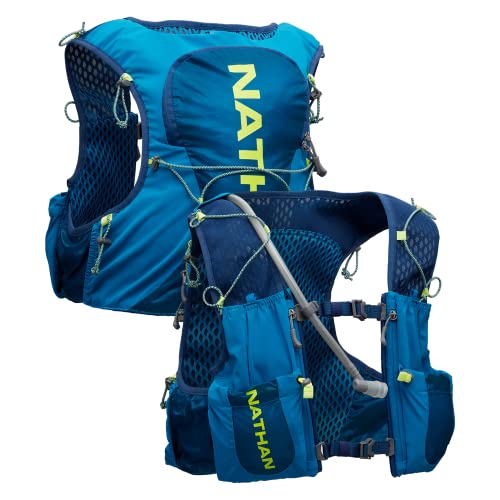
Nathan VaporAir 3.0
A hydration bladder ships in the box instead of flasks, which suits runners who want one large reservoir on remote trails. Mesh paneling breathes well in heat, and front pockets hold a phone and gels without unclipping the vest. Long distance capability comes at a lower outlay than the Salomon flagship.
Pros
- Bladder included for remote routes
- Mesh body vents heat well
- Front pockets reachable mid stride
Cons
- Bladder sloshes when partly filled
- Fewer sizes than the Salomon lineup

Salomon Active Skin 8
This stripped down version of Salomon’s vest keeps the close fit while shedding weight and some storage. Training runs, short races and trips needing only water, a phone and a jacket suit it well. Two soft flasks come included, generous for a vest at this level.
Pros
- Light enough to forget you have it on
- Flasks included in the price
- Simple two strap adjustment
Cons
- Capacity falls short for full day trips
- Thin fabric needs careful packing

CamelBak Octane 12
Twelve litres and a more traditional pack shape let the Octane carry a change of clothes and a laptop sleeve’s worth of gear. It still fits closely enough to run in thanks to a vest style harness. CamelBak’s reservoir ships in the box, a proven design commuters lean on more than trail runners do.
Pros
- Room for commute essentials
- Reliable reservoir and bite valve
- Vest harness cuts bounce for its size
Cons
- Bulkier than dedicated running vests
- Back panel warms up in summer

Osprey Duro 6
A light frame and airy mesh keep the back cooler than most close fitting vests, which matters once temperatures climb. A reservoir ships included, and pockets are organized for poles and spare layers. That airflow adds a small weight penalty over minimalist designs.
Pros
- Noticeably cooler on hot runs
- Pole attachment for mountain routes
- Pockets organized by use
Cons
- Heavier than minimalist vests
- Smaller capacity than commuter packs
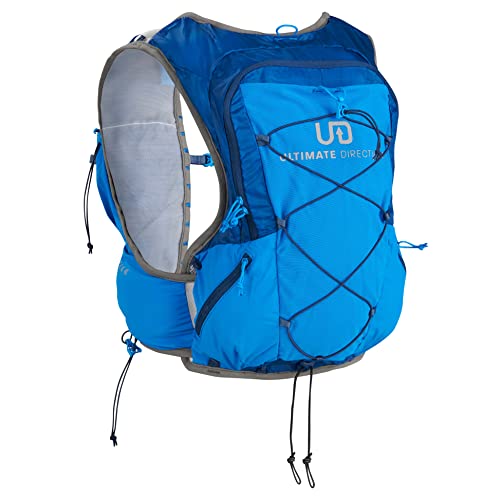
Ultimate Direction Ultra Vest 6.0
Ultra races set the design brief here, so this vest carries mandatory kit, two flasks and food while adjusting as your torso changes over many hours. A comfort cinch system lets you retighten without breaking stride. Treat it as a race specific tool rather than an everyday commuter pack.
Pros
- Retightens easily during long efforts
- Carries mandatory race kit with room to spare
- Flasks included
Cons
- More than short training runs need
- Sizing forgives less than rival vests
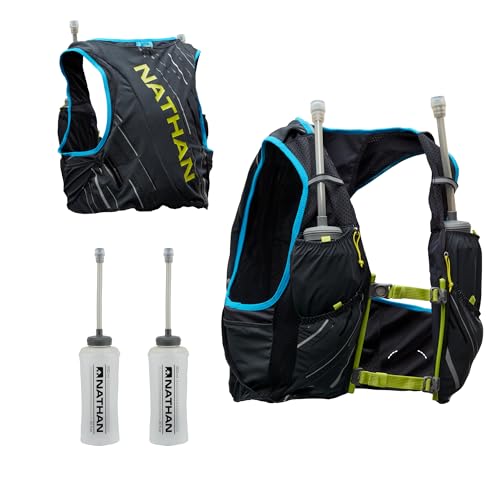
Nathan Pinnacle 4L
Four litres puts this closer to a running vest with pockets than a true backpack, right for hour long runs needing only water, keys and a phone. It sits high and tight so nothing swings. Anyone who regularly carries a jacket or spare clothes will find it too small.
Pros
- Barely any bounce given the small load
- Very light on the shoulders
- Cheapest way into a real running vest
Cons
- Too small for commuting or long days
- Little room for extra layers
Side by side
| # | Model | Capacity | Best for | Score | Price |
|---|---|---|---|---|---|
| 1 | Salomon ADV Skin 12 Set | 12 litres | Best overall | 9.4 | Check price |
| 2 | Nathan VaporAir 3.0 | About 7 litres plus reservoir | Best value for long trails | 9.2 | Check price |
| 3 | Salomon Active Skin 8 | 8 litres | Best lightweight option | 9.0 | Check price |
| 4 | CamelBak Octane 12 | 12 litres | Best for run commuting | 8.8 | Check price |
| 5 | Osprey Duro 6 | 6 litres | Best ventilation | 8.5 | Check price |
| 6 | Ultimate Direction Ultra Vest 6.0 | About 10.5 litres | Best for ultra distance | 8.2 | Check price |
| 7 | Nathan Pinnacle 4L | 4 litres | Best minimalist pack | 8.0 | Check price |
Frequently asked questions
What size running backpack do I need?
Four to eight litres covers training and short trail runs, while ten to twelve litres handles long mountain days and commuting with clothes. Pick the smallest size that fits your usual load, since under filled packs bounce more than full ones.
How do I stop a running pack from bouncing?
Get the chest sizing right first, then tighten the sternum straps and side cinches so the pack sits against your torso. Spread weight evenly between front and back pockets, and compress any half empty compartments.
Can I commute to work with a regular backpack?
You can, but shoulder mounted daypacks swing with each stride and chafe over distance. A vest style pack like the CamelBak Octane 12 carries the same load far more comfortably at running pace.
Are soft flasks better than a hydration bladder?
Flasks refill faster and let you see what is left, which suits racing and aid station loops. Bladders carry more in one fill and work better on remote routes. Many runners combine both, flasks in front and a reservoir behind.
Do running vests fit women differently than men?
Yes. Salomon, Nathan and Ultimate Direction all sell women’s specific cuts with adjusted strap placement and harness shaping. These typically fit better than a unisex version resized down.
How do you wash a running backpack?
Rinse it in cool water with mild soap, skip the washing machine unless the manufacturer allows it, and air dry away from direct heat. Rinse bladders and flasks after every run to keep mould from forming.
Which running packs carry trekking poles?
The Osprey Duro 6 and Ultimate Direction Ultra Vest 6.0 both include pole attachments. Most other vests can carry poles with an aftermarket quiver clipped to a shoulder strap.
How much water should a runner carry?
About half a litre per hour is a common starting point, adjusted for heat, effort and how many refill points the route offers. Carrying more than needed just adds weight and bounce.
Is a 12 litre pack too big for a short training run?
It can be. An under filled 12 litre pack often bounces more than a properly loaded 6 litre vest. Match capacity to the load you actually carry, not the longest run you might someday do.
Our take
The Salomon ADV Skin 12 Set suits anyone running far enough to need real capacity, since it disappears against the body and ships ready to use. The Nathan VaporAir 3.0 delivers most of that for long trail days at a lower cost, while the Salomon Active Skin 8 covers shorter runs well. Nail the chest sizing before anything else matters.
Derek Holt
Derek has a background coaching recreational and amateur athletes and has worked the sales floor at specialty fitness retailers. He focuses on equipment durability, ergonomics and realistic use cases rather than marketing claims.

