Recumbent Bikes Built for Comfortable Long Rides
Schwinn’s 290 leads this roundup for balanced comfort, quiet magnetic resistance, and Bluetooth app tracking at a mid-range price point. NordicTrack’s Commercial R35 suits riders who want trainer-led classes on a large touchscreen. Sunny Health & Fitness SF-RB4708 covers value shoppers who still want a smooth, quiet ride without extra electronics.
Schwinn’s 290 balances a supportive seat, quiet magnetic resistance, and Bluetooth tracking better than most models here. Riders wanting trainer-led classes on a large screen gravitate toward the NordicTrack Commercial R35. Shoppers watching their budget do well with the Marcy ME-709, which keeps the ride simple and reliable.
Recline angle, seat rail length, and resistance smoothness affect comfort more than a listed resistance-level count, which makes recumbent bikes deceptively tricky to compare on paper. We compared these seven models using published specifications, manufacturer documentation, and patterns owners report across seat design, resistance quality, stated weight capacity, console features, and frame stability.
How to choose
What makes a recumbent bike different Reclined seating with back support and forward pedals defines the recumbent design, unlike upright bikes that put more load on the core. Lower back, hips, and knees carry less strain in this position. Rehab-style movement, gentle cardio, and long comfortable sessions all suit this layout well. Weight rests on the seat rather than the legs, so form matters less over a long ride.
How resistance systems affect the ride Magnetic resistance dominates this category because it stays quiet and needs no belt or friction pad to wear out. Knob-adjusted systems suit riders who prefer manual control, while digital consoles auto-adjust resistance during guided classes. More levels give finer control, but smoothness matters more than a big number printed on the box. NordicTrack’s Commercial R35 pairs digital resistance with trainer-led programming, while Sunny’s SF-RB4708 keeps a simple knob.
Matching seat comfort and weight capacity to your body Seat cushioning, backrest height, ventilation, and rail travel decide comfort more than any spec sheet number. Taller riders should confirm inseam range before buying, since some seat rails run short. Weight capacity across this group spans roughly 300 to 350 pounds depending on frame design. Larger riders benefit from a reinforced, extended frame like the Exerpeutic 900XL or Sole R92.
Choosing between tracking, classes, and everyday footprint Basic consoles cover time, distance, and heart rate without extra cost or complexity. Bluetooth models like the Schwinn 290 and Nautilus R618 sync that data to fitness apps for logging. Interactive classes on the NordicTrack Commercial R35 typically require a subscription for full access. Floor space matters too, since recumbent bikes run long and gym-grade frames need a permanent spot rather than daily storage.
The top picks, ranked
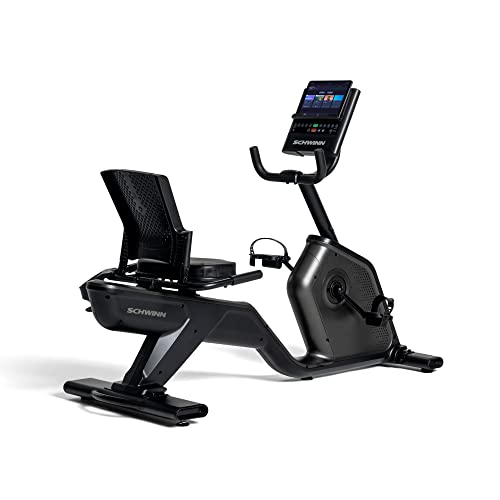
Schwinn 290 Recumbent Bike
Magnetic resistance on the Schwinn 290 stays quiet across its full range, unlike many budget knob-based systems. A ventilated, contoured seat with lumbar support cuts fatigue on longer rides. Bluetooth syncs workout data to popular fitness apps, though tall riders should check the seat rail length before buying.
Pros
- Quiet magnetic resistance across the range
- Ventilated seat with lumbar support
- Bluetooth syncs to fitness apps
Cons
- Seat rail runs short for very tall riders
- No built-in touchscreen display

NordicTrack Commercial R35 Recumbent Bike
A large tilting touchscreen anchors the Commercial R35, streaming trainer-led classes with auto-adjusting resistance. Seat padding is roomy and the steel frame feels planted under hard pedaling. Full access to the class library requires a paid subscription, which adds an ongoing cost beyond the bike itself.
Pros
- Large tilting touchscreen for classes
- Resistance auto-adjusts during workouts
- Sturdy, roomy frame construction
Cons
- Full class library needs a subscription
- Heavy footprint takes up floor space

Sunny Health & Fitness SF-RB4708
Knob-adjusted magnetic resistance keeps the SF-RB4708 quiet without digital complexity. Step-through frame design and a sliding seat rail fit a range of rider heights easily. Console tracking stays basic, skipping app connectivity in exchange for a lower price point.
Pros
- Quiet magnetic resistance for the price
- Step-through frame simplifies mounting
- Sliding seat fits varied heights
Cons
- Console skips app connectivity
- Display lacks backlighting
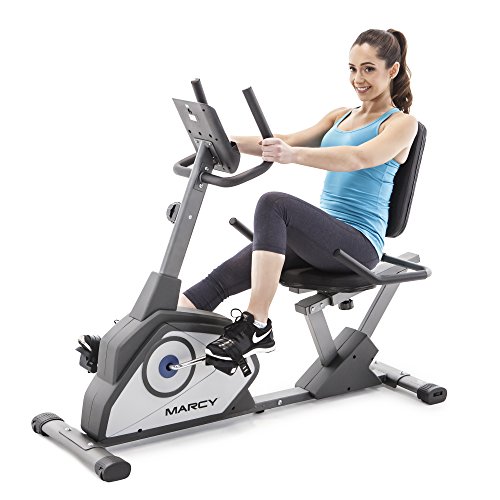
Marcy ME-709 Recumbent Exercise Bike
Eight resistance levels adjust with a simple knob on the Marcy ME-709, no digital console required. Padded seat and high backrest support daily, low-impact sessions in a compact footprint. Peak resistance tops out lower than premium models, so advanced riders may outgrow it quickly.
Pros
- Affordable, straightforward operation
- Compact footprint suits small spaces
- Padded backrest adds comfort
Cons
- Resistance tops out lower than rivals
- Console offers no connectivity

Exerpeutic 900XL Recumbent Bike
Extended step-through frame gives the 900XL a wider stance than entry-level recumbents. Wide, cushioned seating adds stability during steady cardio sessions. Eight magnetic resistance levels favor consistent pacing over intense interval work.
Pros
- Stable, extended step-through frame
- Wide cushioned seat design
- Large LCD display with pulse readout
Cons
- Resistance range stays limited
- No app connectivity available
Nautilus R618 Recumbent Bike
Bluetooth connectivity pairs the R618 with fitness apps for detailed workout logging. Dual-track display shows real-time metrics alongside preset workout programs. Console layout packs in plenty of buttons, and assembly takes longer than simpler models.
Pros
- Detailed metrics and program variety
- Bluetooth tracking syncs to apps
- Weight capacity beats several rivals
Cons
- Console layout feels busy
- Assembly takes longer than average
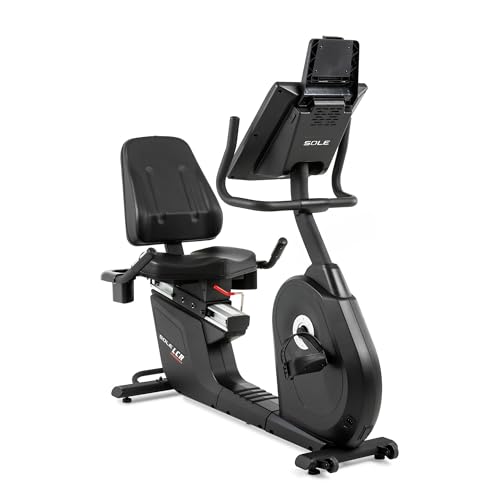
Sole R92 Recumbent Bike
Gym-grade steel frame anchors the R92 for frequent, hard daily use. High weight capacity and a large adjustable seat suit riders logging serious mileage. Bulk and price put it beyond what casual users typically need.
Pros
- Built for frequent, heavy use
- Stable, quiet drive system
- High weight capacity for daily riders
Cons
- Bulky footprint needs a permanent spot
- Higher investment than entry models
How they compare
| # | Model | Resistance | Best for | Score | Price |
|---|---|---|---|---|---|
| 1 | Schwinn 290 Recumbent Bike | Magnetic, multiple quiet levels | Best overall | 9.4 | Check price |
| 2 | NordicTrack Commercial R35 Recumbent Bike | Silent magnetic, digitally controlled | Best for interactive workouts | 9.2 | Check price |
| 3 | Sunny Health & Fitness SF-RB4708 | Magnetic, adjustable knob | Best value | 9.0 | Check price |
| 4 | Marcy ME-709 Recumbent Exercise Bike | Magnetic, eight levels | Best budget | 8.8 | Check price |
| 5 | Exerpeutic 900XL Recumbent Bike | Magnetic, eight levels | Best for larger riders | 8.6 | Check price |
| 6 | Nautilus R618 Recumbent Bike | Magnetic, many levels | Best for data tracking | 8.4 | Check price |
| 7 | Sole R92 Recumbent Bike | Magnetic, many levels | Best for heavy daily use | 8.2 | Check price |
Questions worth asking
Are recumbent bikes good for losing weight?
Consistent, low-impact cardio on a recumbent bike can support weight-loss goals when paired with a calorie deficit. Comfort lets many riders log longer sessions than they would on an upright bike. Interval efforts and higher resistance levels raise the calorie burn per session.
Recumbent bike vs upright bike, which is better?
Neither wins outright since each suits different needs. Back support and a joint-friendly recline make recumbent bikes better for longer, gentler sessions. Upright bikes engage the core more and mimic outdoor cycling posture. Riders with back or knee sensitivity typically lean recumbent.
How much floor space does a recumbent bike need?
Recumbent bikes run longer than uprights because pedals sit out in front of the seat. Check listed length and width, then add clearance for mounting and dismounting. Gym-grade frames like the Sole R92 work best in a permanent spot rather than a room that gets rearranged daily.
What weight capacity is enough for a recumbent bike?
Models in this roundup range from about 300 to 350 pounds rated capacity. Pick a number comfortably above body weight for a stable, lasting ride. Larger riders should prioritize reinforced frames such as the Exerpeutic 900XL or Sole R92.
Do recumbent exercise bikes require a subscription?
Not every model does. Sunny’s SF-RB4708 and the Marcy ME-709 run fully on a standalone console with no ongoing fees. NordicTrack’s Commercial R35 unlocks trainer-led classes through a paid subscription, though manual riding still works without one.
Is a recumbent bike easier on the knees than other cardio machines?
Reclined posture and forward pedal placement reduce strain on knees and the lower back compared with running or an upright bike. Individual joint conditions vary, so anyone with an existing injury should check with a physician before starting a new routine.
Which recumbent bike tracks workouts with an app?
Schwinn’s 290 and the Nautilus R618 both sync data over Bluetooth to popular fitness apps. Basic consoles on budget models track time, distance, and calories without app connectivity. Riders who want detailed logs should prioritize Bluetooth-equipped bikes.
Can seniors use a recumbent exercise bike safely?
Low step-through frames, back support, and a stable seated position make recumbent bikes popular among older adults. Individual health conditions still matter, so checking with a doctor before starting a new exercise routine is a sensible first step.
How difficult is recumbent bike assembly?
Simpler models like the Marcy ME-709 go together with basic tools in under an hour for most owners. Feature-rich bikes such as the Nautilus R618 take longer due to console wiring and additional hardware. Following the included manual step by step helps avoid a wobbly frame later.
What’s the difference between magnetic and manual resistance on a recumbent bike?
Magnetic resistance uses a magnet near the flywheel and produces a smooth, quiet, low-maintenance pedal feel. Manual friction-pad systems are less common now and wear down faster with regular use. Nearly every bike in this group, including budget picks, relies on magnetic resistance.
The verdict
Schwinn’s 290 remains the strongest all-around pick, pairing quiet resistance with a comfortable seat and app tracking. NordicTrack’s Commercial R35 fits riders chasing guided, screen-based workouts, while the Marcy ME-709 keeps cost and footprint low. Larger riders or daily users get more durability from the Sole R92’s gym-grade frame.
Derek Holt
Derek has a background coaching recreational and amateur athletes and has worked the sales floor at specialty fitness retailers. He focuses on equipment durability, ergonomics and realistic use cases rather than marketing claims.