Weighted Vests Compared for Rucking, Walking and Lifting
Hyperwear’s Hyper Vest PRO leads this roundup for its slim profile that resists bounce during fast movement. Budget conscious buyers get the widest weight range from the CAP Barbell Adjustable Weighted Vest. Long rucks favor the RUNmax Pro, since its padded shoulders reduce pressure over multi hour walks.
Most lifters and ruckers do best with the Hyperwear Hyper Vest PRO, our top pick for varied training. The CAP Barbell Adjustable Weighted Vest offers the best value across a wide weight range. Long walks and rucking favor the RUNmax Pro.
Weighted vests look interchangeable, but they are not. A vest built for pull ups bounces painfully on a run, while a heavily padded rucking vest blocks a clean push up. Fixed weight units cannot grow with you, and some adjustable vests jump in increments too large for real progression. We ranked these seven vests using published weight ranges, adjustment increments and strap design, plus what owners report about bounce, chafing and shoulder pressure during long sessions.
What to look for
Match the vest type to your training, not just the weight Slim panel vests such as the Hyperwear Hyper Vest PRO stay flat against the torso. That matters for running, jumping, pull ups and anything where a loose vest would swing or block a bar. Bulkier vests with thick shoulder pads spread load better for long walks and rucking, but they interfere with floor work and push ups. Buying a rucking vest for calisthenics, or a slim vest for heavy rucking, is the most common mistake in this category.
Start lighter than expected and progress in small steps A common guideline suggests beginning around five to ten percent of body weight, then building slowly. Added load compresses the spine and raises joint stress in ways that are not obvious during the first session. Adjustable vests with small removable packs let you add a pound or two at a time, which beats a fixed vest that jumps straight from comfortable to punishing. New to loaded training? A light fixed vest for walking makes a reasonable starting point.
Fit determines whether you actually keep wearing it A bouncing vest chafes the collarbones and shoulders within twenty minutes, and padding alone will not fix a loose fit. Look for side lacing, multiple strap adjustment points and, ideally, real sizing instead of one size fits all, since a vest built for a large frame hangs badly on a smaller one. Wear a shirt underneath, tighten the vest so it moves with your torso rather than against it, and recheck the fit once you add weight.
Weigh heat, noise and storage before you buy Any vest adds an insulating layer across the core, which makes summer sessions noticeably hotter unless the design ventilates, as with the MIR Air Flow vest. Sand filled packs run quieter than iron plates, which matters in an apartment with neighbors below. Storage deserves thought too, since a fully loaded heavy vest is awkward to hang and can pull a hook straight out of drywall. Empty the packs before storing the vest if the design allows it.
The shortlist, ranked

Hyperwear Hyper Vest PRO
Small steel weights spread across a thin, flexible panel here, rather than sitting in a few heavy pockets. Side laces let you cinch the fit, which is what keeps bounce down during running and jumping. Owners report it fits comfortably enough to wear under a jacket.
Pros
- Very low profile with minimal bounce during fast movement
- Small increments allow gradual weight progression
- Sized by build rather than one size fits all
Cons
- Maximum weight stays modest for heavy loading
- Highest cost per pound of weight in this group

CAP Barbell Adjustable Weighted Vest
CAP offers a wide range of vest weights using removable sand or iron packs. That range makes it a practical choice if you expect to add load over time. Construction favors durability over refinement, and the bulk across the chest is more noticeable than on slimmer vests, so walking, squats and general conditioning suit it better than gymnastic movements.
Pros
- Wide weight range for the price
- Removable packs allow steady progression
- Durable shell holds up to regular gym use
Cons
- Bulkier across the chest than slim vests
- Adjustment increments run coarse

RUNmax Pro Weighted Vest
RUNmax sells versions with thick shoulder padding, which matters once you are an hour into a loaded walk and straps start digging in. Removable weight packs let the load build gradually. Floor work and anything requiring a bar near the chest suffer from its taller silhouette, though.
Pros
- Shoulder padding eases pressure on long walks
- Removable packs build load gradually
- Wide range of total weights available
Cons
- Bulk gets in the way of floor and bar work
- Padded version runs warm in summer

Aduro Sport Weighted Vest
Aduro keeps things simple with a fixed weight neoprene vest offered in several sizes. Walkers and bodyweight circuit trainers get load without configuring packs. Neoprene feels comfortable against a shirt, but the weight stays fixed, so pick your target load carefully since it cannot change later.
Pros
- Affordable and simple to use
- Comfortable neoprene against clothing
- Suits walking and light circuits well
Cons
- Fixed weight cannot be adjusted
- Maximum load stays limited
ZFOsports Adjustable Weighted Vest
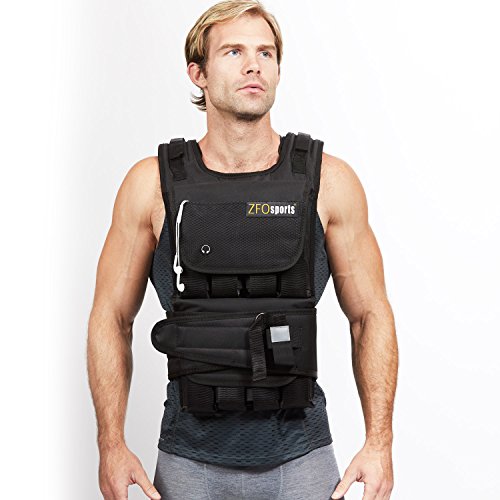
ZFOsports targets the heavier end of the market, well beyond what most brands offer. Weight removes in defined increments, which suits experienced lifters loading dips, pull ups and weighted carries. Comfort takes a back seat to capacity here, so plan on wearing a shirt underneath and accepting extra bulk.
Pros
- Reaches loads most vests cannot match
- Weight removes in defined, trackable increments
- Reinforced stitching at major stress points
Cons
- Heavy and bulky once fully loaded
- Less comfortable than padded rivals

MIR Air Flow Adjustable Weighted Vest
MIR builds this vest around airflow, using a mesh backed construction that cuts down on the sweat trap effect other vests create. Removable weights handle adjustment, and the body sits slimmer than heavily padded options. Owners report reaching for it most in summer, though bare skin finds the mesh less forgiving than neoprene.
Pros
- Noticeably cooler than solid shell vests
- Removable weights allow steady progression
- Reasonably slim for an adjustable design
Cons
- Mesh can irritate against bare skin
- Less shoulder padding than dedicated rucking vests

Henkelion Weighted Vest
Henkelion sits at the lighter end of the range, which is genuinely where most beginners belong. Daily walks with a modest load build tolerance without the joint stress of starting heavy. Construction stays basic, but for walking, light jogging and beginner circuits it does the job adequately.
Pros
- Sensible starting load for newcomers
- Inexpensive way to try weighted training
- Simple strap adjustment
Cons
- Too light for real strength progression
- Weight is neither removable nor adjustable
Side by side
| # | Model | Weight range | Best for | Score | Price |
|---|---|---|---|---|---|
| 1 | Hyperwear Hyper Vest PRO | About 10 pounds, adjustable in small increments | Best overall | 9.4 | Check price |
| 2 | CAP Barbell Adjustable Weighted Vest | Multiple options up to heavy loads | Best value | 9.2 | Check price |
| 3 | RUNmax Pro Weighted Vest | Several options from light to heavy | Best for rucking | 9.0 | Check price |
| 4 | Aduro Sport Weighted Vest | Fixed weight options from light to moderate | Best budget | 8.7 | Check price |
| 5 | ZFOsports Adjustable Weighted Vest | Heavy options with removable increments | Best for heavy loading | 8.5 | Check price |
| 6 | MIR Air Flow Adjustable Weighted Vest | Adjustable with removable weights | Best for hot weather | 8.2 | Check price |
| 7 | Henkelion Weighted Vest | Light fixed weight options | Best for beginners | 8.0 | Check price |
Good to know
How heavy should a weighted vest be?
Most guidance points to starting around five to ten percent of body weight, then progressing gradually. Walking rarely needs more than that light range. Strength work such as weighted pull ups and dips can justify heavier loads, built up over months rather than weeks.
Can you run in a weighted vest?
You can, but a slim, tightly fitted vest with a light load works best. Bounce transmits repeated impact straight to the shoulders and spine. Many coaches suggest weighted walking or rucking instead, for similar conditioning with far less joint stress.
Do weighted vests improve bone density?
Loaded walking counts as weight bearing exercise, which is generally linked to bone health benefits. Individual circumstances vary a great deal, though, especially with existing joint or spine conditions. Discuss it with a doctor or physiotherapist before adding load if you have concerns.
Sand or iron weights, which is better?
Iron packs pack more weight into less space, so the vest sits slimmer. Sand packs run quieter, cost less and bruise less if the vest shifts against you. Gymnastic movements favor iron for its low bulk, while walking and general conditioning work fine with sand.
Will a weighted vest help with weight loss?
Extra load raises the energy cost of the same walk or workout, so calorie burn increases modestly. It is no substitute for overall training volume or diet, and the effect is smaller than most people expect. Think of it as a way to make an existing routine harder, not a shortcut.
How do you stop a weighted vest from chafing?
Wear a fitted shirt underneath, tighten every adjustment point so the vest moves as one unit with your torso, and keep early sessions short while your shoulders adapt. Proper shoulder padding, like the padded RUNmax versions offer, makes a large difference on walks over an hour.
Is it safe to wear a weighted vest all day?
Extended wear is not recommended. Spinal compression and postural compensation build up in ways that are easy to miss. Most sources suggest limiting sessions to a defined workout window, well under an hour when you are starting out.
Are one size fits all vests a problem?
They can be, particularly for smaller or larger frames. A vest that hangs low lands on the ribs instead of the shoulders and chest. Buyers outside average sizing should look for options sold in multiple sizes, such as the Hyperwear vest, or ones with extensive side and shoulder adjustment.
What is a good weighted vest for rucking?
Rucking rewards padded shoulders and removable weight packs, since sessions often run past an hour. The RUNmax Pro fits that profile well. Slimmer vests built for running or calisthenics tend to dig in on longer loaded walks.
Final word
For varied training, the Hyperwear Hyper Vest PRO stands out since its slim profile handles running, calisthenics and conditioning without the bounce that makes bulkier vests miserable. Dollar for pound, the CAP Barbell Adjustable Weighted Vest is hard to beat. Long loaded walks favor the RUNmax Pro, thanks to its shoulder padding.
Derek Holt
Derek has a background coaching recreational and amateur athletes and has worked the sales floor at specialty fitness retailers. He focuses on equipment durability, ergonomics and realistic use cases rather than marketing claims.