Compact Camera or Smartphone: What Wins for Travel?
Sony’s ZV-1 II tops this list with an 18mm equivalent wide end, fast autofocus and creator focused video. Canon’s PowerShot G7 X Mark III delivers the best value with its bright f1.8 to f2.8 zoom, while the Ricoh GR III remains the sharpest true pocket camera for street photography.
Buyers who want one compact camera that clearly outshoots a phone should start with the Sony ZV-1 II, with the Canon PowerShot G7 X Mark III close behind on value and the Ricoh GR III leading for street work. Every model below solves a different problem, from 960mm superzoom reach to shallow depth of field portraits.
Comparing compacts is tricky because marketing leads with megapixels while real image quality comes from sensor area and lens aperture. We compared published sensor specifications, aperture at both ends of each zoom, autofocus systems, video modes and body weight, then factored in what owners report about battery life and menu usability.
How to choose
Why does sensor size matter more than megapixels? A one inch sensor gathers roughly four times the light of the 1/2.3 inch chips inside budget superzooms, and APS-C sensors collect more still. Extra light means cleaner images indoors and at dusk, precisely where phones start smearing detail with processing. Buyers motivated by low light should rank sensor area and lens aperture above zoom range and megapixel count.
What does a long zoom cost you? Stretching more focal range into the same barrel forces the maximum aperture to shrink as the lens extends. A compact that opens at f1.8 wide may close to f6.4 at full zoom, which demands bright daylight or high ISO. Decide honestly between reach and speed before buying, because no compact on this list delivers both at once.
Which video features matter for creators? Anyone planning to publish clips should verify uncropped 4K, a microphone input, a forward facing screen and dependable continuous autofocus. Stills first cameras often crop 4K heavily or overheat on long takes. Based on specifications, the creator focused models here also handle vertical framing and live streaming with less setup.
How do you pick a compact you will actually carry? Whichever camera fits the pocket or bag you already use wins by default. Weigh the body with battery and card, test whether the grip suits your hand, and decide if a viewfinder matters for shooting in harsh sun. Owners report that an awkward camera stays home, and a camera at home loses to a phone every time.
The top picks, ranked

Sony ZV-1 II
An 18mm equivalent wide end in front of a one inch stacked sensor is the ZV-1 II’s defining feature, and it transforms handheld vlogging and tight interiors. Sony adds a side flip screen, a directional three capsule microphone and a product showcase focus mode, making this a genuine stills and video hybrid. Owners report the wide framing removes the need for a gimbal or selfie stick on walking shots.
Pros
- Widest lens of any camera in this class
- Face and eye autofocus rarely misses
- Flip out screen with a windscreen mount built in
Cons
- No electronic viewfinder
- Battery runs short on full shoot days
Canon PowerShot G7 X Mark III
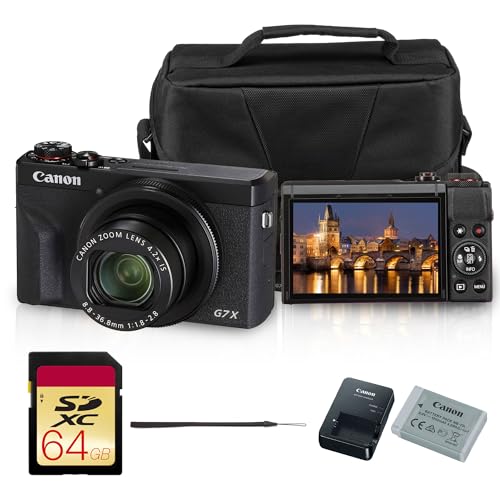
Canon keeps the bright f1.8 to f2.8 zoom that made this line popular and adds uncropped 4K plus direct live streaming. Skin tones straight out of camera need almost no editing, which is why many owners hold onto it over newer rivals. Reach extends to a useful 100mm equivalent, yet the body still slips into a jacket pocket.
Pros
- Aperture stays bright across the full zoom
- Canon colour needs minimal editing
- Microphone input for interviews
Cons
- Video autofocus trails the Sony
- Screen tilts up but does not flip sideways

Ricoh GR III
Ricoh fits an APS-C sensor behind a fixed 28mm equivalent lens in a body that genuinely disappears into a front trouser pocket. Zoom and viewfinder are deliberately absent, and the snap focus system lets you shoot from the hip without hunting. Owners consistently describe it as the camera they actually carry every single day.
Pros
- Largest sensor to weight ratio here
- Snap focus excels at candid street work
- Deep JPEG image controls
Cons
- Sensor dust is a known long term complaint
- Video and battery life are weak points

Fujifilm X100VI
Enthusiasts get a 40MP APS-C sensor, in body stabilisation and a hybrid optical and electronic viewfinder inside a fixed lens rangefinder style body. Film simulations produce finished looking colour, so many owners skip editing software entirely. Size puts it beyond true pocket cameras, making it a jacket or bag companion rather than an everywhere camera.
Pros
- Class leading detail and film simulation colour
- Hybrid viewfinder is unique at this size
- Stabilisation steadies handheld low light shots
Cons
- Largest and heaviest camera on this list
- Availability is frequently limited
Panasonic Lumix ZS200
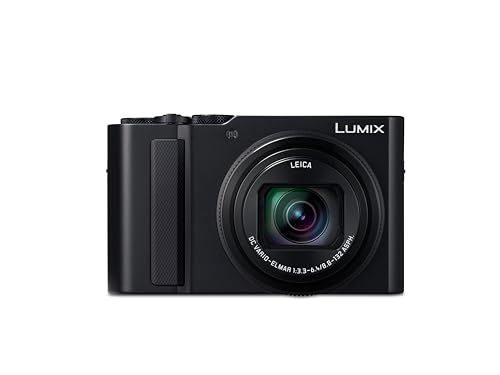
Travellers who refuse to carry lenses get a 15x zoom over a one inch sensor, spanning 24 to 360mm equivalent. Reach that long costs aperture, so the ZS200 does its best work in daylight. A built in electronic viewfinder earns its place in bright sun, where rear screens wash out completely.
Pros
- 15x zoom over a one inch sensor
- Electronic viewfinder for bright sun
- Stabilisation steadies the long end
Cons
- Aperture narrows quickly past mid zoom
- Viewfinder eyepiece is small

Sony RX100 VII
Sports parents and pet owners get Sony’s real time tracking autofocus, a 200mm equivalent zoom and a pop up viewfinder in a body barely larger than a deck of cards. Burst shooting reaches 20 frames per second with tracking locked on. Trade offs include a slower lens at the long end and menus that intimidate beginners.
Pros
- Subject tracking leads the compact class
- Pop up viewfinder in a tiny body
- 20fps bursts catch fast action
Cons
- Menu system overwhelms beginners
- Smooth body needs an add on grip

Canon PowerShot SX740 HS
A 40x zoom reaching 960mm equivalent puts subjects in frame that nothing else on this list can touch. Its 1/2.3 inch sensor is smaller than every rival here, so low light results fall behind after dark. Daytime travel, distant wildlife and stadium seats are its territory, and the light body with a tilting screen passes easily between family members.
Pros
- 960mm reach in a pocket body
- Light and simple for any family member
- Tilting screen frames selfies
Cons
- Small sensor struggles after dark
- No microphone input
Side by side
| # | Model | Sensor | Best for | Score | Price |
|---|---|---|---|---|---|
| 1 | Sony ZV-1 II | 1 inch stacked CMOS, 20.1MP | Best overall | 9.4 | Check price |
| 2 | Canon PowerShot G7 X Mark III | 1 inch CMOS, 20.1MP | Best value | 9.2 | Check price |
| 3 | Ricoh GR III | APS-C CMOS, 24.2MP | Best for street photography | 9.0 | Check price |
| 4 | Fujifilm X100VI | APS-C X-Trans, 40.2MP | Best for image quality | 8.8 | Check price |
| 5 | Panasonic Lumix ZS200 | 1 inch MOS, 20.1MP | Best for travel zoom | 8.6 | Check price |
| 6 | Sony RX100 VII | 1 inch stacked CMOS, 20.1MP | Best for fast action | 8.3 | Check price |
| 7 | Canon PowerShot SX740 HS | 1/2.3 inch CMOS, 20.3MP | Best budget option | 8.0 | Check price |
Questions worth asking
Is a compact camera still worth buying over a phone?
Yes, when it carries a one inch or larger sensor. Those models keep shadow detail, render natural background blur and zoom optically without the heavy processing that makes phone photos look synthetic.
What sensor size should a compact camera have?
One inch is the practical minimum for a visible step up from a modern phone. APS-C compacts like the Ricoh GR III and Fujifilm X100VI improve further, though both give up zoom to get there.
Which compact camera is best for vlogging?
The Sony ZV-1 II leads on its 18mm equivalent wide end, forward facing screen and reliable face tracking. Canon’s PowerShot G7 X Mark III is the pick if you prefer Canon colour science.
Ricoh GR III vs Fujifilm X100VI, which should I choose?
Choose the GR III if the camera must vanish into a trouser pocket for daily street shooting. Choose the X100VI for higher resolution, a hybrid viewfinder, stabilisation and far stronger video, accepting roughly double the weight.
Do any of these compact cameras have a viewfinder?
The Panasonic Lumix ZS200, Sony RX100 VII and Fujifilm X100VI include viewfinders. The Sony ZV-1 II, Canon G7 X Mark III, Ricoh GR III and Canon SX740 HS rely on their rear screens.
How much optical zoom do I need?
Match it to your subjects. Travel and wildlife favour the 360mm reach of the ZS200 or the 960mm of the SX740 HS, while street and portrait work suits a fast prime like the Ricoh GR III.
Can these cameras shoot RAW?
Six of the seven capture RAW files. Only the entry level Canon SX740 HS is JPEG only, which limits how far you can recover highlights or adjust white balance later.
How long does a compact camera battery last?
Small bodies mean small batteries, so most models here are rated around 250 to 400 stills per charge. Owners report carrying a spare battery or a USB power bank for full days out.
Can I use a compact camera as a webcam?
Several models, including the Canon PowerShot G7 X Mark III and Sony ZV-1 II, work as USB webcams through manufacturer software. Confirm current firmware support for your exact body before relying on it.
The verdict
Most buyers should choose the Sony ZV-1 II, because its wide fast lens and dependable autofocus cover stills and video without compromise. Pick the Canon PowerShot G7 X Mark III for the same one inch quality with longer zoom reach, or the Ricoh GR III when the camera must vanish into a pocket. On a tight budget for daylight travel, the Canon PowerShot SX740 HS still earns its place.
Marcus Chen
Marcus covered consumer electronics for enthusiast tech publications for six years before joining ChoiceCrest. He specializes in translating manufacturer spec sheets into plain-language buying advice, with a focus on audio, computing accessories and smart-home gear.