Which Trail Camera Actually Catches Moving Deer?
Browning’s Strike Force Pro DCL sets the pace for detection speed and night image clarity among the seven cameras compared here. SPYPOINT’s FLEX-M suits hunters who want photos sent straight to a phone from land they rarely visit. Campark’s T85 handles casual scouting and driveway monitoring without any cellular fees.
Most hunters do best with the Browning Strike Force Pro DCL, while SPYPOINT’s FLEX-M takes over once photos need to reach a phone instead of an SD card.
Specs printed on a box rarely predict field behavior, since a slow trigger can miss a walking buck even with 4K video attached. We compared published trigger speeds, flash types, detection range, battery ratings and owner feedback on false triggers to rank these seven cameras.
How to pick the right one
What specs actually matter on a trail camera? Trigger speed decides whether a camera catches a walking animal or an empty trail. Anything at or under 0.3 seconds handles most crossings, while a feeder or water source gives slower cameras, around 0.5 seconds, enough time to fire. Recovery time counts too, since a camera that resets slowly misses the second and third animal in a group. Megapixel count matters far less than either of those two numbers.
Cellular vs SD card trail cameras: which is better? Cellular cameras send images straight to a phone, letting hunters leave pressured land undisturbed for months. That convenience comes with a monthly image plan and, in most models, a slightly slower trigger. Non cellular cameras trade that convenience for faster performance and sharper images at the same price point. Choose cellular for land visited rarely, and SD cards for property checked often.
How does flash type affect night photos? Low glow infrared produces brighter night images but emits a faint red glow that alert animals sometimes notice. No glow, also called black flash, stays invisible at the cost of a darker frame at the same distance. Dual lens designs sidestep that tradeoff entirely by switching to a dedicated night optic. Browning’s Strike Force Pro DCL uses this approach among the cameras compared here.
How do I extend battery life and place a trail camera correctly? Lithium AA cells outlast alkaline by a wide margin in cold weather and rarely leak inside the battery bay. A Class 10 SD card sized to the check interval avoids write errors, and formatting it inside the camera prevents file corruption. Mounting at roughly waist height with a slight downward angle keeps the sensor from tilting at the sky. Facing the camera north stops sunrise and sunset from washing out images or triggering false shots.
What we recommend

Browning Strike Force Pro DCL
Browning fitted the Strike Force Pro DCL with a 0.15 second trigger, among the fastest in this lineup. A dual lens system swaps to a dedicated night optic instead of forcing one lens to cover both day and dark. Owners report crisp images at range where cheaper infrared units blur into a bright haze.
Pros
- Trigger fires in 0.15 seconds with fast recovery
- Dual lens keeps night shots sharp at distance
- Lithium AA cells run a full season in moderate traffic
Cons
- No cellular version available
- Menu system takes time to learn

SPYPOINT FLEX-M
SPYPOINT built the FLEX-M to find whichever carrier signal is strongest on site, so buyers do not need to guess a network in advance. Setup happens through the SPYPOINT app, and owners describe activation as faster than rival cellular units. A free image tier covers light scouting, while paid plans handle busier trails.
Pros
- Automatic dual carrier switching skips network guesswork
- App activation with no separate SIM setup
- Free image plan covers light use
Cons
- Heavy traffic requires a paid data plan
- Trigger speed trails non cellular models

Bushnell CelluCORE 20
Bushnell keeps the CelluCORE 20 simple, pairing a short menu with a small screen and steady image uploads. Land visited only a few times a year benefits most, since owners report fewer dropped transmissions than budget cellular rivals. Image quality stays solid rather than class leading, which is the tradeoff for that consistency.
Pros
- Uploads transmit reliably on remote land
- Short, straightforward menu for quick setup
- Compact housing mounts close to the tree
Cons
- Carrier choice locks in at purchase
- Video quality falls behind pricier rivals

Stealth Cam DS4K Ultimate
Stealth Cam aimed the DS4K Ultimate at owners who want to watch behavior, not just count animals, with genuine 4K video and audio. An eight battery bay supplies the extra power video recording demands. Burst and time lapse modes go deeper here than on most cameras in this group, based on specifications.
Pros
- 4K video captures detail with usable audio
- Burst and time lapse modes add flexibility
- Large battery bay supports video’s power draw
Cons
- Housing runs bulkier than most rivals
- Video recording drains batteries faster

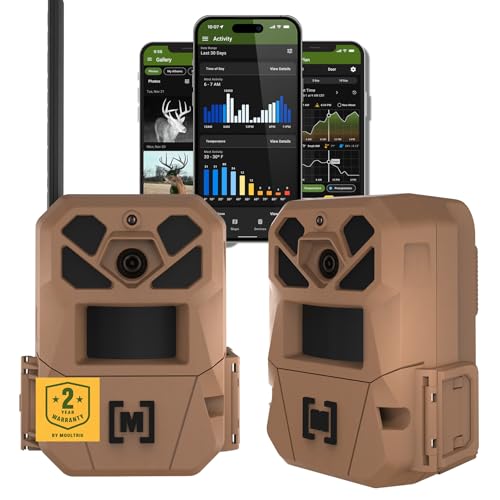
Moultrie Mobile Edge 2
Moultrie paired a compact camera with what owners call the most polished app in the category, complete with species tagging and weather overlays. Activation happens automatically out of the box, skipping any SIM card handling. Anyone running several cameras gets one dashboard for managing all of them at once.
Pros
- App tagging and weather overlays are class leading
- No SIM card setup required at activation
- Manages multiple cameras from one dashboard
Cons
- Subscription needed once trial images run out
- Night stills lose sharpness at longer range
Reconyx HyperFire 2
Biologists and land managers leave Reconyx cameras out for a full year at a stretch, and the HyperFire 2 explains why. Its 0.2 second trigger and near instant recovery rarely miss a sequence of moving animals. Resolution stays modest next to newer rivals, but the sealed, cold rated housing is built for that kind of neglect.
Pros
- Sealed housing survives extreme weather long term
- Battery life stretches up to a year
- Near instant recovery catches full sequences
Cons
- Resolution lags behind newer competitors
- Image output stays plain with few extras
Campark T85
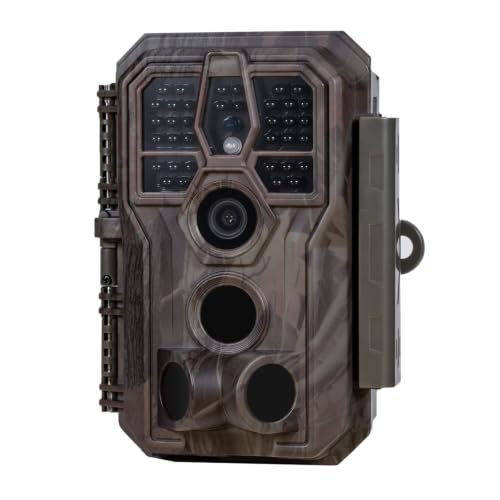
Campark’s T85 handles backyard wildlife, driveways and light scouting without asking for a monthly fee. WiFi and Bluetooth let you preview images on a phone right at the camera instead of pulling the card each time. Trigger speed and night range are the compromises, so mount it close to a trail rather than across an open field.
Pros
- Phone preview skips pulling the SD card
- Costs less than every other camera here
- Simple menu suits first time buyers
Cons
- Slower trigger misses fast moving animals
- Night illumination falls short at range
How they compare
| # | Model | Trigger speed | Best for | Score | Price |
|---|---|---|---|---|---|
| 1 | Browning Strike Force Pro DCL | 0.15 seconds | Best overall | 9.4 | Check price |
| 2 | SPYPOINT FLEX-M | Dual carrier LTE | Best for remote properties | 9.2 | Check price |
| 3 | Bushnell CelluCORE 20 | 20 megapixel stills | Best for dependable cellular uploads | 9.0 | Check price |
| 4 | Stealth Cam DS4K Ultimate | 4K at 30 frames per second | Best for video quality | 8.8 | Check price |
| 5 | Moultrie Mobile Edge 2 | Built in LTE, auto activation | Best for managing multiple cameras | 8.6 | Check price |
| 6 | Reconyx HyperFire 2 | 0.2 seconds | Best for year-long unattended deployment | 8.3 | Check price |
| 7 | Campark T85 | Up to 32 megapixel interpolated | Best budget pick | 8.0 | Check price |
Frequently asked questions
What trigger speed do I need for a trail camera?
Look for 0.3 seconds or faster on trails where animals keep moving. Over bait, water or a food plot, 0.5 seconds still works since animals pause there. Slower trigger speeds open up cheaper cameras that perform well in other areas.
Do cellular trail cameras require a monthly subscription?
Most do, beyond a small free tier on brands like SPYPOINT. Plans are priced per camera and by monthly image count, so several cameras add up fast. Pick a plan after one month of real image volume rather than guessing upfront.
Can deer and other animals see infrared flash at night?
Low glow emitters give off a faint red glow that some animals notice at first. Most stop reacting to it after a few visits to the same area. No glow, or black flash, models stay invisible to animals and to people passing by.
How long do trail camera batteries actually last?
Lithium AA cells typically run two to six months in moderate traffic for still images. Heavy video recording can drain the same set of batteries within weeks. Cold weather shortens alkaline battery life dramatically, which is why lithium performs better outdoors.
What SD card size works best in a trail camera?
A Class 10 card between 32GB and 128GB fits most current models. Check the manual first, since some older cameras cap out at a lower maximum size. Format the card inside the camera before the first deployment to avoid file errors.
Why does my trail camera take pictures of nothing?
Sun moving branches or heat shimmer off open ground triggers most false shots. Clearing vegetation from the detection zone cuts down on wasted photos. Facing the camera north and lowering sensitivity in hot weather also helps.
Are trail cameras waterproof in rain and snow?
Most models are weather resistant rather than fully waterproof. A properly latched door and clean gasket keep rain and snow out during normal use. Adding a small silica pack inside the housing helps in especially humid climates.
Is a security box worth it for a trail camera?
On private, fenced land a cable lock through the housing is usually enough. Public or shared ground carries more risk, so a steel security box paired with a no glow camera cuts theft risk substantially.
Which trail camera works best for hunting on public land?
A no glow model paired with a locking security box lowers the odds of a camera walking off. Reconyx and Browning models in this comparison both support that kind of setup. Avoid low glow flash on land other hunters can access freely.
SD card or cellular trail camera: which should I buy?
SD card cameras cost less upfront and trigger faster in most head to head comparisons. Cellular cameras save trips to land visited only a few times a year. Choose based on how often you can realistically check the camera in person.
Our pick
Browning’s Strike Force Pro DCL comes out ahead overall, pairing a fast trigger with night images that hold up at distance. Choose SPYPOINT’s FLEX-M for land checked only a few times a year, or Reconyx’s HyperFire 2 when a camera has to survive a full year untouched. Campark’s T85 remains a sensible starting camera for driveways and backyard wildlife.
Marcus Chen
Marcus covered consumer electronics for enthusiast tech publications for six years before joining ChoiceCrest. He specializes in translating manufacturer spec sheets into plain-language buying advice, with a focus on audio, computing accessories and smart-home gear.


