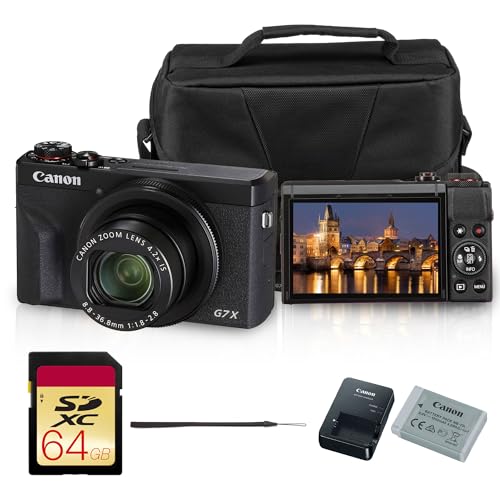
Which Vlogging Camera Keeps Your Face Sharp While Moving
The Sony ZV-E10 II leads for creators who want interchangeable lenses and reliable face tracking. The Sony ZV-1 II is the strongest pocket choice with its wide zoom, and the DJI Osmo Pocket 3 wins for walking shots thanks to its gimbal stabilized sensor and rotating screen.
Autofocus stickiness and overheating limits matter more to a vlog than megapixels ever will. The ZV-E10 II is the overall pick, the ZV-1 II covers pocket sized shooting, and the Osmo Pocket 3 handles motion heavy footage. Canon, Panasonic and GoPro round out the budget, hybrid and action angles.
A spec sheet rarely shows how a camera behaves alone, walking, and talking to the lens. We compared published specifications, recording limits, stabilization methods and what owners report about long clips, then ranked accordingly.
Our top picks

Sony ZV-E10 II
An APS-C sensor paired with Sony’s newer autofocus processing keeps handheld talking head clips locked on your eyes. A fully articulating screen and a dedicated background defocus button make solo shooting far less fiddly. Owners report noticeably better low light performance than the original model.
Pros
- Reliable subject tracking for solo pieces to camera
- Interchangeable lenses let you grow the kit
- Strong built in microphone with wind screen included
Cons
- No in body stabilization, so lens or digital IS does the work
- Battery drains quickly on long 4K sessions

Sony ZV-1 II
An 18mm equivalent wide end replaces the older model’s longer zoom, the single most useful change for arm’s length filming. A one inch sensor still fits inside a jacket pocket. Owners report the flip out screen and product showcase mode make it an easy second camera.
Pros
- Wide enough for handheld selfie framing
- Genuinely pocketable for daily carry
- Clean directional audio without an external mic
Cons
- Digital only stabilization crops the frame
- No viewfinder for bright outdoor shooting
DJI Osmo Pocket 3
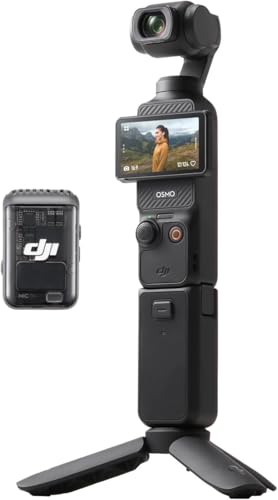
A one inch sensor rides on a three axis mechanical gimbal, so walking shots stay smooth without any crop. The rotating two inch screen flips between vertical and horizontal with one motion, useful for creators posting to both feeds. Owners report ActiveTrack framing keeps them centered while moving.
Pros
- Smoothest motion footage in this group
- Vertical and horizontal switching is instant
- Very small footprint for travel
Cons
- Fixed lens with no optical zoom
- Gimbal arm is exposed and needs careful storage

Canon EOS R50
Uncropped 4K from 6K oversampling comes from a small mirrorless body that inherits Canon’s Dual Pixel autofocus. That combination makes it a sensible pick for shooting both photos and vlogs on one camera. Owners report the color science needs less grading than rivals straight out of camera.
Pros
- Excellent skin tones without heavy editing
- Compact body with a proper grip
- Strong stills performance for thumbnails
Cons
- Kit lens is not wide enough for handheld selfie shots
- Single card slot and modest battery life

GoPro HERO12 Black
Water, bikes and bad weather are where the HERO12 Black earns its place. HyperSmooth stabilization and a horizon lock feature keep footage usable when the camera gets knocked around. Owners report the front screen makes framing yourself far easier than older action cameras.
Pros
- Extremely stable footage in rough conditions
- Waterproof out of the box
- Wide field of view suits handheld framing
Cons
- Small sensor struggles once the light drops
- Needs an adapter for external microphones

Panasonic Lumix G100
OZO Audio uses multiple internal microphones to track where sound comes from relative to the frame, which is what sets the G100 apart. That means usable voice recording without clipping a lav on. Owners report a tidy travel kit overall, though the Micro Four Thirds sensor trails most rivals here in size.
Pros
- Best in class internal microphone system
- Includes an electronic viewfinder at this size
- Light body that suits long handheld days
Cons
- 4K recording carries a noticeable crop
- Smaller sensor means more noise indoors

Canon PowerShot V10
A vertical first design with a flip up screen and a built in kickstand makes the V10 the simplest camera on this list. Pressing record and talking is the whole point here. Owners report it performs best in good light and works well as a casual daily vlogger rather than a main rig.
Pros
- Genuinely one handed and ready instantly
- Built in stand removes the need for a tripod
- Vertical framing is native, not cropped
Cons
- No zoom and limited manual control
- Noise rises quickly in dim rooms
How to pick the right one
How much does sensor size matter for vlogging? A larger sensor collects more light, which shows up as cleaner footage indoors and at dusk. APS-C bodies lead here, one inch compacts sit in the middle, and action camera sensors trail behind both. Anyone filming mostly under lamps rather than daylight should weight sensor size heavily and accept a bigger body in exchange.
Why does autofocus matter more than resolution? Nothing ruins a vlog faster than a face drifting out of focus mid sentence. Phase detection autofocus with dedicated face and eye tracking beats contrast based systems every time. Sony and Canon lead this category based on specifications and owner reports, which is why they take the top hybrid slots in this ranking.
Which stabilization method suits your shooting style? Mechanical gimbals move the sensor physically, giving the smoothest walking footage with no crop. Electronic stabilization crops into the frame and can wobble at the edges. Lens based optical stabilization sits between the two. Match the method to how you actually shoot rather than assuming the highest number wins.
What audio setup should you plan for before buying? Built in microphones have improved, but a 3.5mm input or a digital shoe still leaves room to grow into a wireless lav later. Check whether a shortlist camera has a headphone jack for monitoring, and whether the included wind muff actually works. Audio problems remain the most common reason creators replace a camera early.
How they compare
| # | Model | Sensor | Best for | Score | Price |
|---|---|---|---|---|---|
| 1 | Sony ZV-E10 II | 26MP APS-C Exmor R | Best overall | 9.4 | Check price |
| 2 | Sony ZV-1 II | 20.1MP one inch stacked CMOS | Best value | 9.2 | Check price |
| 3 | DJI Osmo Pocket 3 | One inch CMOS | Best for walk and talk | 9.0 | Check price |
| 4 | Canon EOS R50 | 24.2MP APS-C CMOS | Best hybrid stills and video | 8.8 | Check price |
| 5 | GoPro HERO12 Black | 5.3K 60p | Best for action and outdoors | 8.6 | Check price |
| 6 | Panasonic Lumix G100 | 20.3MP Micro Four Thirds | Best built in audio | 8.3 | Check price |
| 7 | Canon PowerShot V10 | One inch type CMOS | Best budget grab and go | 8.0 | Check price |
Common questions
Do I need 4K for vlogging?
Not strictly, since most platforms compress heavily. 4K does give you room to crop and reframe in editing, and it downscales into a sharper 1080p file. If storage and editing power are limited, 1080p at a high bitrate is still perfectly usable.
Is a flip screen essential for a vlogging camera?
It is close to essential if you film yourself. Without a screen facing you, framing becomes guesswork and cropped heads only show up in the edit. A fully articulating side hinged screen also stays usable when a microphone sits in the hot shoe.
Which vlogging camera is easiest for a complete beginner?
The Canon PowerShot V10 and the DJI Osmo Pocket 3 need the least setup. Both are effectively point and record, with sensible defaults and no lens choices to make. The mirrorless options reward learning but ask more of you up front.
Do vlogging cameras overheat during long recordings?
Compact bodies with small heat sinks can stop recording during long 4K clips, especially in warm weather. Owners report shorter clips and open articulating screens both help. Anyone recording uninterrupted sessions longer than half an hour should check published recording limits before buying.
Can I use my phone instead of a vlogging camera?
Modern phones shoot excellent video, but they struggle with shallow depth of field, external audio routing and long battery sessions. A dedicated camera also frees the phone for scripts, monitoring and uploads. Many creators use both rather than choosing.
How important is a wide angle lens for vlogging?
Very important for handheld selfie filming. Anything around 18mm to 20mm equivalent keeps your head and some background in frame at arm’s length. Kit zooms starting at 24mm equivalent or longer feel uncomfortably tight for talking to camera.
What accessories should I budget for after buying a camera?
A spare battery, fast memory cards, a small tripod or grip, and a wireless microphone cover most needs. A variable neutral density filter helps outdoors when cinematic shutter speeds matter. Add these gradually rather than all at once.
Do vlogging cameras work as webcams?
Most of the models here support clean output over USB with the manufacturer’s utility or a capture device. The Sony ZV series and Canon bodies are the most straightforward. Check current firmware notes for a specific model since support has improved over time.
Sony ZV-E10 II vs Sony ZV-1 II, which should I buy?
Choose the ZV-E10 II for interchangeable lenses and room to grow the kit. Choose the ZV-1 II when pocketability matters more than lens flexibility, since it delivers similar image quality in a far smaller body.
What’s the best vlogging camera for filming while walking?
The DJI Osmo Pocket 3 handles motion best, thanks to its mechanical gimbal and one inch sensor. Footage stays smooth without the crop that digital stabilization introduces on other cameras.
Our take
For most creators the Sony ZV-E10 II is the sensible center of gravity, offering dependable autofocus, a real sensor and room to add lenses later. If pocketability matters more, the Sony ZV-1 II covers the same ground in a far smaller body. Choose the DJI Osmo Pocket 3 when your footage involves a lot of movement.
Marcus Chen
Marcus covered consumer electronics for enthusiast tech publications for six years before joining ChoiceCrest. He specializes in translating manufacturer spec sheets into plain-language buying advice, with a focus on audio, computing accessories and smart-home gear.