Why Does a Wet Saw Need Water Flow to Cut Tile Safely?
A wet tile saw runs water across the blade for two reasons at once: the water cools the spinning diamond blade so it doesn’t overheat and dull, and it washes away the ceramic or porcelain dust that cutting friction creates before that dust can turn into an abrasive paste or become airborne silica dust. Cut the same tile water-starved and the blade glazes over, the tile overheats and chips, and fine dust that is genuinely hazardous to breathe fills the air instead of washing into the tray.
How the water actually gets to the blade
Most wet tile saws pull water from a tray or reservoir underneath the table using a small submersible pump, then route it through tubing to a nozzle or drip line aimed at the blade as it spins. On sliding table models the blade usually sits partly submerged in a shallow pan, so water clings to it on every rotation without needing a pump at all on some basic models. Either way, the goal is the same: a steady film of water on the blade at the exact point where it meets the tile.
What happens to a diamond blade cutting dry
Diamond tile blades work by the metal bond around the diamonds wearing away just fast enough to expose fresh diamond, and heat buildup disrupts that balance. A dry blade on tile overheats quickly, the bond glazes over and stops exposing sharp diamond, and the blade starts rubbing instead of cutting, generating even more heat in a cycle that can warp a thin blade within a single long cut.
Why the dust itself is a real health issue, not just a mess
Cutting porcelain and ceramic releases crystalline silica dust, which is small enough to lodge deep in the lungs and is linked to silicosis with repeated exposure over years. Water suppresses that dust at the source by turning it into a wet slurry that stays on the blade and tray rather than becoming airborne, which is the main reason occupational safety guidance treats wet cutting as a recognized control method for this kind of dust.
What a mid cut interruption in water flow actually does
If the pump clogs with slurry or the reservoir runs dry mid cut, the blade is suddenly cutting hot and dry through tile that is still moving at full speed. The result is usually a scorched line on the tile face, a burning smell from the blade, and on brittle porcelain, a crack running out from the cut line rather than a clean edge.
Wet saws versus dry cut blades with a vacuum shoe
Handheld angle grinders and specialty saws can run a dry cut diamond blade paired with a dust collection shroud and shop vacuum, and contractors use this for small cuts or jobs without water access. It controls dust reasonably well but does nothing for blade cooling, so dry cut blades are rated for shorter bursts of cutting and wear faster on long, continuous rip cuts than a wet blade doing the same work.
Keeping the water system itself from becoming the problem
Tile slurry settles in the reservoir and pump housing between uses, and a pump left sitting in that sludge is a common reason a wet saw suddenly starts cutting dry even though the reservoir looks full. Draining and rinsing the tray after each use, and running clean water through the pump before storing it, keeps the intake from clogging on the next job.

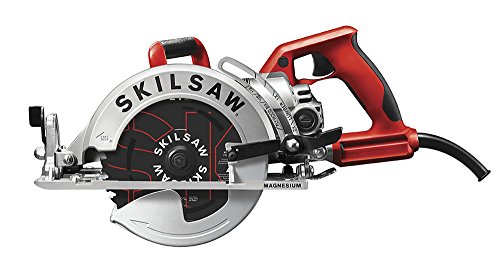
SKIL 3540-02 7-Inch Wet Tile Saw
A benchtop wet saw built around a submersible pump and sliding table, aimed at homeowners doing bathroom or kitchen tile jobs rather than daily commercial use.
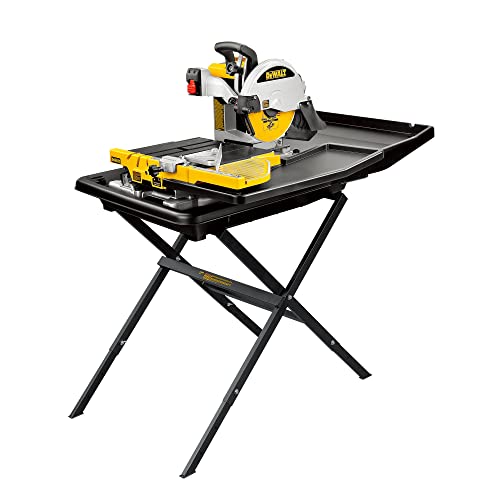
DEWALT D24000S Wet Tile Saw
A larger sliding table wet saw with a bigger water reservoir and a more powerful pump, built for contractors cutting porcelain and stone for extended periods.
Common questions
Can a wet tile saw be run without water for a quick cut?
Technically yes for a few seconds, but the blade heats up fast and tile dust starts filling the air immediately, so even a short dry pass defeats the two reasons the saw is designed to run wet in the first place.
Why does my wet saw blade smell like it’s burning?
A burning smell almost always means the blade is running dry, either because the reservoir is low, the pump has clogged with slurry, or the water line has kinked, so the fix is to stop and check the water path before continuing.
How much water does a tile saw actually need to run properly?
It needs enough to keep a continuous film on the blade at the cutting point, not a heavy spray. Most reservoirs hold enough for several cuts before needing a refill, and the pump is sized to recirculate that volume steadily rather than consume it.
Does the water need to be clean, or is tap water fine?
Plain tap water is fine. What matters more is changing it once it turns thick with slurry, since sludgy water cools and lubricates less effectively than fresh water even though it still looks wet.
How often should the water in the reservoir be changed?
For a single bathroom’s worth of tile, once partway through usually covers it, but on larger jobs changing the water every hour or two of active cutting keeps the slurry from building up enough to affect the cut.
Can a wet tile saw be used indoors?
Yes, that’s one of its advantages over dry cutting, since the water keeps dust contained to the saw and tray rather than spreading through the room, though a drop cloth and towel for the inevitable splash is still worth having.
Why does my cut come out rough even with water running?
A rough edge with adequate water usually points to a dull or wrong type blade, feeding the tile too fast through the cut, or a blade that isn’t fully seated and is wobbling slightly rather than running true.
Do natural stone tiles need wet cutting the same way porcelain does?
Yes, and arguably more so, since natural stone like marble or travertine is more heat sensitive and prone to cracking from thermal stress than manufactured porcelain, making steady water flow even more important.
Can a dry cut blade be swapped onto a wet saw instead?
Physically it often fits, but doing so defeats the saw’s cooling design and will wear the blade and the saw’s bearings faster, so it’s not something manufacturers recommend even when the blade mounts line up.
Why does the work area turn into such a mess with a wet saw?
The water has to go somewhere once it’s done its job, and slurry splashes off a spinning blade more than people expect, which is why most users run the saw outdoors or over a drop cloth rather than directly on finished flooring.
Is a sliding wet saw better than a stationary one for keeping water on the blade?
Sliding table saws tend to keep the blade partially submerged in the water tray through the whole cut, which some users find gives more consistent cooling than a stationary table where the tile moves past a fixed, pump fed blade.
Does cutting speed change how much water is needed?
Faster blade speeds generate more friction heat, so a saw running at a higher RPM benefits from more consistent water contact, though most tile saws are already set to a speed matched to their standard water delivery rate.
Can hard water cause problems inside a wet saw’s pump over time?
Yes, mineral deposits from hard water can build up inside a submersible pump over repeated use, which is part of why rinsing the pump and reservoir after each job helps it keep priming and flowing reliably.
Will a wet saw still raise dust if I don’t catch all the splash water?
Some fine spray and mist is normal, but it’s nowhere near the volume of airborne dust a dry cut produces, and most of what escapes is simply water droplets rather than silica particles.
Is it safe to pour the leftover slurry water down a household drain?
It’s better avoided repeatedly, since tile slurry can settle and build up in pipes over time; many users let it settle in a bucket and dispose of the solid sediment separately rather than pouring straight down the sink.
Final word
The water isn’t a nice to have feature bolted onto a tile saw, it’s doing two jobs the blade cannot do without: keeping itself cool enough to keep cutting and keeping dangerous dust out of the air you’re breathing. A wet saw that’s running dry, even briefly, is a saw that’s about to need a new blade or a cleanup it didn’t need to cause.
Jake Monroe
Jake worked as a residential contractor for over a decade before shifting to full-time writing. He evaluates power tools, hand tools and workshop gear through the lens of someone who has actually used them on job sites, not just read the box.