Commercial grade circular saws built for daily framing
Skilsaw SPT77WML-01 wins for framing crews, pairing worm drive torque with a 2-3/8 inch cut at 90 degrees. Makita 5007MG spins faster at 5,800 RPM and adds dual LEDs. Roof and ladder work suits the 8.8 pound DEWALT DWE575SB. All three run 7-1/4 inch blades on 15 amp motors.
Skilsaw SPT77WML-01 fits crews who rip wet joists every day. Gearing down to 5,300 RPM buys pulling power that sidewinders lose in soaked 2×12 stock. Magnesium holds the whole tool to 11.6 pounds, light for a worm drive. Overhead work is the catch, since that weight tells after an hour on a ladder.
Amp ratings sit at 15 on almost every full-size saw, so the box settles nothing. We compared blade speed, depth at 90 and 45 degrees, bevel limits, shoe and housing material, brake behaviour and power platform. Owner reports on shoe flex, arbor runout and brush life broke the remaining ties.
How to choose
What makes a circular saw commercial grade Amp ratings rarely separate these tools, since nearly every full-size saw claims 15. Look instead at what the housing and shoe are made from. Magnesium and cast aluminium keep their shape after a fall off staging, while stamped steel bends and every cut afterwards drifts. Serviceable brushes, a replaceable cord and stocked spare parts count for more across five years than any number on the box. Depth at 90 degrees should clear 2-3/8 inches so two-by stock goes through in a single pass.
Worm drive vs sidewinder: how the two differ Worm drive saws sit the motor behind the blade and gear it down. Torque climbs, blade speed drops, and long rips in soaked lumber stop stalling. Sidewinders mount the motor beside the blade, which shortens the tool and saves two to three pounds. That compact shape earns its keep between studs and on a ladder. Framers on the West Coast still reach for worm drive, while remodel and finish crews rarely do.
Corded or cordless for jobsite work Blade speed no longer divides the two camps, as the 5,800 RPM Milwaukee 2732-20 shows. Runtime does. Ripping sheathing through a morning empties packs, and wet pressure-treated stock empties them sooner. Most crews park a corded saw at the cut station and carry cordless where extension cords turn a framed deck into a trip hazard. FLEXVOLT and M18 High Output packs narrow the gap for occasional heavy rips.
Matching depth, bevel and blade to the cut Bevel range decides whether hip, valley and compound rafter cuts are possible, and 55 degrees or more covers nearly all of them. Depth at 45 degrees falls well under the 90 degree figure, often to around 1-7/8 inches, so read that spec before buying for angled framing. Tooth count handles the rest. A 24 tooth carbide blade rips fast and clears chips; 40 to 60 teeth cut tearout in plywood and melamine. Rough edges usually mean the wrong blade rather than a weak saw.
Our top picks
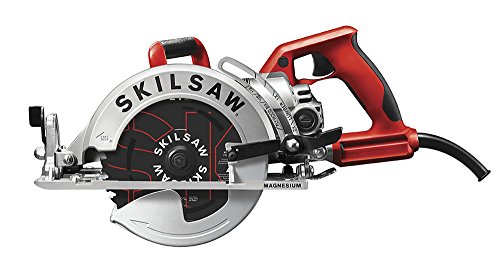
Skilsaw SPT77WML-01
Motor sits behind the blade and drives it through a gearset, trading speed for pulling power. That layout keeps cutting through soaked 2×12 joists where sidewinders bog down. Magnesium shoe and housing hold the tool to 11.6 pounds, and a 2-3/8 inch depth clears nominal two-by lumber in one pass.
Pros
- Gear reduction holds blade speed in wet dimensional lumber
- Magnesium shoe shrugs off drops that bend stamped steel bases
- Blade on the left keeps the cut line visible to right-handed users
Cons
- Heaviest pick here, which tells on ladder and overhead cuts
- Gear oil needs topping up across years of daily service

Makita 5007MG
Depth reaches 2-1/2 inches at 90 degrees, the deepest figure in this lineup. Magnesium guards and base absorb drops off staging instead of deforming. Two LEDs light the kerf for crawlspaces and unlit framing bays, and the 15 amp motor turns 5,800 RPM at 10.6 pounds.
Pros
- Deepest 90 degree cut of the seven at 2-1/2 inches
- Dual LEDs show the line in dark framing bays
- Magnesium housing saves a full pound against the worm drive
Cons
- Blade coasts after release, since no electric brake is fitted
- Rubberised cord stiffens noticeably below freezing
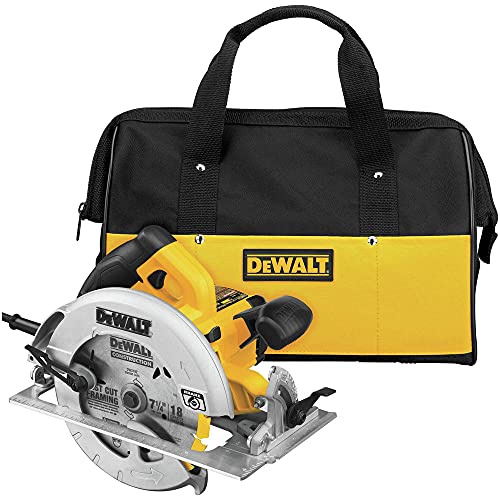
DEWALT DWE575SB
Weight of 8.8 pounds is the whole argument, and it shows after an afternoon cutting sheathing on a roof deck. An electric brake stops the blade within about a second, tightening the cycle at a repetitive cut station. Depth still hits 2-9/16 inches and bevel swings to 57 degrees for rafter layout.
Pros
- Lightest corded saw here, which cuts arm fatigue over a full day
- Brake shortens the gap between repeat cuts
- Dust blower keeps sawdust off the pencil line
Cons
- 5,200 RPM is the slowest corded speed and shows in engineered beams
- Plastic guard scuffs sooner than magnesium versions
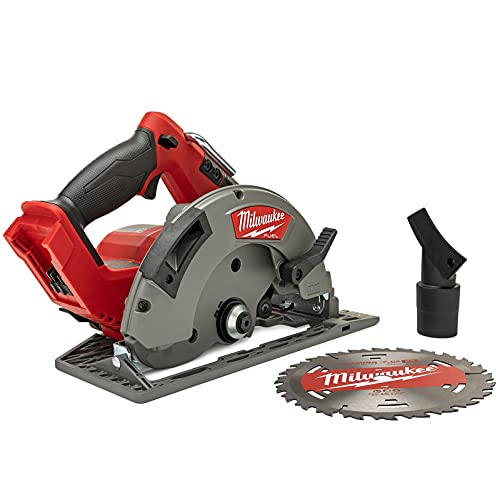
Milwaukee 2732-20 M18 FUEL
Brushless M18 FUEL motor reaches 5,800 RPM, matching corded sidewinders on blade speed. Depth of 2-1/2 inches covers 2x framing, and a magnesium shoe survives being dragged over concrete. Sold as a bare tool, so plan on a High Output pack before ripping sheet goods all morning.
Pros
- No cord to drag across a framed deck or trip a crew
- Brake and rafter hook suit repetitive cutting at height
- Runs the same M18 packs as the rest of the line
Cons
- Battery and charger are not in the box
- Wet pressure-treated stock drains packs quickly

DEWALT DCS578B FLEXVOLT
Sixty volts gives this brushless saw headroom to rip laminated veneer lumber without stalling mid-kerf. Blade speed of 5,800 RPM and a 2-9/16 inch depth put double top plates through in one pass. Brake and rafter hook come standard, and any FLEXVOLT pack already in your bag will run it.
Pros
- Rips LVL and thick engineered beams without bogging
- Deepest cordless cut in this comparison at 2-9/16 inches
- FLEXVOLT packs also power 20V MAX tools
Cons
- Fitting a 9.0Ah pack pushes weight past every corded pick
- Bare tool only, so platform buy-in comes first

Metabo HPT C7SB3
Six thousand RPM tops every saw here, and that speed leaves cleaner edges in plywood and OSB. Bevel travel runs to 55 degrees with a positive stop at 45, which covers hip and valley work. Base is aluminium rather than magnesium, so a hard drop onto rebar will dent it.
Pros
- Highest no-load speed in the group for smooth sheet-good cuts
- 55 degree bevel reaches common roof framing angles
- Bright base is easy to spot on a cluttered deck
Cons
- Aluminium shoe dents where magnesium would not
- No electric brake, so the blade coasts between cuts

Bosch CS5
Accuracy rather than raw torque drives this design, and a composite footplate that resists warping is how Bosch gets there. Speed of 5,600 RPM suits plywood, MDF and finish stock where tearout costs more than pace. Weight of 10.3 pounds lands between the framing saws and the lightweight DEWALT.
Pros
- Stiff footplate keeps long rip cuts square
- Bevel detents at 22.5 and 45 degrees speed up setup
- Spindle lock turns a blade change into a one-wrench job
Cons
- Falls behind worm drive saws for torque in wet framing lumber
- Dust port needs an adapter for common vacuum hoses
Side by side
| # | Model | Motor | Best for | Score | Price |
|---|---|---|---|---|---|
| 1 | Skilsaw SPT77WML-01 | 15 amp, 5,300 RPM | Best overall | 9.4 | Check price |
| 2 | Makita 5007MG | 15 amp, 5,800 RPM | Best value | 9.2 | Check price |
| 3 | DEWALT DWE575SB | 15 amp, 5,200 RPM | Best lightweight for all-day framing | 9.0 | Check price |
| 4 | Milwaukee 2732-20 M18 FUEL | M18 REDLITHIUM, 18V | Best cordless | 8.8 | Check price |
| 5 | DEWALT DCS578B FLEXVOLT | FLEXVOLT 60V MAX | Best cordless for engineered lumber | 8.6 | Check price |
| 6 | Metabo HPT C7SB3 | 15 amp, 6,000 RPM | Best budget | 8.3 | Check price |
| 7 | Bosch CS5 | 15 amp, 5,600 RPM | Best for bevel cuts and sheet goods | 8.0 | Check price |
Questions worth asking
What does commercial grade mean for a circular saw?
It points to tools built for daily use: cast magnesium or aluminium housings, brushes you can replace, and parts that stay in stock. Homeowner saws use stamped steel shoes and sealed assemblies. Warranty terms and parts availability are the practical test.
Is a worm drive saw better than a sidewinder?
Worm drive supplies more torque for long rips in wet lumber, which is why framers keep buying it. Sidewinders weigh less and fit tighter spaces, so remodel and finish crews prefer them. Blade side and weight decide most purchases, not power.
How deep does a 7-1/4 inch circular saw cut?
Expect roughly 2-3/8 to 2-9/16 inches at 90 degrees, enough for nominal two-by lumber in one pass. Tilt to 45 degrees and that drops to around 1-7/8 inches. Check the 45 degree figure if rafters are part of the job.
Can a cordless circular saw replace a corded one on site?
For framing, blocking and sheathing, yes. Owners report that all-day ripping still drains packs faster than a crew can charge them. Keeping one corded saw at the cut table remains the common setup.
Does an electric brake on a circular saw matter?
It halts the blade a second or so after you release the trigger. That speeds up repetitive cuts and reduces the chance of a spinning blade meeting a cord or a leg. DWE575SB, 2732-20 and DCS578B all include one.
Which blade is best for framing lumber?
A 24 tooth carbide framing blade cuts fastest and clears sawdust well. Move to 40 teeth or higher for plywood, and use a dedicated plywood or melamine blade where the finished face shows. Carry both in the truck.
What is the best circular saw for roof and ladder work?
Weight decides it, and the DEWALT DWE575SB at 8.8 pounds is the lightest corded option here. Its 57 degree bevel also covers rafter angles. Cordless suits roof decks too, since there is no cord to snag on trusses.
Are magnesium shoes worth it over aluminium?
Magnesium resists denting better and weighs less for the same stiffness, which is why Skilsaw, Makita and Milwaukee use it. Aluminium bases like the Metabo HPT C7SB3 work fine with reasonable care. A dented shoe throws off every cut that follows.
Skilsaw SPT77WML-01 vs Makita 5007MG: which should you buy?
Take the Skilsaw for torque through wet joists and a left-blade sightline. Choose the Makita for a pound less weight, 5,800 RPM, dual LEDs and a 2-1/2 inch cut. Both use magnesium housings and 15 amp motors.
How do you keep a circular saw cutting straight?
Check the shoe for flex and squareness against the blade first, because a bent base ruins everything after it. Support the offcut so the kerf cannot pinch the blade. On long rips, clamp a straightedge and let the shoe ride it.
The verdict
Buy the Skilsaw SPT77WML-01 if framing is the daily job, because gear-driven torque and a magnesium shoe are what survive that work. Anyone on ladders and roof decks should take the 8.8 pound DEWALT DWE575SB instead and accept its slower 5,200 RPM. Pick the Milwaukee 2732-20 only when M18 packs are already in the van, since runtime rather than power is the cordless ceiling.
Jake Monroe
Jake worked as a residential contractor for over a decade before shifting to full-time writing. He evaluates power tools, hand tools and workshop gear through the lens of someone who has actually used them on job sites, not just read the box.


