Wet Tile Saws for Porcelain, Stone, and Job Site Speed
The DEWALT D24000 handles daily contractor cutting with a sliding table built for large porcelain slabs. The SKIL 3540-02 suits DIY bathroom projects at a light weight and low cost. The MK Diamond MK-370EXP fits crews cutting dense stone in tight spaces.
The DEWALT D24000 rips tile up to 3.25 inches thick using a 15 amp motor and a fence rated for stone and porcelain, making it the strongest all-around pick here.
Benchtop models suit occasional DIY jobs, while stand-mounted saws hold up to daily contractor cutting, so motor power, table travel, and portability guided which seven made this list based on specifications and job type.
The best picks, ranked
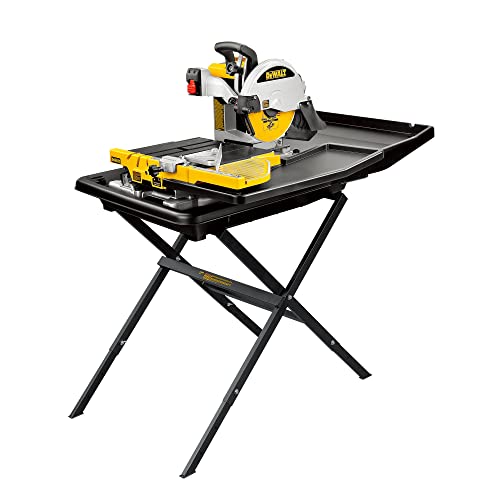
DEWALT D24000 Wet Tile Saw
A sliding table rips 24 inches and bevels to 45 degrees on this 15 amp saw, covering porcelain and stone alike. Stainless steel resists rust in the water reservoir after repeated jobsite use. Contractors lean on it for daily cutting, not just occasional home projects.
Pros
- Sliding table rips large slabs
- Stainless steel water reservoir resists corrosion
- Bevels to 45 degrees
Cons
- Heavy at over 100 pounds
- Takes up significant workspace
SKIL 3540-02 Wet Tile Saw
Bathroom and kitchen tile projects suit this saw’s 7 inch blade and adjustable rip fence well. Weighing under 25 pounds, one person can carry the table between rooms without help.
Pros
- Lightweight for one person to carry
- Affordable for occasional projects
- Adjustable rip fence for consistent cuts
Cons
- Smaller motor struggles with thick stone
- Not built for continuous daily use

MK Diamond MK-370EXP Wet Tile Saw
A 1.5 hp motor paired with a high volume water pump gives this compact saw an edge on dense natural stone. Installers cutting granite or marble get cleaner edges than lower powered benchtop saws deliver.
Pros
- Strong motor cuts dense stone cleanly
- Compact footprint for tight jobsites
- High water flow reduces blade heat
Cons
- Smaller rip capacity than full stand saws
- Higher cost than basic benchtop models

RIDGID R4030S Tile Saw
Large format porcelain panels fit easily under this saw’s 34 inch rip capacity and folding stand. A built-in laser guide keeps long straight cuts accurate, a common need in flooring installs.
Pros
- Handles oversized porcelain panels
- Folding stand simplifies transport
- Laser guide improves long cut accuracy
Cons
- Bulky even when folded
- Overkill for small bathroom jobs

Kobalt KWS 7-Inch Wet Tile Saw
Repeatable cuts come from the rack and pinion fence on this stainless steel benchtop table. Homeowners tiling one or two rooms get fence precision usually reserved for pricier saws.
Pros
- Rack and pinion fence improves accuracy
- Stainless table resists water damage
- Reasonable weight for occasional moves
Cons
- Water pump is louder than premium models
- Fence adjustment feels stiff out of the box
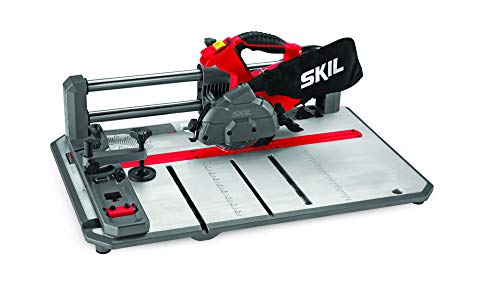
SKIL 3550-02 Flooring Saw
A low profile table lets installers slide large flooring tiles across without lifting them high. An included stand supports standing use through long jobs.
Pros
- Low table height eases sliding large tiles
- Folding stand included at this price
- Good balance of power and portability
Cons
- Stand legs feel less rigid than pro models
- Rip fence lacks fine micro-adjustment

Ryobi WS722S Tile Saw
A single bathroom remodel is well within reach for this affordable saw’s 7 inch blade and stamped steel table. It skips the sliding table found on pricier models but manages standard ceramic tile without issue.
Pros
- Low entry cost for first-time buyers
- Compact enough for garage storage
- Adequate power for standard ceramic tile
Cons
- Table flexes slightly under larger tiles
- Water tray is smaller, needs frequent refilling
Before you buy
What to look for Motor size should match the material, not the budget. A 5 to 7 amp motor handles ceramic fine, but porcelain and natural stone need 1.5 hp or more to avoid chipped edges. Check max rip and depth against tile size before buying.
Benchtop vs stand saws Single rooms suit a benchtop saw like the SKIL 3540-02, which stores away easily afterward. Larger volumes and big format tile call for a stand saw such as the RIDGID R4030S, which needs more storage space between jobs.
Best for a single home project A benchtop saw under 30 pounds, like the SKIL 3540-02 or Kobalt KWS, covers a kitchen backsplash or one bathroom without a large investment. Renting a pro saw rarely pays off below 200 square feet.
Best for contractors and daily use Budget pumps and fences wear out fast under daily cutting. Stainless components and sliding tables on the DEWALT D24000 and RIDGID R4030S survive repeated jobsite transport and continuous use.
Side by side
| # | Model | Motor | Best for | Score | Price |
|---|---|---|---|---|---|
| 1 | DEWALT D24000 Wet Tile Saw | 15 amp | Best overall | 9.5 | Check price |
| 2 | SKIL 3540-02 Wet Tile Saw | 5.5 amp | Best for DIY | 8.6 | Check price |
| 3 | MK Diamond MK-370EXP Wet Tile Saw | 1.5 hp | Best for stone | 9.0 | Check price |
| 4 | RIDGID R4030S Tile Saw | 15 amp | Best for large format tile | 9.1 | Check price |
| 5 | Kobalt KWS 7-Inch Wet Tile Saw | 1.5 hp | Best value | 8.4 | Check price |
| 6 | SKIL 3550-02 Flooring Saw | 12 amp | Best for flooring installers | 8.8 | Check price |
| 7 | Ryobi WS722S Tile Saw | 1.3 hp | Best budget | 8.0 | Check price |
Common questions
What size wet saw do I need for porcelain tile?
A 7 inch blade handles most residential porcelain up to 3/4 inch thick. Large format panels over 24 inches need at least a 20 inch rip capacity, like the RIDGID R4030S offers.
Can a wet tile saw cut natural stone?
Yes, but stone needs a higher powered motor and steady water flow to avoid cracking. The MK Diamond MK-370EXP is built specifically for granite and marble tile.
Is a benchtop tile saw good enough for a bathroom remodel?
For one bathroom, a benchtop saw like the SKIL 3540-02 or Kobalt KWS provides enough rip capacity and power. Whole-home projects benefit more from a stand saw.
Wet saw vs dry cutting, which is better for tile?
Water cools the blade on a wet saw, cutting down on dust and chipping across porcelain and stone. Dry cutting handles quick small cuts but leaves more dust and rougher edges.
How thick a tile can these saws cut?
Most benchtop saws here top out around 1.25 inches thick. The DEWALT D24000 extends to 3.25 inches, covering thicker pavers and stone slabs.
Do wet tile saws need a water hookup?
No. All seven models use a self-contained reservoir and pump. Fill the tray manually and the pump recirculates water to the blade during cutting.
What blade size works with these saws?
Five of the seven models use a 7 inch blade. The DEWALT D24000 and RIDGID R4030S step up to a 10 inch blade for larger rip capacity and thicker material.
Are wet tile saws safe to use indoors?
Compared with dry cutting, yes, since water knocks down airborne dust. Ventilate the room anyway and lay a tarp to catch spray from the pump.
Which wet tile saw is best for large format porcelain?
The RIDGID R4030S handles panels up to 34 inches wide thanks to its folding stand and wide rip capacity, well beyond what benchtop saws manage.
The bottom line
The DEWALT D24000 is the strongest overall pick for anyone cutting porcelain or stone on a regular basis, thanks to its sliding table and stainless reservoir. Homeowners tackling a single room should choose the SKIL 3540-02 instead to save weight and cost. Skip the smaller benchtop saws entirely for any project involving large format tile over 24 inches.
Jake Monroe
Jake worked as a residential contractor for over a decade before shifting to full-time writing. He evaluates power tools, hand tools and workshop gear through the lens of someone who has actually used them on job sites, not just read the box.