Sony 70-200mm f/2.8 GM II Review: Worth the Upgrade?
Sony FE 70-200mm f/2.8 GM OSS II leads E-mount telephoto zooms for portraits, weddings, sport, and events, weighing around 1045 grams with fast autofocus. Tamron 70-180mm f/2.8 G2 covers similar ground smaller and cheaper. Sony’s f/4 Macro G OSS II trades a stop of light for lighter travel weight.
Serious E-mount photographers who need a fast telephoto zoom reach for the Sony FE 70-200mm f/2.8 GM OSS II first. Constant f/2.8 brightness, fast reliable autofocus, and class-leading light weight define this lens over every rival tested here.
A 70-200mm f/2.8 stays the classic working zoom for wedding, sport, portrait, and event photographers who need reach, subject separation, and low-light performance in one lens. Sony’s second-generation GM version shed weight while improving optics over the original, so we compared sharpness at 70mm, 135mm, and 200mm, autofocus speed for moving subjects, weight, minimum focus distance, and teleconverter compatibility across seven lenses, then weighed that against what owners report about handling a full working day.
What matters most
What to look for in a 70-200mm f/2.8 telephoto zoom Weight defines how long you can hand-hold a lens through a wedding day or field shoot. At roughly 1045 grams the GM II undercuts most rival f/2.8 zooms by hundreds of grams. Four XD linear motors drive autofocus fast and quiet enough for stills bursts and clean video, and optics hold sharpness into the corners even wide open at 200mm. Closer minimum focus distance and 1.4x or 2x teleconverter support extend its range further than most competitors.
Who should buy the GM II Wedding and event shooters, portrait photographers, and indoor or field sport photographers earn back the cost fastest. Constant f/2.8 keeps shutter speeds high in dim churches and gymnasiums, while the 70-200mm range covers a tight environmental portrait through a distant field moment. Occasional daylight shooters save weight and money with an f/4 version instead, without much practical loss.
Best alternatives for value, travel, and reach Buyers who want f/2.8 performance for less should compare the Tamron 70-180mm G2, which gives up 20mm of reach and stabilization for a smaller, cheaper body. Travelers and hybrid video shooters save real weight with the f/4 Macro G instead, gaining half-life-size macro focusing in the process. Wildlife photographers needing more than 200mm should look at the 100-400mm GM.
GM II vs the original GM: is the upgrade worth it Weight reduction drives most upgrade decisions, since the Mark II sheds roughly 435 grams versus the original’s 1480. Faster XD linear motor autofocus and closer minimum focus distance add further reasons to switch. Photographers who only care about image quality and can live with the extra weight still get excellent results from the original, often for considerably less used.
The best picks, ranked
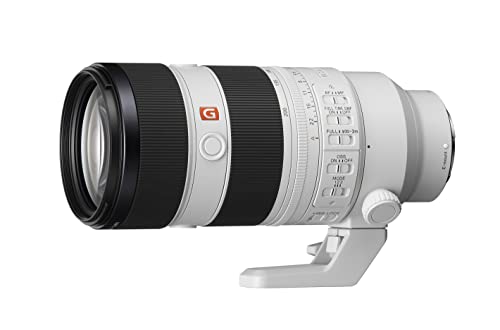
Sony FE 70-200mm f/2.8 GM OSS II
Professionals and committed enthusiasts covering portraits, weddings, indoor sport, and events on Sony E-mount need one telephoto, and this is it. Four XD linear motors drive fast, quiet, accurate autofocus at around 1045 grams, among the lightest lenses in its class, while sharpness holds up even wide open at 200mm. Extracting its full tracking potential really needs a recent Alpha body.
Pros
- Very light for a fast 70-200mm
- Fast, quiet, accurate autofocus
- Sharp across the range even wide open
Cons
- Premium professional price
- Best tracking needs a recent Alpha body

Tamron 70-180mm f/2.8 Di III VXD G2
Photographers who want f/2.8 telephoto performance without the professional outlay land here. Twenty millimeters of reach disappears at the long end, in exchange for a smaller, lighter body and a much lower price. Closer focusing and teleconverter support arrive new in this second generation, based on published specifications.
Pros
- Much lower cost than the GM
- Smaller and lighter to carry
- Fast VXD linear focus motor
Cons
- Shorter 180mm maximum reach
- No built-in optical stabilization

Sony FE 70-200mm f/4 Macro G OSS II
Hybrid shooters and hikers who value weight over extra brightness pick this sibling instead. One stop of light trades for half-life-size macro focusing and a slimmer body at 794 grams. Portrait subject separation runs weaker than the f/2.8 delivers in low light.
Pros
- Lighter and easier to travel with
- Half-life-size macro focusing
- Lower cost than the f/2.8
Cons
- One stop slower at f/4
- Less subject separation for portraits

Sony FE 70-200mm f/2.8 GM OSS
Budget-conscious buyers entering Sony’s professional telephoto line find real savings in the previous generation, sold used for meaningfully less than the Mark II. Weight climbs to 1480 grams and autofocus trails the newer linear motors, though image quality still holds up well. Full 200mm reach and teleconverter support carry over unchanged.
Pros
- Excellent optics at a lower used price
- Full 200mm reach and f/2.8
- Accepts Sony teleconverters
Cons
- Considerably heavier than the Mark II
- Slower autofocus than the newer version

Sigma 70-200mm f/2.8 DG DN OS Sports
Photographers wanting the full 200mm range and f/2.8 in a rugged body for less money should compare Sigma’s Sports line entry. Weather sealing and dual HLA focus motors come standard at 1335 grams, well above the GM II’s weight. Autofocus trails Sony’s own system by a small margin.
Pros
- Full range and f/2.8 for less
- Solid weather-sealed build
- Dual HLA focus motors
Cons
- Much heavier than the GM II
- Autofocus slightly behind Sony native
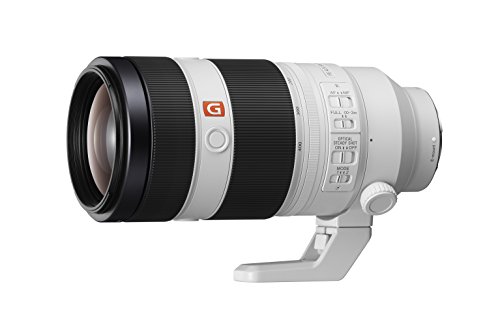
Sony FE 100-400mm f/4.5-5.6 GM OSS
Wildlife and distant sport photographers who need more than 200mm should look here instead. Reach extends to 400mm at the cost of two stops of aperture and portrait-friendly framing. Sharp G Master optics and strong teleconverter compatibility carry over from Sony’s flagship telephoto line.
Pros
- Long reach for wildlife and sport
- Sharp G Master optics
- Works well with teleconverters
Cons
- Slower variable aperture
- Too long for general portraits
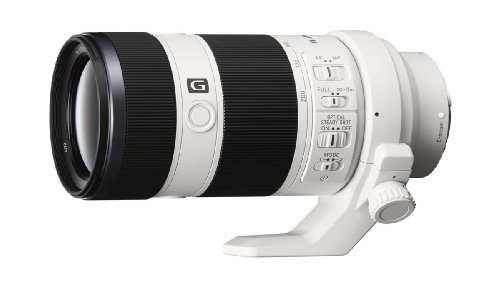
Sony FE 70-200mm f/4 G OSS
Enthusiasts wanting the focal range without spending on f/2.8 find the most affordable native option here. A stop of light and the newer macro focusing disappear, but the lens stays sharp and light at 840 grams. Reliable optical stabilization makes it a common first telephoto purchase.
Pros
- Lowest cost native 70-200mm
- Light and easy to handle
- Reliable optical stabilization
Cons
- One stop slower at f/4
- Older, slower autofocus system
Compared at a glance
| # | Model | Mount | Best for | Score | Price |
|---|---|---|---|---|---|
| 1 | Sony FE 70-200mm f/2.8 GM OSS II | Sony E full frame | The one reviewed | 9.6 | Check price |
| 2 | Tamron 70-180mm f/2.8 Di III VXD G2 | Sony E full frame | Best value alternative | 9.2 | Check price |
| 3 | Sony FE 70-200mm f/4 Macro G OSS II | Sony E full frame | Best lighter option | 9.0 | Check price |
| 4 | Sony FE 70-200mm f/2.8 GM OSS | Sony E full frame | Best used pick | 8.8 | Check price |
| 5 | Sigma 70-200mm f/2.8 DG DN OS Sports | Sony E full frame | Best third-party f/2.8 | 8.7 | Check price |
| 6 | Sony FE 100-400mm f/4.5-5.6 GM OSS | Sony E full frame | Best for reach | 8.6 | Check price |
| 7 | Sony FE 70-200mm f/4 G OSS | Sony E full frame | Best budget zoom | 8.3 | Check price |
Good to know
Is the GM II worth upgrading from the original GM?
For many working photographers, yes, mainly for the large weight reduction and faster XD linear motor autofocus. Closer minimum focus distance adds further value. Buyers who only care about image quality and can live with extra weight still get excellent results from the original, often for less money used.
Does the 70-200mm f/2.8 GM II work with teleconverters?
Yes, it accepts Sony’s 1.4x and 2x teleconverters, extending reach to 280mm or 400mm at the long end. Each teleconverter reduces the effective maximum aperture by one or two stops respectively.
How does it compare to the Tamron 70-180mm f/2.8?
Tamron’s lens runs smaller, lighter, and much cheaper but reaches only 180mm and skips optical stabilization. GM II adds 20mm of reach, in-lens stabilization, teleconverter support, and faster autofocus. Choose Tamron for value and GM II for professional reliability and reach.
Is f/2.8 necessary or will f/4 do?
It depends on your work. F/2.8 matters most for indoor events, low light, and stronger background blur in portraits. Daylight and outdoor shooters get similar sharpness from the lighter, cheaper f/4 versions with less cost and weight.
How heavy is the GM II compared to rivals?
At around 1045 grams it ranks among the lightest full-frame 70-200mm f/2.8 zooms available, noticeably lighter than the 1335 to 1480 gram alternatives from Sigma and the first-generation GM. That difference matters across a long shoot.
Can it be used for wildlife or sport?
It suits field and indoor sport well, thanks to fast autofocus and f/2.8 brightness. Distant wildlife exceeds its 200mm reach, so a teleconverter or a longer lens like the 100-400mm GM fits small or far subjects better.
Does it have optical stabilization?
Yes, Optical SteadyShot works alongside in-body stabilization on Alpha cameras. That combination helps handheld shooting at slower shutter speeds and steadies handheld video footage.
Is it good for video?
It performs well for video, since linear motors stay quiet and focus breathing stays well controlled. Constant f/2.8 keeps exposure steady across the zoom range, making it a capable hybrid lens for run-and-gun filming when paired with a stabilized body.
Sony 70-200mm f/2.8 GM II vs Sigma 70-200mm f/2.8 Sports: which should I buy?
Sigma undercuts the Sony on price while matching the full 200mm range and f/2.8 aperture in a rugged, weather-sealed body. Sony’s GM II wins on weight, savings around 290 grams, and slightly faster autofocus. Choose Sigma to save money, GM II to save weight.
The bottom line
Sony FE 70-200mm f/2.8 GM OSS II stands close to a reference telephoto for E-mount, pairing class-leading light weight with fast autofocus and sharpness that holds up wide open across the whole range. Weddings, events, portraits, and sport all suit a working photographer carrying this lens all day. Buyers stretched by the professional price get most of the performance from the Tamron 70-180mm f/2.8 G2 in a smaller body, while travel and video shooters should compare the FE 70-200mm f/4 Macro G OSS II.
Marcus Chen
Marcus covered consumer electronics for enthusiast tech publications for six years before joining ChoiceCrest. He specializes in translating manufacturer spec sheets into plain-language buying advice, with a focus on audio, computing accessories and smart-home gear.