Is the Fujifilm X-M5 Worth Buying for Vlogging?
Fujifilm X-M5 packs a 26MP APS-C sensor and 6.2K video into the smallest, cheapest body in Fujifilm’s X series, built for vloggers and first camera buyers. It skips a viewfinder and in body stabilization, limiting serious stills and handheld video. Step up to the X-S20 for both, or the X-T50 for 40MP resolution.
Buy the Fujifilm X-M5 if you want the smallest, cheapest route into Fujifilm color and 6.2K video for social content or travel. Skip it if you need a viewfinder for bright light or in body stabilization for handheld footage; the X-S20 covers both. Owners praise how pocketable it feels, though the omissions show up once the work gets more demanding.
Fujifilm built this around the proven 26MP X-Trans 4 sensor, then added a fully articulating screen, faster subject detection and a dedicated film simulation dial. That combination gives strong video and real portability at one of the lowest prices in the range. We compared sensor performance, video specs, stabilization, autofocus and price against six other entry APS-C cameras, then weighed owner reports on the missing viewfinder.
The top picks, ranked
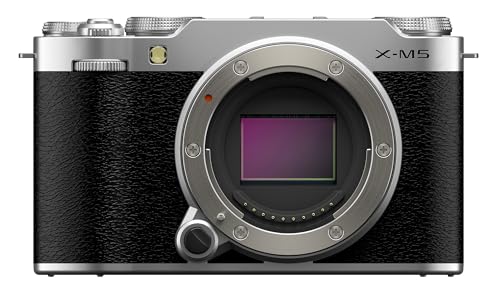
Fujifilm X-M5
Content creators, travelers and first camera buyers are the target here, and the X-M5 delivers for that group. It pairs the 26MP X-Trans 4 sensor with 6.2K video, a fully articulating screen, a film simulation dial and quick subject detection autofocus. There is no viewfinder, so bright sunlight makes screen framing hard, and no in body stabilization, so handheld video needs the digital mode or a gimbal.
Pros
- Small, light body at a low price
- 6.2K video with strong vlogging features
- Film simulation dial delivers Fujifilm color
Cons
- No viewfinder for framing in bright light
- No in body stabilization for handheld video
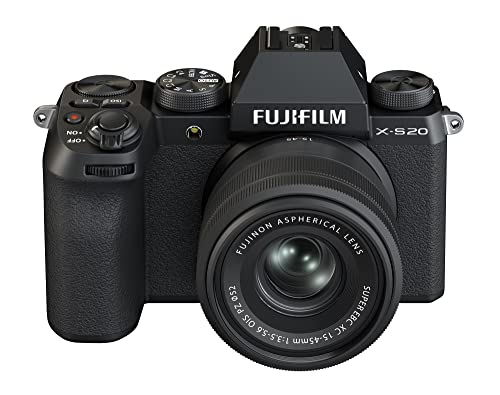
Fujifilm X-S20
Everything the X-M5 skips shows up here: about seven stops of in body stabilization, an electronic viewfinder, a bigger battery and a deeper grip. Sensor and video specs match the X-M5, so image quality stays familiar. Size, weight and price all increase, which is the trade creators make for steadier handheld footage.
Pros
- In body stabilization steadies handheld video
- Electronic viewfinder plus a larger battery
- Deeper grip suits bigger lenses
Cons
- Larger and heavier than the X-M5
- Costs more than the pocketable X-M5

Fujifilm X-T50
A newer 40MP X-Trans 5 sensor sets this apart, paired with in body stabilization and a viewfinder in a still compact body. Detail jumps well past the X-M5, and the film simulation dial carries over. Video stays capable rather than exceptional, since stills photographers are the real audience.
Pros
- 40MP sensor captures far more detail
- In body stabilization and a viewfinder included
- Compact body keeps the film simulation dial
Cons
- Costs more than the X-M5
- Dense sensor needs sharper lenses to resolve

Sony ZV-E10 II
Sony’s creator focused APS-C body matches the 26MP sensor and adds 4K at 60p plus class leading autofocus. Product showcase and background defocus modes target vloggers directly. Like the X-M5 it skips a viewfinder and in body stabilization, and its color leans more neutral than Fujifilm’s film simulations.
Pros
- Class leading autofocus tracks moving subjects
- Product showcase and defocus modes for vloggers
- Large Sony APS-C lens ecosystem
Cons
- No viewfinder or in body stabilization
- Neutral color lacks Fujifilm’s film simulations

Fujifilm X-T30 II
Classic shutter and exposure dials return here, paired with a viewfinder and the same 26MP sensor as the X-M5. Stills shooters who want a traditional feel gain a viewfinder but lose in body stabilization. The screen only tilts rather than fully articulating, so vlogging is less comfortable.
Pros
- Classic exposure dials plus a viewfinder
- Same sensor and color as the X-M5
- Compact and affordable for stills shooters
Cons
- Tilting screen only, awkward for vlogging
- No in body stabilization, older video specs

Canon EOS R50
Canon’s entry mirrorless body pairs a 24MP sensor with a viewfinder, a fully articulating screen and reliable Dual Pixel autofocus. Beginners get a viewfinder the X-M5 lacks, plus an easy interface. In body stabilization is absent, and Canon’s native APS-C lens range stays smaller than Fujifilm’s.
Pros
- Viewfinder plus a fully articulating screen
- Reliable Dual Pixel autofocus for beginners
- Simple, approachable interface
Cons
- Smaller native APS-C lens selection
- No in body stabilization, 4K capped at 30p

OM System OM-5
A small Micro Four Thirds body brings strong in body stabilization, thorough weather sealing and computational modes like handheld high resolution. Low light performance trails the X-M5’s larger APS-C sensor, and film simulations are absent. Hikers and travelers shooting in harsh conditions gain durability instead.
Pros
- Strong in body stabilization for handheld shots
- Thorough weather sealing for outdoor use
- Computational modes add handheld high resolution
Cons
- Smaller sensor limits low light performance
- No Fujifilm film simulations
How to pick the right one
Who should buy the Fujifilm X-M5? Content creators, travelers and first time interchangeable lens buyers fit this camera best. Social platforms and travel work suit its size and video far better than a demanding stills workflow. Anyone who needs a viewfinder in bright light, stabilization for handheld video or maximum resolution should look elsewhere in Fujifilm’s lineup.
What features actually stand out? Size comes first: this is the smallest, lightest body in the current X series. 6.2K video and vlogging friendly features, including a solid built in microphone setup, come second. A dedicated film simulation dial lets you switch Fujifilm’s color profiles without digging through menus, and the fully articulating screen makes filming yourself straightforward.
How does it compare with the alternatives? Within Fujifilm, the X-S20 adds stabilization and a viewfinder, the X-T50 swaps in 40MP resolution, and the X-T30 II brings back classic dials. Sony’s ZV-E10 II matches the creator focus with stronger autofocus. Canon’s EOS R50 adds a viewfinder for beginners, while the OM System OM-5 trades sensor size for weather sealing. Size, price and color remain the X-M5’s advantages.
Is the X-M5 worth the money? Few cameras pack this much video and color into so small a body for so little money. You give up a viewfinder and in body stabilization to get there, which barely matters for social content or travel. Serious stills or handheld video work justifies spending more on the X-S20 or a rival with those features built in.
Side by side
| # | Model | Sensor | Best for | Score | Price |
|---|---|---|---|---|---|
| 1 | Fujifilm X-M5 | 26.1 MP APS-C X-Trans 4 | The camera reviewed | 9.4 | Check price |
| 2 | Fujifilm X-S20 | 26.1 MP APS-C X-Trans 4 | Best step up alternative | 9.2 | Check price |
| 3 | Fujifilm X-T50 | 40.2 MP APS-C X-Trans 5 HR | Best resolution alternative | 9.0 | Check price |
| 4 | Sony ZV-E10 II | 26 MP APS-C | Best vlogging rival | 8.8 | Check price |
| 5 | Fujifilm X-T30 II | 26.1 MP APS-C X-Trans 4 | Best dial led alternative | 8.6 | Check price |
| 6 | Canon EOS R50 | 24.2 MP APS-C | Best beginner rival | 8.3 | Check price |
| 7 | OM System OM-5 | 20 MP Micro Four Thirds | Best rugged compact rival | 8.0 | Check price |
Questions worth asking
Does the Fujifilm X-M5 have a viewfinder?
No electronic viewfinder is built in, so composing happens on the rear screen. That keeps the body small and affordable, though bright sunlight makes framing harder. The X-S20, X-T50 and X-T30 II all include one if that matters to you.
Is the X-M5 good for vlogging?
Yes. It records 6.2K and 4K video, includes a fully articulating screen and a capable built in microphone setup, and subject detection autofocus has improved over older entry models. The main gap is stabilization, so handheld walking shots rely on the digital mode or a gimbal.
Why doesn’t the X-M5 have in body stabilization?
Fujifilm left it out to keep the body small, light and cheap. Static or tripod shooting sees no difference. Handheld walking footage needs the digital stabilization mode, which crops the frame, or a gimbal for smoother results.
What is the difference between the X-M5 and the X-S20?
Both share the 26MP sensor and strong video specs. The X-S20 adds in body stabilization, an electronic viewfinder, a bigger battery and a deeper grip. Portability and price favor the X-M5; stabilization and a viewfinder favor the X-S20.
Is the X-M5 a good first camera?
Yes, it ranks among the friendliest entry points into a serious camera system. Film simulations produce good color with little effort, and the articulating screen suits beginners filming themselves. Some new photographers still prefer having a viewfinder for bright conditions.
Can the X-M5 use all Fujifilm X mount lenses?
Yes, it takes the standard Fujifilm X mount and works with every X series lens. Compact primes and zooms balance best on this small body. Larger telephoto lenses feel front heavy without a deeper grip like the X-S20 offers.
How good is the X-M5 for stills photography?
Stills quality stays strong, thanks to the same 26MP sensor used in several well regarded Fujifilm bodies, plus excellent color from the film simulations. Missing a viewfinder and stabilization matters more in bright or low light. Casual and travel stills perform well above the price point.
Should I choose the X-M5 or the X-T50?
The X-M5 stays smaller, cheaper and creator focused with the 26MP sensor and no viewfinder. The X-T50 uses a 40MP sensor, adds stabilization and a viewfinder, and leans toward stills. Portability and value point to the X-M5; resolution points to the X-T50.
How does the X-M5 compare to the Sony ZV-E10 II?
Both target creators with a 26MP APS-C sensor, no viewfinder and articulating screens. Autofocus tracking runs stronger on the Sony. Color differs the most: Fujifilm’s film simulations versus Sony’s more neutral rendering, plus each brand’s own lens ecosystem.
Our take
The Fujifilm X-M5 remains one of the smallest, most affordable ways into Fujifilm color and 6.2K video, which suits content creators, travelers and first time buyers well. No viewfinder and no in body stabilization limit it in bright light and handheld video. Step up to the X-S20 for those features, or the X-T50 when 40MP resolution matters more than pocket size.
Marcus Chen
Marcus covered consumer electronics for enthusiast tech publications for six years before joining ChoiceCrest. He specializes in translating manufacturer spec sheets into plain-language buying advice, with a focus on audio, computing accessories and smart-home gear.
