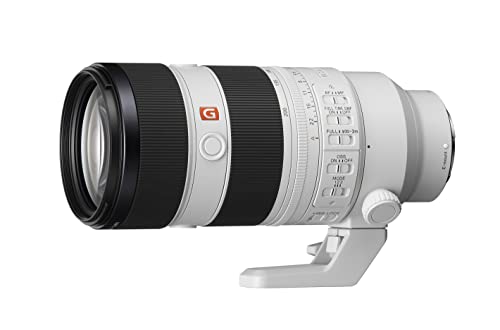
Sony A6700 Review: Does It Still Lead APS-C Cameras?
The Sony A6700 remains the strongest all-round APS-C camera, pairing AI subject tracking, 5-axis stabilisation and 4K 120p video in a compact body. It beats the Sony A6600 and ZV-E10 II on autofocus, though the Fujifilm X-T5 offers more resolution and the Canon EOS R7 suits telephoto shooters better.
The Sony A6700 pairs a 26MP APS-C sensor with AI-driven subject recognition and 5-axis in-body stabilisation, making it Sony’s most complete APS-C body yet. Enthusiasts and hybrid creators get flagship-level autofocus and 4K 120p video in a body small enough to travel with. Rivals from Fujifilm, Canon and Nikon have closed the gap, though, so the choice depends on whether stills resolution, grip size or battery life matter more to you.
Picking between similarly priced APS-C cameras gets tricky once sensor resolution, autofocus generation and lens ecosystems all pull in different directions. We chose this line-up by comparing published specifications, verified owner feedback and real use-case fit, focusing on cameras that Sony A6700 shoppers actually cross-shop on Amazon.
The top picks, ranked
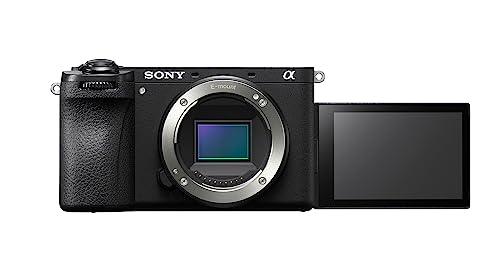
Sony A6700
The Sony A6700 targets enthusiasts and hybrid creators who want flagship autofocus in a compact APS-C body. Its AI processing unit recognises people, animals, birds and vehicles, then holds focus through fast motion. A single UHS-II slot and a small viewfinder are the main trade-offs against 5-axis stabilisation and 10-bit 4K video.
Pros
- Class-leading AI autofocus and subject tracking
- 5-axis in-body stabilisation with 10-bit 4K video
- Compact body that suits travel and everyday carry
Cons
- Single UHS-II card slot limits backup options
- Viewfinder is small next to rivals like the X-T5

Fujifilm X-T5
Fujifilm’s X-T5 is the closest photo-first rival to the A6700, built around a 40MP sensor and dedicated exposure dials. Owners report the larger viewfinder and dual card slots suit stills-heavy workflows, though its autofocus trails Sony’s for fast action. Video tops out at 6K, ahead of the A6700 on resolution but behind it on frame-rate flexibility.
Pros
- 40MP sensor resolves far more fine detail
- Dedicated dials and a larger viewfinder
- Dual card slots for in-camera backup
Cons
- Autofocus tracking lags behind Sony for action
- Higher resolution demands sharper, pricier lenses

Canon EOS R7
Canon’s EOS R7 pairs a 32MP sensor with fast burst shooting, appealing to wildlife and sports shooters who cross-shop the A6700. Its deeper grip balances telephoto lenses better than Sony’s smaller body, and dual card slots add backup security. Rolling shutter is more noticeable in silent electronic mode, according to the listing and owner reports.
Pros
- Fast burst rates suit wildlife and sports
- Deep grip balances long telephoto lenses
- Dual card slots plus higher resolution
Cons
- Native APS-C lens choice is still limited
- Rolling shutter shows in silent shutter mode
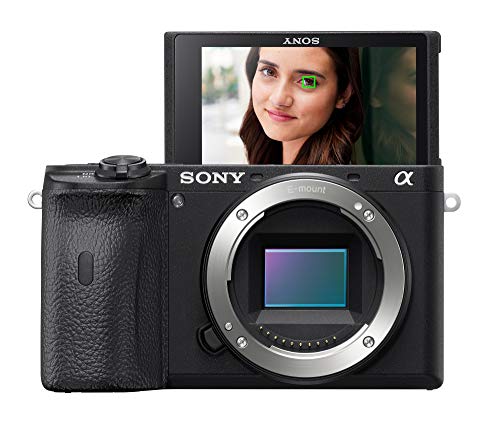
Sony A6600
The A6600 is the A6700’s direct predecessor and still sells at a lower cost. Its 24MP sensor and earlier autofocus generation trail the newer model, so subject recognition covers fewer categories and video stays at 8-bit. A larger battery than the A6700’s carries it through longer sessions, which owners frequently cite as a reason to choose it.
Pros
- Lower cost than the newer A6700
- Larger battery for longer shooting days
- Shares Sony’s full E-mount lens catalogue
Cons
- Older sensor and autofocus generation
- No 10-bit colour or high-frame-rate 4K
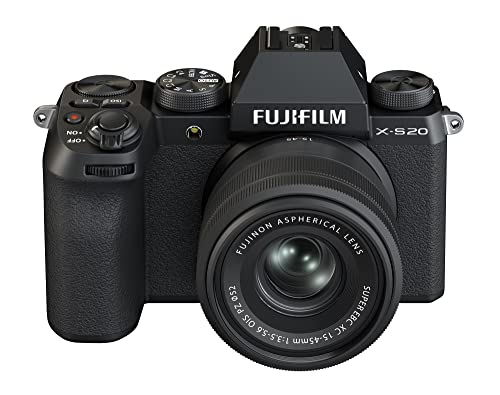
Fujifilm X-S20
Fujifilm’s X-S20 brings much of the A6700’s hybrid appeal into a grip-forward body built for creators. A 26MP sensor and a dedicated vlogging mode pair with unusually long battery life for this class. Autofocus polish falls slightly short of Sony’s system, but access to Fujifilm’s colour science and lens range offsets that for many buyers.
Pros
- Long battery life outlasts most APS-C rivals
- Beginner-friendly controls with strong video specs
- Access to Fujifilm’s X-mount lens lineup
Cons
- Autofocus tracking is a step behind Sony’s
- Single card slot limits backup options

Nikon Z50 II
Nikon updated the Z50 II with a faster processor and subject-detection autofocus borrowed from its flagship bodies. A fully articulating screen and a comfortable grip make it approachable for buyers new to interchangeable lenses. It lacks in-body stabilisation and offers a smaller native lens range than the A6700’s E-mount system, though pricing keeps it competitive.
Pros
- Comfortable grip with simple, direct controls
- Improved subject-detection autofocus for the price
- Strong value against pricier APS-C rivals
Cons
- No in-body stabilisation for stills or video
- Smaller native Z-mount APS-C lens range

Sony ZV-E10 II
The ZV-E10 II shares the A6700’s 26MP sensor but drops the viewfinder and mechanical shutter to focus on video. Creators who never compose through a viewfinder save both weight and cost by choosing it. Without in-body stabilisation, run-and-gun footage needs a gimbal or the electronic stabilisation mode to stay smooth.
Pros
- Same sensor as the A6700 at a lower cost
- Strong autofocus for talking-head video
- Lighter body built around creator workflows
Cons
- No viewfinder or in-body stabilisation
- More rolling shutter during fast motion
How they compare
| # | Model | Sensor | Best for | Score | Price |
|---|---|---|---|---|---|
| 1 | Sony A6700 | APS-C 26MP Exmor R CMOS | The camera reviewed | 9.3 | Check price |
| 2 | Fujifilm X-T5 | APS-C 40MP X-Trans CMOS | Best for resolution and dials | 9.1 | Check price |
| 3 | Canon EOS R7 | APS-C 32MP CMOS | Best for wildlife and sports | 8.9 | Check price |
| 4 | Sony A6600 | APS-C 24MP Exmor CMOS | Best value in the range | 8.7 | Check price |
| 5 | Fujifilm X-S20 | APS-C 26MP X-Trans CMOS | Best for hybrid creators on a budget | 8.5 | Check price |
| 6 | Nikon Z50 II | APS-C 21MP CMOS | Best handling for the money | 8.2 | Check price |
| 7 | Sony ZV-E10 II | APS-C 26MP Exmor R CMOS | Best for pure video creators | 8.0 | Check price |
How to pick the right one
Who should buy the Sony A6700? Enthusiasts and hybrid creators get the most from the A6700. Travellers, event shooters and YouTubers benefit from reliable autofocus paired with in-body stabilisation. Landscape photographers who prize resolution may prefer the Fujifilm X-T5’s 40MP sensor instead. Professionals needing dual-slot backup should also look elsewhere, since the A6700 ships with one card slot.
What features actually matter on the A6700? Three features define this camera. An AI processing unit recognises humans, animals, birds, insects and vehicles, then keeps focus locked as they move. Five-axis in-body stabilisation steadies handheld stills and video without added gear. Ten-bit 4K video runs up to 120p, though the fastest frame rates apply a sensor crop.
How does the A6700 compare to the Fujifilm X-T5 and Canon EOS R7? Against the Fujifilm X-T5, the A6700 gives up resolution and dials for stronger tracking and video flexibility. The Canon EOS R7 answers with a deeper grip and dual slots, useful for telephoto shooters, but its native lens range stays thin. Sony’s own ZV-E10 II shares the A6700’s sensor for less if a viewfinder never gets used, while the A6600 remains a cheaper, older-generation alternative.
Is the A6700 worth it for lenses and long-term value? Lens choice shapes the ownership cost more than the body price does. Sony’s native APS-C E-mount lineup keeps growing but still trails Fujifilm’s, so many owners add full-frame E-mount glass, which adds size and weight. Buyers already invested in E-mount gain an easy upgrade path. Shoppers starting fresh should weigh Fujifilm’s purpose-built APS-C system before committing to Sony’s.
Common questions
Is the Sony A6700 good for video?
Yes. It records 10-bit 4K up to 60p oversampled and up to 120p with a crop, backed by in-body stabilisation and AI autofocus tracking. Heavy video users should still note the single card slot and increased rolling shutter at the highest frame rates.
Does the Sony A6700 have in-body stabilisation?
Yes, 5-axis in-body stabilisation is built in, unlike the earlier A6400. It steadies handheld stills at slower shutter speeds and smooths video, and it works alongside optical stabilisation in supported lenses for extra effect.
Sony A6700 vs Fujifilm X-T5: which is better for stills?
The X-T5 offers a higher 40MP sensor, dedicated dials, a larger viewfinder and dual card slots, favouring stills photographers. The A6700 counters with stronger subject-tracking autofocus and more flexible high-frame-rate video, so hybrid and video-leaning users tend to prefer it.
Should you upgrade from the Sony A6600 to the A6700?
In most cases, yes. The A6700 adds a newer 26MP sensor, AI-based autofocus, 10-bit and high-frame-rate 4K, and a fully articulating screen. The A6600 keeps a larger battery and lower price, but its older sensor and autofocus put it a generation behind.
Does the Sony A6700 have a viewfinder?
It has a built-in electronic viewfinder, though it is smaller than those on the Fujifilm X-T5 and full-frame cameras. Shooters who compose mostly at eye level may find some rivals more comfortable for extended use.
How many card slots does the A6700 have?
The A6700 has one UHS-II SD card slot. That suits enthusiasts and creators, but professionals wanting instant in-camera backup should consider dual-slot bodies like the Fujifilm X-T5 or Canon EOS R7.
What lenses work with the Sony A6700?
It uses Sony’s E-mount, accepting both APS-C and full-frame E-mount lenses. Since the native APS-C selection trails Fujifilm’s, many owners add full-frame lenses, trading extra size and cost for wider options.
Is the Sony A6700 worth buying in 2026?
For most enthusiasts and hybrid creators, yes. It pairs flagship autofocus and stabilisation with a compact body suited to both stills and video. Buyers wanting more resolution should compare the Fujifilm X-T5, while video-first creators may prefer the cheaper Sony ZV-E10 II.
Sony A6700 vs Sony ZV-E10 II: what’s the real difference?
Both share the same 26MP sensor and AI autofocus system, so image quality is similar. The A6700 adds a viewfinder, a mechanical shutter and in-body stabilisation that the ZV-E10 II drops to save size and cost. Video-only creators who skip the viewfinder often choose the cheaper ZV-E10 II instead.
Can the Sony A6700 handle wildlife or sports photography?
It handles moving subjects well thanks to AI-based tracking and a respectable burst rate, but the Canon EOS R7 offers a deeper grip and dual card slots that suit long telephoto lenses better. Owners shooting fast action with big glass often prefer the Canon’s ergonomics.
The bottom line
The Sony A6700 remains the strongest all-round APS-C camera, combining AI autofocus, in-body stabilisation and flexible 4K video in a compact body. Its single card slot and small viewfinder are the clearest limits against pricier or dual-slot rivals. Buyers wanting more resolution should compare the Fujifilm X-T5, while video-first creators may prefer the cheaper Sony ZV-E10 II.
Marcus Chen
Marcus covered consumer electronics for enthusiast tech publications for six years before joining ChoiceCrest. He specializes in translating manufacturer spec sheets into plain-language buying advice, with a focus on audio, computing accessories and smart-home gear.