What Volleyball Gear Actually Helps First-Time Players
Mikasa’s MVA200 covers most beginners as an all-purpose match ball approved for indoor and outdoor play. Champion Sports’ Rubber Volleyball works as an affordable practice ball for backyard sessions. Wilson’s Super Soft Play volleyball softens forearm impact, helping new indoor players build passing technique without bruising.
Mikasa’s MVA200 suits beginners who want one ball for indoor courts and backyard grass. Its FIVB-approved leather cover gives predictable flight during serving and passing drills. That same firm surface can sting bare forearms during early reps, which is why softer picks appear further down this list.
We compared official size and weight specs, cover material, and net height ranges against feedback from recreational league players and parents building a backyard court. Matching a first ball, net, and pair of knee pads to a beginner’s skill level is trickier than it looks, since youth and adult gear differ in weight, padding, and net height.
The best picks, ranked

Mikasa MVA200 Volleyball
Mikasa built the MVA200 as an FIVB-approved indoor and outdoor volleyball with a synthetic leather cover over a butyl bladder. It measures official size 5 and weighs 260 to 280 grams, the same spec used at Olympic indoor and beach events. Eighteen-panel construction keeps flight predictable while beginners learn serve and pass mechanics.
Pros
- Consistent flight for serving practice
- FIVB-approved construction
- Works on indoor courts and grass
Cons
- Firmer cover than foam training balls
- Costs more than recreational rubber balls

Champion Sports Rubber Volleyball
Champion Sports molds this rubber volleyball to official size 5 specifications at roughly 260 grams instead of stitching leather panels. Physical education programs and casual backyard players make up its main audience. A molded cover resists scuffing on asphalt or gym floors better than leather alternatives.
Pros
- Withstands rough outdoor surfaces
- Costs less than leather match balls
- Easy to inflate and maintain
Cons
- Grippier surface stings bare forearms
- Flight feels less consistent than leather

Wilson Super Soft Play Volleyball
Wilson cushions forearm passing drills with a foam-backed synthetic cover on this Super Soft Play volleyball. It ships at standard size 5 circumference but feels noticeably lighter in hand than a leather match ball. That softer touch lets beginners repeat bumping and setting motions without bruised forearms.
Pros
- Reduces forearm sting during passing reps
- Soft touch builds passing confidence
- Machine-stitched cover holds its shape
Cons
- Not approved for official league play
- Softer cover wears faster outdoors

EastPoint Sports Portable Volleyball Net Set
This kit bundles a net, steel poles, boundary lines, and a carry bag for backyard courts. Net height adjusts from roughly 6 to 8 feet, covering youth and adult regulation ranges. Ground stakes anchor the poles into grass without a permanent post installation.
Pros
- Adjusts for youth and adult net heights
- Packs into an included carry bag
- Needs no permanent post installation
Cons
- Poles flex in strong wind without extra anchoring
- Boundary lines need re-staking after heavy use
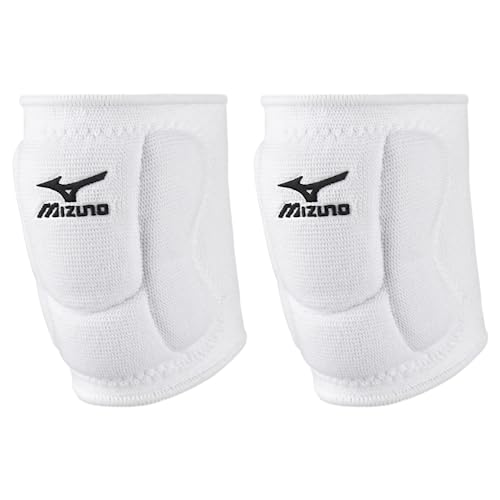
Mizuno LR6 Volleyball Knee Pads
Mizuno pairs a moisture-wicking sleeve with molded foam padding over the kneecap on the LR6 pads. Sizes run small through extra-large based on measured thigh and calf circumference. Low-profile foam allows a full range of motion during diving and floor defense drills.
Pros
- Molded foam cushions the kneecap on hard floors
- Moisture-wicking sleeve stays in place
- Size range fits youth through adult legs
Cons
- Sizing chart requires accurate leg measurement
- Foam compresses with repeated heavy use

Tandem Sport Bumpy Volleyball Trainer
Tandem Sport oversizes this textured trainer to exaggerate passing and setting errors during practice. Raised bumps punish poor platform angle, forcing beginners to correct forearm position immediately. Its larger-than-regulation size slows drills down to a controlled speed.
Pros
- Highlights passing platform mistakes instantly
- Slows drills down for technique correction
- Works for solo practice against a wall
Cons
- Not usable for actual gameplay
- Bumpy texture feels unusual at first
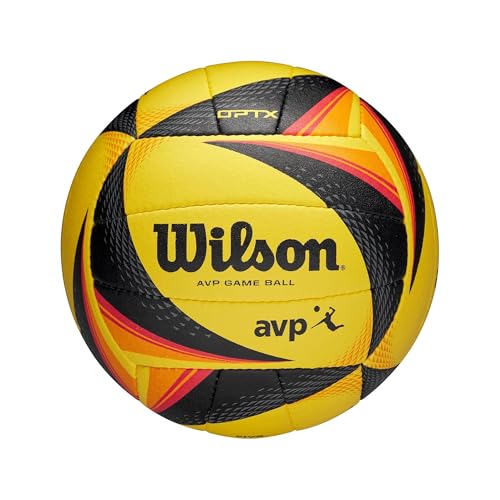
Wilson AVP Arena Outdoor Volleyball
Sand and grass courts are the target for Wilson’s AVP Arena, wrapped in a water-resistant composite cover. It holds official size 5 dimensions and includes a butyl bladder tuned for outdoor air retention. A textured surface grips better than indoor balls once hands and forearms get sandy.
Pros
- Grips well with sandy or wet hands
- Resists water absorption on beach courts
- Retains air pressure through outdoor swings
Cons
- Textured cover feels rough for indoor passing
- Bright colorway shows dirt quickly
How they compare
| # | Model | Size | Best for | Score | Price |
|---|---|---|---|---|---|
| 1 | Mikasa MVA200 Volleyball | Official size 5 | Best overall | 9.4 | Check price |
| 2 | Champion Sports Rubber Volleyball | Official size 5 | Best budget | 9.1 | Check price |
| 3 | Wilson Super Soft Play Volleyball | Official size 5 | Best for indoor practice ball | 8.8 | Check price |
| 4 | EastPoint Sports Portable Volleyball Net Set | Approx. 6-8 ft adjustable | Best for backyard net system | 8.5 | Check price |
| 5 | Mizuno LR6 Volleyball Knee Pads | Molded foam | Best for knee protection | 8.2 | Check price |
| 6 | Tandem Sport Bumpy Volleyball Trainer | Textured, oversized training ball | Best for serving and passing training aid | 8.1 | Check price |
| 7 | Wilson AVP Arena Outdoor Volleyball | Official size 5 | Best for beach volleyball | 8.0 | Check price |
How to pick the right one
What beginners need before their first practice A regulation ball, access to a net, and basic knee protection cover most early sessions. Surface matters more than skill level at this stage, since grass, sand, and hardwood favor different cover materials. Many parents start kids on a softer ball before moving to a leather match ball. Knee pads deserve an early budget line, since floor defense drills show up in nearly every beginner clinic.
How to choose a first volleyball Official size 5 balls weigh between 260 and 280 grams no matter the brand. Leather covers, like the Mikasa MVA200, hold their shape longest but feel firmer on bare forearms. Foam-backed balls, such as the Wilson Super Soft Play, trade durability for comfort during early passing reps. Rubber balls split the difference on cost while surviving rough outdoor surfaces better than stitched leather.
Setting up a net for backyard practice Regulation net height runs 7 feet 4 1/8 inches for women and 8 feet for men, though youth play often drops to 7 feet or lower. Adjustable sets, like the EastPoint Sports kit, let a net rise as kids grow into adult height. Steel poles need staking on grass to resist wind, and sand courts require deeper anchoring than lawns. Boundary lines included in most kits help new players judge in-bounds serves without a referee.
Do beginners need knee pads and training aids? Floor defense drills put direct pressure on the kneecap, so pads like the Mizuno LR6 prevent bruising during early diving practice. Sizing runs by measured leg circumference rather than shoe size, so a quick tape measurement avoids a loose fit. Training aids such as the Tandem Sport Bumpy trainer exaggerate passing errors, helping new players fix platform angle before moving to a regulation ball. Skipping both often leads to sore forearms and skinned knees within the first few weeks.
Common questions
What size volleyball do beginners need?
Beginners should use an official size 5 ball, weighing roughly 260 to 280 grams with a circumference near 65 to 67 centimeters. That size matches adult recreational and school leagues, so skills transfer directly to game play.
Is an indoor or outdoor volleyball better for beginners?
Indoor balls use softer leather or synthetic covers suited to gym floors, while outdoor balls add water-resistant composite covers for sand and grass. Beginners who play mostly indoors should pick a ball built for that surface rather than a dual-purpose one.
What net height should beginners practice at?
Regulation height is 8 feet for men and 7 feet 4 1/8 inches for women, though youth and beginner sessions often start at 7 feet. An adjustable net set lets height increase as players improve.
How do I size volleyball knee pads?
Measure around the thigh a few inches above the kneecap and match that number to the brand’s sizing chart. Most brands, including Mizuno, offer small through extra-large based on that single measurement.
Can I set up a volleyball net in my backyard?
Yes, portable net sets like the EastPoint Sports kit include poles, stakes, and boundary lines for grass or sand. Setup usually takes under 20 minutes without permanent posts.
What training aids help beginners learn to pass and serve?
Oversized textured balls, like the Tandem Sport Bumpy trainer, exaggerate forearm platform errors so beginners correct technique before switching to a regulation ball. Wall-rebound drills with a standard ball also build serving consistency.
How much air pressure should a volleyball have?
Most official balls list a recommended pressure range on the panel, typically between 0.30 and 0.325 kilograms per square centimeter. Checking the specific ball’s markings avoids overinflating the bladder.
What is the difference between beach and indoor volleyball equipment?
Beach balls, such as the Wilson AVP Arena, use water-resistant composite covers and softer bladders tuned for sand play. Indoor balls prioritize leather or synthetic covers for consistent bounce on hardwood, and sand courts need deeper pole anchoring than indoor or grass setups.
What is the minimum gear a beginner volleyball player needs?
A regulation size 5 ball and a pair of knee pads cover most first sessions. A net only becomes necessary for backyard or home practice, since gyms and courts usually already have one installed.
The bottom line
Mikasa’s MVA200 stays the strongest pick for beginners who want one ball that works indoors and in the backyard without swapping gear later. Players who bruise easily during early passing drills should start with the Wilson Super Soft Play ball instead, then move to the MVA200 once forearm technique feels comfortable.
Derek Holt
Derek has a background coaching recreational and amateur athletes and has worked the sales floor at specialty fitness retailers. He focuses on equipment durability, ergonomics and realistic use cases rather than marketing claims.

