Indoor Volleyball Gear That Actually Holds Up on Hardwood
Mikasa V200W is the top overall pick, carrying FIVB certification and a flight pattern that stays consistent on hardwood. Molten V5M5000 fits club and tournament play thanks to its Flistatec surface. ASICS Gel-Rocket 10 rounds out the top three, giving jumping players grip and landing support on the court.
Mikasa V200W leads this list for indoor play, carrying FIVB certification and a flight pattern that stays predictable off the hand. Club and recreational players get match-consistent touch from it, though the certified cover costs more than an uncertified ball.
No single product covers every need here, since volleyball gear spans balls, nets, footwear, and protective equipment. We checked official certifications, cover materials, padding construction, and sizing details on each product page to sort seven picks by the situation they solve.
The shortlist, ranked

Mikasa V200W Volleyball
This is the official FIVB competition ball, used across the Olympics, NCAA, and USA Volleyball events. An 18-panel microfiber composite leather cover gives it a soft, tacky touch that cuts down on forearm sting during passes. A butyl rubber bladder keeps pressure steady through long practice sessions.
Pros
- Consistent flight matches official competition standards
- Soft cover reduces forearm sting on passes and digs
- Holds air pressure reliably across long sessions
Cons
- Costs more than recreational balls without certification
- Requires proper inflation pressure to perform as designed
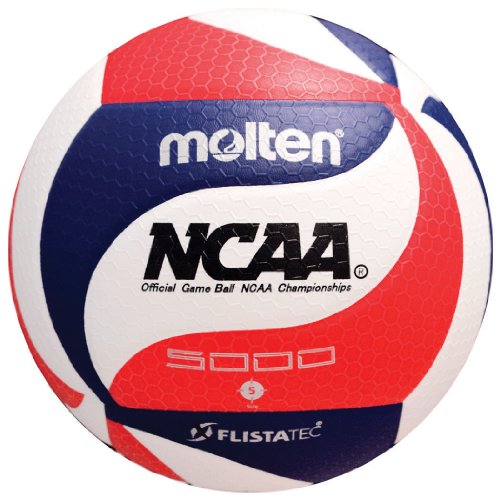
Molten V5M5000 Flistatec Volleyball
Flistatec surface technology gives this ball a dimpled cover that stabilizes flight on hard-driven serves and spikes. FIVB approval matches the Mikasa V200W, and past Olympic competitions have used this exact model. A synthetic polyurethane cover resists scuffing from repeated gym floor contact.
Pros
- Dimpled surface stabilizes flight on serves and spikes
- Widely used in international and club-level competition
- Durable cover resists scuffing from gym floor contact
Cons
- Firmer touch than the V200W can sting forearms for new players
- Priced above recreational, non-certified volleyballs
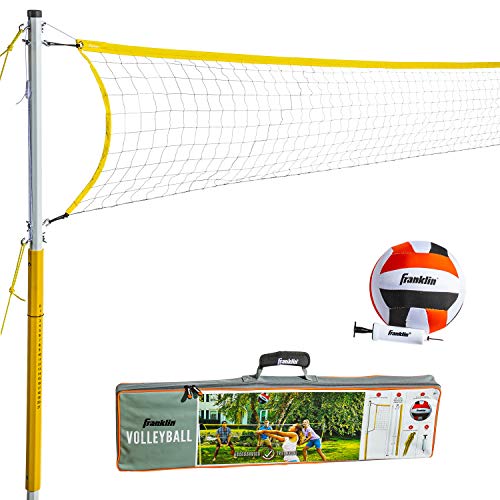
Franklin Sports Volleyball Net Set
Telescoping steel poles, a regulation-width net, boundary lines, and a carry bag all pack into one kit here. No tools are needed for setup, which suits driveways, backyards, and open gym floors alike. Competition play isn’t the target; co-ed, youth, and recreational games are.
Pros
- Quick setup without tools using telescoping poles
- Included carry bag simplifies storage and transport
- Adjustable height suits co-ed, youth, and family play
Cons
- Ground stakes anchor well outdoors but not on hardwood or tile
- Maximum height falls short of full men’s regulation net height

ASICS Gel-Rocket 10 Volleyball Shoes
Repeated jumping and lateral cuts are what this low-top indoor court shoe is built around. A gum rubber outsole grips hardwood without building up excess squeak, while rearfoot GEL cushioning absorbs landing impact. Synthetic leather and mesh in the upper keep the foot ventilated through long matches.
Pros
- Gum rubber sole grips hardwood reliably
- GEL cushioning absorbs repeated jump landings
- Breathable mesh panels limit foot overheating
Cons
- Narrower fit than average athletic shoes, so wide feet may need a half size up
- Not designed for outdoor or sand court surfaces
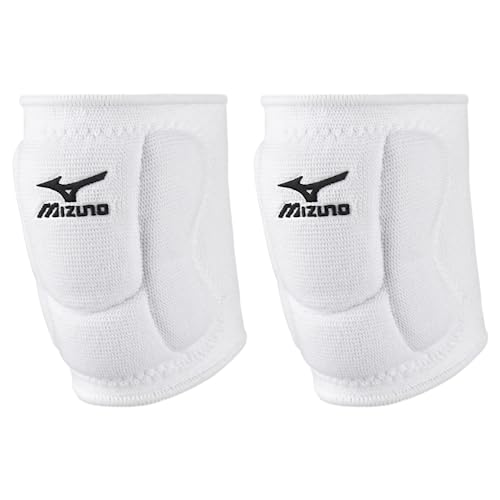
Mizuno LR6 Volleyball Knee Pads
Cross-linked polyethylene foam sits over the kneecap inside a moisture-wicking compression sleeve on this pad. A pull-on design skips straps entirely, so nothing needs adjusting mid-match and nothing slips during a dive. Full range of motion stays intact thanks to the low profile.
Pros
- Low-profile pad allows full range of motion during digs
- Compression sleeve stays in place without slipping
- Breathable fabric limits sweat buildup during practice
Cons
- Thinner padding than bulkier pads offers less cushion on concrete or tile
- Sizing runs snug, so players between sizes should size up

McDavid 195 Ultralight Ankle Brace
Figure-8 elastic straps on this lace-up brace limit the inversion motion behind most volleyball ankle sprains. Breathable mesh with nylon reinforcement keeps it lightweight enough to wear under a court shoe. Most low-top and mid-top shoes accept it without a change in shoe size.
Pros
- Figure-8 strap pattern limits inversion during blocking and landing
- Low-profile design fits inside standard court shoes
- Lace-up front allows adjustable tightness
Cons
- Sold individually, so players needing both ankles covered buy two
- Less rigid than hinged braces for players recovering from severe sprains

Tachikara SofTech Volley-Lite Training Volleyball
A softer synthetic leather cover and lighter fill separate this training ball from a regulation match ball. Reduced sting helps new players learn to pass and serve without flinching on contact. Official Size 5 circumference carries over, so hand-eye timing transfers to a regulation ball later.
Pros
- Softer cover reduces forearm sting for new players
- Lighter weight makes overhand serving easier to learn
- Same circumference as a regulation ball keeps timing consistent
Cons
- Flight characteristics differ from regulation match balls
- Not intended for official match play
What to look for
What indoor volleyball equipment actually covers Four categories make up indoor volleyball gear: game balls, net systems, protective pads, and court footwear. Each solves a different problem, so one product rarely covers them all. Recreational players usually start with just a ball and net, then add knee pads and shoes as play gets more frequent. Club and school teams typically need certified balls plus dedicated protective gear from day one.
Indoor ball vs outdoor ball: why the cover matters Indoor balls like the Mikasa V200W use a softer, tackier cover for control on hardwood. Outdoor and beach balls trade that for a firmer cover, often in a larger size, to resist wind. Serve and set feel changes noticeably when an outdoor ball gets used indoors, since the surface grips the hand differently. Regulation indoor Size 5 balls also weigh less on average than balls built for outdoor conditions.
Setting up a net system on a home or shared court Portable sets like the Franklin Sports system work well on driveways, backyards, or gyms with open floor space. Ground stakes included with most portable kits don’t anchor into hardwood or tile, so indoor setups need a floor plate, sandbag base, or wall mount instead. Permanent gyms usually run wall-mounted or ceiling-anchored systems built to regulation heights, about 7 feet 11 5/8 inches for men and 7 feet 4 1/8 inches for women. Shared community courts often keep a fixed net height, so check before buying an adjustable set for a group that changes ages often.
Knee pads, ankle braces, and injury prevention for regular play Diving and floor defense put repeated stress on the knees, which is why pads like the Mizuno LR6 use cross-linked foam over the kneecap. Ankle sprains rank among the most common volleyball injuries, usually from blocking and landing on another player’s foot. A lace-up brace such as the McDavid 195 limits the inversion motion that causes most of those sprains. Players recovering from a prior sprain often get more support from a brace than from tape alone, since a brace holds consistent tension through a full match.
Side by side
| # | Model | Construction | Best for | Score | Price |
|---|---|---|---|---|---|
| 1 | Mikasa V200W Volleyball | 18-panel paneled cover | Best overall indoor volleyball | 9.4 | Check price |
| 2 | Molten V5M5000 Flistatec Volleyball | Flistatec aerodynamic dimpled surface | Best for club and tournament play | 9.1 | Check price |
| 3 | Franklin Sports Volleyball Net Set | Adjustable up to about 7 feet 4 inches | Best portable net system for home and recreational courts | 8.9 | Check price |
| 4 | ASICS Gel-Rocket 10 Volleyball Shoes | Rearfoot GEL cushioning system | Best indoor volleyball shoes for court grip | 8.8 | Check price |
| 5 | Mizuno LR6 Volleyball Knee Pads | Cross-linked polyethylene foam | Best knee pads for diving and floor defense | 8.6 | Check price |
| 6 | McDavid 195 Ultralight Ankle Brace | Lace-up with figure-8 elastic straps | Best ankle brace for injury prevention | 8.3 | Check price |
| 7 | Tachikara SofTech Volley-Lite Training Volleyball | Lighter than regulation Size 5 game balls | Best training ball for beginners and youth | 8.0 | Check price |
Frequently asked questions
What is the difference between an indoor and outdoor volleyball?
Indoor volleyballs like the Mikasa V200W use a softer, tackier synthetic leather cover suited to hardwood courts. Outdoor and beach balls use a firmer, often larger cover built to resist wind and sand abrasion. Serves and sets feel different off the hand when the wrong type gets used.
Do I need an official Size 5 ball to practice at home?
Size 5 matches the regulation dimensions used in club, school, and adult league play. Beginners and younger players sometimes start with a lighter training ball, such as the Tachikara SofTech Volley-Lite, before moving up to a full-weight Size 5.
What height should a volleyball net be set at for adults?
Men’s regulation net height is 7 feet 11 5/8 inches, while women’s regulation height runs 7 feet 4 1/8 inches. Co-ed and recreational games often split the difference or use a lower adjustable setting.
Are knee pads necessary for indoor volleyball?
Rules don’t require knee pads, but floor defense and diving put regular stress on the kneecap. Pads like the Mizuno LR6 add cushioning without limiting mobility during digs.
Can I use a portable outdoor volleyball net system indoors?
Portable sets like the Franklin Sports net system can work indoors, though their ground stakes won’t anchor into hardwood or tile. Indoor setups typically need a floor plate, sandbag base, or wall mount instead.
What ankle brace do volleyball players use most?
Lace-up braces with figure-8 strapping, such as the McDavid 195, are common because they limit the inversion motion behind most ankle sprains. They fit inside standard low-top and mid-top court shoes.
How should indoor volleyball shoes fit compared to running shoes?
Volleyball shoes like the ASICS Gel-Rocket 10 fit snugger than running shoes to support quick lateral cuts and jump landings. Players with wider feet often need a half size up from their usual running shoe size.
Is a training volleyball worth buying for beginners?
A softer training ball reduces forearm sting while players learn to pass and serve. The Tachikara SofTech Volley-Lite keeps the same official Size 5 circumference, so hand-eye timing carries over to a regulation ball later.
What is the best volleyball for club and tournament play?
The Molten V5M5000 sees heavy use at club and international level thanks to its Flistatec dimpled surface, which stabilizes flight on hard-driven serves and spikes. FIVB approval matches the Mikasa V200W.
Do volleyball shoes matter more than regular sneakers on hardwood?
Yes. Court-specific shoes like the ASICS Gel-Rocket 10 use a gum rubber outsole tuned for hardwood grip and repeated jump landings, which running or basketball shoes don’t replicate as reliably.
The bottom line
Mikasa V200W stays the strongest all-around choice for indoor volleyball, backed by FIVB certification and flight that stays consistent through regular match play. Club teams chasing the Flistatec aerodynamic surface should choose the Molten V5M5000 instead, and beginners still learning to pass are better off starting with the Tachikara SofTech Volley-Lite before switching to a regulation ball.
Derek Holt
Derek has a background coaching recreational and amateur athletes and has worked the sales floor at specialty fitness retailers. He focuses on equipment durability, ergonomics and realistic use cases rather than marketing claims.