Indoor Court or Beach Sand: Picking the Right Volleyball
The Mikasa V200W is the top pick, the dimpled microfibre cover used in top-level indoor volleyball. The Mikasa VLS300 Beach Champ handles sand and moisture best. For schools and leagues on a budget, the Tachikara SV5WSC Sensi-Tec holds air and survives daily shared use season after season.
The Mikasa V200W leads this list. Its dimpled microfibre cover is the indoor competition standard, and that texture changes how a float serve moves. The Mikasa VLS300 Beach Champ resists moisture on sand. Schools and leagues keep reordering the Tachikara SV5WSC Sensi-Tec for its durability.
Volleyballs are easy to buy wrong. Indoor covers absorb moisture and turn heavy on sand, while outdoor covers feel dead on hardwood. Panel count and seam depth change serve behavior, and cover softness affects forearm comfort. We compared cover materials, panel construction, water resistance and what owners report about air retention over a season.
The best picks, ranked

Mikasa V200W Indoor Volleyball
This is the ball used at the highest levels of indoor competition. Its dimpled microfibre cover changes how the ball moves through the air, so float serves behave differently than with a smooth-panel ball. The price reflects that positioning, and it belongs on a clean indoor court rather than a driveway.
Pros
- Reference ball for serious indoor competition
- Dimpled cover produces consistent float-serve behavior
- Soft enough for extended passing sessions
Cons
- Priced above recreational-use budgets
- Cover wears quickly on rough outdoor surfaces

Molten Super Touch V5M5000 Volleyball
Molten builds this with a soft microfibre cover for gentle contact on the forearms. The panel layout gives clear visual feedback on rotation, which helps players learning to read serves. Many clubs run it as a primary training ball for that reason.
Pros
- Soft cover reduces forearm soreness during long sessions
- Panel coloring makes rotation easy to track
- Consistent flight through a full practice
Cons
- Softer feel draws less interest from power hitters
- Built for indoor use, wears fast outdoors

Mikasa VLS300 Beach Champ Volleyball
The VLS300 is the official ball of international beach competition. Its water-resistant cover and slightly larger circumference suit sand rather than hardwood. It stays light in damp conditions, though it feels dead on an indoor court.
Pros
- Stays light and playable in damp sand
- Soft cover suits barefoot beach play
- Official ball used in competitive beach volleyball
Cons
- Feels slow and dead on an indoor court
- Light-colored cover shows sand staining

Tachikara SV5WSC Sensi-Tec Composite Volleyball
School programs and recreation leagues buy this by the case. Its Sensi-Tec composite cover survives a season of daily use, and the butyl bladder holds air better than budget alternatives. Feel is firm without being punishing, according to the listing.
Pros
- Holds air over a full season with minimal topping up
- Cover withstands heavy shared use
- Balances durability and feel for the price
Cons
- Firmer than premium club training balls
- Not built for regular sand play
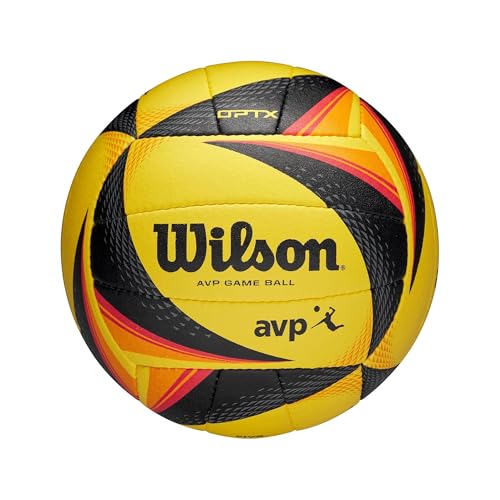
Wilson AVP Official Beach Volleyball
Wilson’s AVP line covers outdoor play at a lower price than competition beach balls. Its durable composite cover tolerates concrete edges and grass better than premium alternatives. It plays firmer than the Mikasa beach ball, a trait some recreational players prefer.
Pros
- Tolerates grass, sand and rough surfaces
- Costs less than competition-grade beach balls
- Firmer feel suits casual power hitting
Cons
- Harder on the forearms than premium beach balls
- Seams wear faster on abrasive surfaces
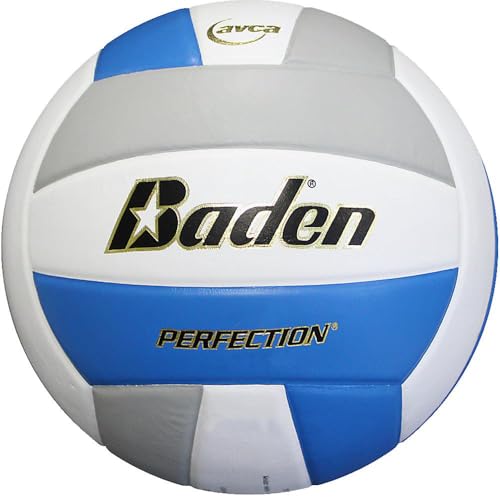
Baden Perfection Elite Composite Volleyball
Baden targets teams needing multiple practice balls that feel close to their game ball. The microfibre composite cover stays soft enough for repetition passing drills. Owners report reliable consistency across a purchased set.
Pros
- Affordable enough to buy several for drills
- Soft cover suits high-volume passing work
- Consistent feel across a matched set
Cons
- Flight is less refined than premium eight-panel balls
- Cover scuffs faster than competition composites

Wilson Soft Play Outdoor Volleyball
For a family beach trip or backyard net, a soft play ball is the practical choice. Its forgiving cover and softer inflation keep new players in the game after a hard serve. Serious players will find it too light and slow.
Pros
- Comfortable for beginners and children
- Inexpensive enough to treat as disposable
- Handles grass, sand and pool decks
Cons
- Too light and slow for competitive play
- Loses air faster than premium bladders
Compared at a glance
| # | Model | Use | Best for | Score | Price |
|---|---|---|---|---|---|
| 1 | Mikasa V200W Indoor Volleyball | Indoor competition | Best overall | 9.4 | Check price |
| 2 | Molten Super Touch V5M5000 Volleyball | Indoor club and training | Best for club play | 9.2 | Check price |
| 3 | Mikasa VLS300 Beach Champ Volleyball | Beach and outdoor | Best for beach | 9.0 | Check price |
| 4 | Tachikara SV5WSC Sensi-Tec Composite Volleyball | Indoor recreation, school and league | Best for schools and leagues | 8.8 | Check price |
| 5 | Wilson AVP Official Beach Volleyball | Beach, grass and backyard | Best value outdoor | 8.6 | Check price |
| 6 | Baden Perfection Elite Composite Volleyball | Indoor practice and recreation | Best for practice | 8.3 | Check price |
| 7 | Wilson Soft Play Outdoor Volleyball | Casual outdoor and family play | Best budget | 8.0 | Check price |
What matters most
Indoor vs Beach: Why One Ball Doesn’t Cover Both Indoor volleyballs use leather or microfibre composite covers that absorb moisture and turn heavy on sand. Outdoor balls use water-resistant covers and softer panels that feel dead on hardwood. Picking the wrong category is the most common mistake buyers make.
How Panel Count and Cover Texture Affect Flight Eight-panel balls like the Mikasa V200W move differently in the air than eighteen-panel practice balls. A dimpled microfibre surface changes drag during a float serve. Seam depth and panel count together decide how predictable the ball’s flight is.
Choosing a Ball for Schools, Leagues and Group Practice Programs buying for many players need durability over refinement. Butyl bladders hold air longer between pumps, which matters when a ball rotates through dozens of hands. The Tachikara SV5WSC and Baden Perfection Elite both target this use case.
Beginner and Family Play: When Softness Matters More Than Standard Children and first-time players benefit from softer inflation and forgiving covers. A competition-grade ball can sting on first contact and discourage new players. Wilson’s Soft Play line and similar recreational balls trade performance for comfort.
Questions worth asking
What is the difference between an indoor and outdoor volleyball?
Indoor volleyballs use leather or microfibre covers built for hardwood courts, while outdoor and beach volleyballs use water-resistant covers and softer panels suited to sand and grass. Using one in the other’s environment shortens its lifespan.
Can you use a beach volleyball indoors?
You can, but it will feel slow and dead compared to an indoor ball. The softer cover and larger circumference are built for sand resistance, not hardwood speed.
Which volleyball do professional indoor players use?
The Mikasa V200W is the ball used at the highest levels of indoor competition, including international matches. Its dimpled microfibre cover is the reference standard for serve behavior.
What volleyball is used in official beach competition?
The Mikasa VLS300 Beach Champ is the official ball of international beach volleyball. Its water-resistant cover keeps the ball’s weight consistent even when the sand is damp.
How many panels does a volleyball have?
Competition indoor balls typically use eight panels for consistent aerodynamics, while practice balls often use eighteen panels. Panel count affects seam depth and how predictably the ball flies.
What is the best volleyball for school or recreation league use?
The Tachikara SV5WSC Sensi-Tec is a common choice for schools and leagues. Its butyl bladder holds air well and the composite cover survives daily shared use.
Is a softer volleyball better for beginners?
Yes, softer covers and lower inflation reduce forearm sting during early practice. Balls like the Wilson Soft Play trade competitive feel for comfort.
Do volleyball covers affect serve behavior?
Cover texture changes air resistance during flight, so a dimpled microfibre surface produces different float-serve movement than a smooth composite panel. This is why competition balls specify a particular cover type.
How long does a volleyball hold air?
Air retention depends mainly on the bladder material. Butyl bladders, used in balls like the Tachikara SV5WSC, typically hold air longer between top-ups than basic rubber bladders.
What volleyball works best for backyard or family play?
A durable outdoor composite ball, such as the Wilson AVP, handles grass and sand without much care. For young children, a softer play ball like the Wilson Soft Play is more forgiving.
Our take
The Mikasa V200W remains the standard for indoor competition, and the VLS300 Beach Champ covers sand-specific needs. Budget and program buyers get more value from the Tachikara SV5WSC or Wilson AVP. Match the cover type to where the ball will actually be played.
Derek Holt
Derek has a background coaching recreational and amateur athletes and has worked the sales floor at specialty fitness retailers. He focuses on equipment durability, ergonomics and realistic use cases rather than marketing claims.