NVMe vs SATA vs Portable: How to Choose an SSD
Samsung 990 PRO leads for peak PCIe 4.0 speed and strong endurance ratings across sustained workloads. WD_BLACK SN850X suits gaming rigs and PlayStation 5 storage expansion best. Crucial P3 Plus covers simple capacity upgrades for everyday laptops and desktops without extra cost.
Samsung 990 PRO tops this list for raw PCIe 4.0 speed and endurance headroom. WD_BLACK SN850X is the stronger pick for gaming rigs and PlayStation 5 storage expansion. Crucial P3 Plus handles a plain capacity upgrade without extra complexity.
Advertised sequential numbers rarely match daily performance, since booting, launching apps and loading games mostly involve small random reads rather than one long transfer. We compared interface generation, DRAM cache presence, published endurance ratings and form factor compatibility against owner feedback to rank the seven drives below.
What matters most
Match the SSD to the Slot Your System Actually Has Desktop boards built in the last few years usually include one or more M.2 slots wired for PCIe 4.0 or 5.0. Older boards may wire M.2 only for PCIe 3.0, which still runs an NVMe drive at reduced speed. Some machines skip M.2 entirely and need a 2.5 inch SATA drive instead. Laptops add another constraint, since many accept only a single sided M.2 module. Check your exact model’s support page before buying.
Why DRAM Cache Matters More Than the Box Number Drives split into two camps: those with onboard DRAM and those that borrow system memory through host memory buffer. Browsing, office work and gaming show little difference between the two. Copying large folders, editing video or running virtual machines is where DRAM earns its keep. A DRAM less drive slows sharply once its fast write cache empties. Pay for DRAM if your workload involves sustained writes.
Random Reads Predict Daily Feel Better Than Sequential Speed Box labels highlight one long sequential transfer, a scenario few daily tasks resemble. Booting an operating system, opening apps and loading a game rely on small random reads instead. Two drives with a large sequential gap can feel identical during normal use. Random read performance and the endurance rating in terabytes written predict real world behaviour better. Check both figures on the listing rather than the headline number alone.
Plan for Heat in Consoles and Thin Laptops PCIe 4.0 and 5.0 drives generate real heat under sustained load and throttle to protect themselves. A desktop board with a built in M.2 heatsink handles this without extra parts. Console expansion bays need a heatsink attached to the drive itself, within a fixed height limit. Thin laptops rely entirely on a thermal pad supplied by the chassis. Buy the heatsink version for console installs rather than adding one afterward.
Our top picks
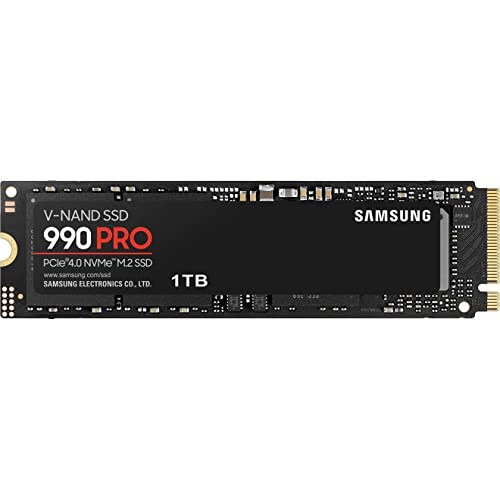
Samsung 990 PRO NVMe M.2 Internal SSD
Samsung builds this flagship drive around an in house controller and onboard DRAM cache. That pairing keeps write speed steady after the fast cache fills during long transfers. Both heatsink and bare versions exist, fitting desktop boards and console expansion bays alike. Owners report sustained speeds staying close to rated figures on large file moves.
Pros
- Maintains speed after the write cache fills
- Endurance rating leads the class per specifications
- Heatsink version fits console expansion bays
Cons
- Costs more than drives with a similar daily feel
- Runs warm without a heatsink or case airflow

WD_BLACK SN850X NVMe Internal Gaming SSD
Western Digital tunes this drive for gaming rather than raw throughput. Random read speed matches the flagship tier, and that figure affects level load times more than sequential speed does. A game mode setting in the companion software keeps the drive from idling down mid session. Owners cite it as a common choice for PlayStation 5 expansion when bought with the heatsink.
Pros
- Random read speed rivals the top tier drive
- Heatsink model sized for console expansion bays
- Companion software adds firmware and health monitoring
Cons
- Companion software works only on Windows
- Bare version needs case airflow in tight builds

Crucial T500 NVMe M.2 Internal SSD
Crucial equips this drive with real DRAM cache, a feature many midrange drives skip. Benchmarks place it just under the flagship pair while daily desktop use feels nearly identical. Single sided capacities exist for laptop installs where board clearance is tight. Owners describe it as the drive they picked once the flagship premium stopped making sense.
Pros
- DRAM cache included at a midrange position
- Performance sits close to flagship drives in practice
- Single sided boards available for thin laptops
Cons
- Peak benchmark figures trail the top two drives
- Heatsink bundling varies by capacity and retailer

Crucial P3 Plus NVMe M.2 Internal SSD
This drive skips onboard DRAM and borrows system memory instead through host memory buffer. That tradeoff suits browsing, office work and general storage rather than sustained heavy writes. A single sided board drops straight into laptops and older desktops with one open M.2 slot. Owners describe installation as simple, needing no extra hardware or driver steps.
Pros
- Single sided board fits thin laptop chassis
- Runs in PCIe 3.0 slots at reduced speed
- Installs with no extra hardware required
Cons
- Sustained write speed drops once the cache fills
- Missing DRAM cache slows heavy multitasking

Samsung 870 EVO SATA III 2.5 inch Internal SSD
Machines without an M.2 slot still cover a large share of desktops and older laptops. SATA caps sequential speed well below NVMe, yet the jump from a mechanical hard drive stays dramatic. Onboard DRAM keeps performance consistent across the full capacity rather than only at the start. Owners report years of service in office machines and home servers.
Pros
- Works in any system with a SATA connector
- Performance stays consistent across the full drive
- Long reliability track record among owners
Cons
- SATA interface limits sequential speed well below NVMe
- Needs a mounting bracket in many desktop bays
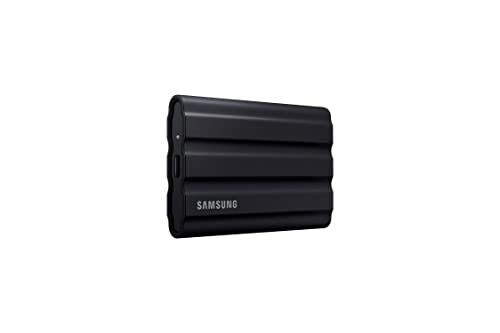
Samsung T7 Shield Portable SSD
A rubberised shell and an ingress protection rating separate this drive from plain metal enclosures. USB 3.2 Gen 2 connects it to computers, and many camera bodies accept it directly for offloading footage. Owners report the grippy exterior survives repeated drops into a backpack.
Pros
- Ingress protection rating unusual at this size
- Works across computers, cameras and some Android devices
- Grippy shell resists everyday travel knocks
Cons
- USB interface caps speed below internal NVMe drives
- Included cable runs short for desk setups
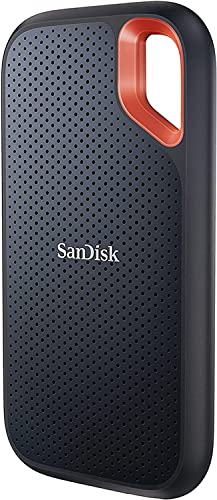
SanDisk Extreme Portable SSD V2
A moulded carabiner loop lets this drive clip straight onto a bag strap or belt loop. Photographers use it as an easy way to offload memory cards in the field. Hardware encryption protects files if the drive gets lost or stolen. Owners call it the most convenient portable to carry, while noting it should back up rather than replace a primary copy.
Pros
- Carabiner loop attaches directly to bags
- Silicone shell absorbs drops and knocks
- Hardware encryption included at this price tier
Cons
- Should not serve as the only copy of files
- Warms noticeably during long continuous transfers
Compared at a glance
| # | Model | Interface | Best for | Score | Price |
|---|---|---|---|---|---|
| 1 | Samsung 990 PRO NVMe M.2 Internal SSD | PCIe 4.0 x4 NVMe | Best overall | 9.4 | Check price |
| 2 | WD_BLACK SN850X NVMe Internal Gaming SSD | PCIe 4.0 x4 NVMe | Best for gaming | 9.2 | Check price |
| 3 | Crucial T500 NVMe M.2 Internal SSD | PCIe 4.0 x4 NVMe | Best value | 9.0 | Check price |
| 4 | Crucial P3 Plus NVMe M.2 Internal SSD | PCIe 4.0 x4 NVMe, backwards compatible | Best budget upgrade | 8.8 | Check price |
| 5 | Samsung 870 EVO SATA III 2.5 inch Internal SSD | SATA III 6Gb per second | Best for older systems | 8.6 | Check price |
| 6 | Samsung T7 Shield Portable SSD | USB 3.2 Gen 2, Type C | Best portable | 8.3 | Check price |
| 7 | SanDisk Extreme Portable SSD V2 | USB 3.2 Gen 2, Type C | Best budget portable | 8.0 | Check price |
Common questions
Does a PCIe 4.0 SSD work in a PCIe 3.0 slot?
Yes. NVMe drives are backwards compatible and run at the slower interface speed. Peak sequential performance drops, but the drive still feels far faster than any mechanical hard drive. A PCIe 3.0 only board pairs better with a drive built for that generation.
What does TBW mean on an SSD?
TBW stands for terabytes written, the manufacturer’s endurance rating for total data written over the drive’s life. Ordinary home use rarely approaches these figures. Video editing, database work and constant writing are where TBW becomes the limiting factor.
Do I need a heatsink for an NVMe SSD?
It depends on where the drive sits. Desktop boards with a built in M.2 heatsink need nothing extra. Console bays require a heatsink sized to fit, and thin laptops generally cannot accept an aftermarket one at all.
Can I clone my old drive instead of reinstalling Windows?
Yes, and most manufacturers offer free cloning software for their own drives. The destination drive needs enough space for the data being moved, not the original drive’s full size. Cloning keeps installed apps and settings, though a clean install often runs tidier.
Is a SATA SSD still worth buying?
It is, when the machine has no M.2 slot. A SATA drive still transforms an old desktop or laptop compared with a mechanical hard drive, even with a lower speed ceiling than NVMe. Use an M.2 slot instead if one is available.
Why does SSD transfer speed drop during large copies?
Most consumer drives reserve part of their flash as a fast write cache. Writes stay quick while that cache has room. Once it fills, the drive writes directly to slower flash, and speed drops, sometimes sharply on drives without DRAM.
How full should you let an SSD get?
Leaving roughly ten to fifteen percent free space is a reasonable habit. SSDs need spare blocks for wear levelling and garbage collection to run efficiently. A drive filled to its last gigabyte slows down and works harder than it needs to.
Are portable SSDs reliable enough for backups?
They work as one copy, not the only copy. Any single drive can fail, and portable drives face drops, cable strain and heat that internal drives avoid. Keep important data in more than one place, ideally with one copy away from your desk.
NVMe vs SATA: which should you buy for gaming?
NVMe wins for load times because of its faster random read speed, which matters more than sequential numbers during gameplay. SATA still works for a games library that mostly waits on load screens rather than streaming assets constantly. Check your board’s available slots before deciding.
Final word
Samsung 990 PRO remains the pick for peak PCIe 4.0 speed and endurance that holds up under sustained load. WD_BLACK SN850X matches it closely for gaming rigs and PlayStation 5 expansion. For a plain capacity upgrade covering browsing, office work and media, Crucial P3 Plus does the job well, and Samsung 870 EVO still answers for any machine without an M.2 slot.
Marcus Chen
Marcus covered consumer electronics for enthusiast tech publications for six years before joining ChoiceCrest. He specializes in translating manufacturer spec sheets into plain-language buying advice, with a focus on audio, computing accessories and smart-home gear.