How to Choose a Shotgun Microphone for Clean Audio
The Rode VideoMic NTG leads for its USB output, safety channel and long battery life. Sennheiser MKE 600 suits interviews and boom work with strong off axis rejection. Rode VideoMic GO II gives the simplest setup for creators who want plug in audio with no menus.
Rode VideoMic NTG is the pick most creators should start with. Sennheiser MKE 600 is the stronger choice for boomed dialogue. Rode VideoMic GO II is the simplest way to upgrade camera sound. Each one solves a different recording problem rather than topping a straight ranking of quality.
Shotgun mics get tricky because the spec that matters most, off axis rejection, rarely appears clearly on a spec sheet, and a long interference tube that sounds superb outdoors can turn boxy in a small room. We compared published polar patterns, self noise figures, power requirements and connector types, then weighed what owners report about wind handling, mount noise and battery behavior over long shoots.
How to pick the right one
How does room size affect shotgun mic choice? A long interference tube narrows the pickup angle and helps outdoors, but in a small room those same reflections arrive off axis and can make voices sound hollow. Most filming happens in bedrooms, offices or kitchens, where a short body shotgun like the AT875R or a compact camera mic often sounds more natural than a long broadcast tube.
3.5mm or XLR: which connector fits your setup? A 3.5mm mic plugs straight into a mirrorless camera or phone and works in seconds. XLR gives balanced cable runs, phantom power and better preamps on a dedicated recorder. Buying an XLR mic without a recorder or adapter is the most common mistake, so plan the whole audio chain before choosing the microphone.
Why self noise matters more than maximum volume Every microphone generates a small hiss of its own, quoted as self noise in dBA. Lower numbers mean cleaner recordings when a voice is quiet or the mic sits further away. Based on specifications, anything near or under 15 dBA suits dialogue comfortably, while higher figures push you to record closer and lift less gain in the edit.
Budgeting for wind and mount accessories The capsule is only half the system. A shock mount stops rig vibration from reaching the diaphragm, and a furry windscreen makes outdoor audio usable instead of a roar. Some mics include both; others expect you to add them. Check what is in the box before comparing two options that look similar on paper.
The best picks, ranked
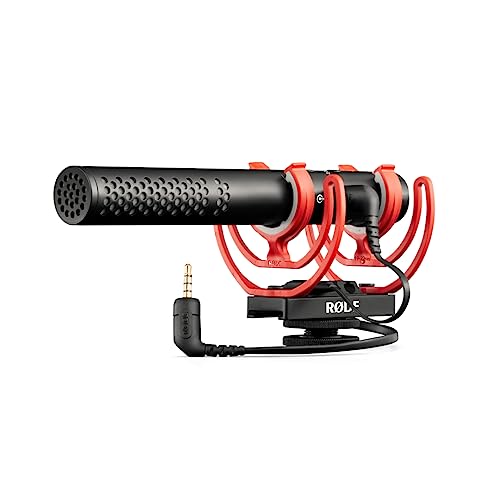
Rode VideoMic NTG
This shotgun covers the most jobs from one body, working as a camera mic over 3.5mm and as a USB microphone straight into a computer or phone. A safety channel records a duplicate track at lower gain, so a sudden laugh or clap does not ruin a take. Owners report battery life measured in tens of hours per charge.
Pros
- Doubles as a USB mic for desk recording
- Safety channel protects against clipped takes
- Auto sensing output works with cameras and phones
Cons
- No XLR option for pro audio bags
- Rear controls are easy to nudge in a rig
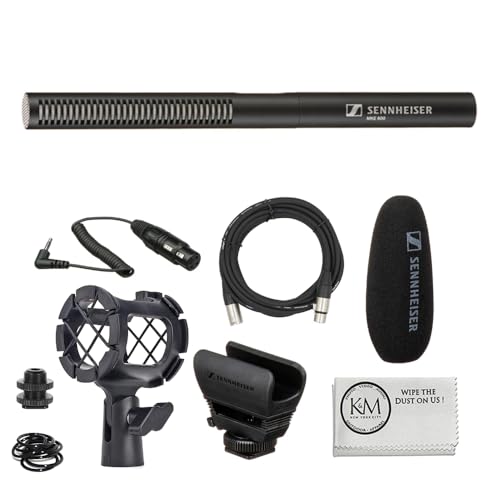
Sennheiser MKE 600
This classic XLR shotgun also runs from a single AA battery, fitting both a mixer and a simple camera rig with an adapter. Switchable low cut helps in rooms with air handling rumble, and tube length gives useful reach on a boom pole. Owners describe a warm, forgiving voice tone that needs little correction in the edit.
Pros
- Runs on phantom power or a single AA
- Strong side rejection for dialogue
- Switchable low cut tames room rumble
Cons
- Needs an XLR interface or adapter for cameras
- Long body is awkward on small mirrorless bodies

Deity V-Mic D3 Pro
A stepless gain dial pairs with a microprocessor that senses whether it is plugged into a camera, a recorder or a phone, then sets the correct output. That makes it sensible for anyone who swaps bodies often and does not want to relearn levels each time. A rotating head keeps the capsule pointed forward even when the shock mount sits sideways.
Pros
- Detects camera, recorder or phone automatically
- Rotatable head suits odd rig angles
- Fine gain control instead of fixed steps
Cons
- Menus and switches take a session to learn
- Shock mount elastics loosen with heavy use

Rode VideoMic GO II
No batteries and no switches here; power comes from the camera, or the mic works as a USB device plugged into a computer. That simplicity appeals to anyone filming alone who wants one less thing to check before rolling. Owners report a noticeable jump over built in camera audio, especially for close range talking head footage.
Pros
- No batteries to charge or replace
- Works as a USB mic for voiceover
- Very light on small gimbals and cages
Cons
- No on body gain or filter controls
- Relies on camera preamp quality

Audio-Technica AT875R
At around seven inches, this short interference tube shotgun suits interiors where a long tube starts to color the sound. It is XLR only and needs phantom power, so it belongs on a recorder or mixer rather than a bare camera. Owners describe clear, neutral speech capture that sits well under music without much EQ.
Pros
- Short body suits low ceilings and tight sets
- Neutral tone needs little correction
- Light enough for long boom sessions
Cons
- Phantom power is mandatory
- No battery fallback option

Shure VP83 LensHopper
A metal body and integrated Rycote shock mount explain why this turns up in documentary and event kits. A single AA cell powers it, so a spare battery in a pocket covers the entire contingency plan. Owners say it shrugs off knocks that would loosen plastic mounts on cheaper shotguns.
Pros
- Metal chassis handles field abuse
- Built in shock mount reduces handling noise
- AA power is easy to replace anywhere
Cons
- Heavier than plastic bodied rivals
- No USB or headphone monitoring

Movo VXR10
This aluminum bodied compact shotgun ships with a foam windscreen, a furry deadcat, and both camera and phone cables. It is passive, so nothing needs charging or switching on. Owners call it a clear step up from phone and camera mics for vlogging, with the honest limit that it is not a dialogue mic for large rooms.
Pros
- Accessories included in the box
- No power or charging to manage
- Very light for phone and compact rigs
Cons
- Limited reach compared with long tube mics
- Picks up more room tone indoors
How they compare
| # | Model | Polar pattern | Best for | Score | Price |
|---|---|---|---|---|---|
| 1 | Rode VideoMic NTG | Supercardioid | Best overall | 9.4 | Check price |
| 2 | Sennheiser MKE 600 | Supercardioid and lobar | Best for interviews and boom work | 9.2 | Check price |
| 3 | Deity V-Mic D3 Pro | Supercardioid | Best for mixed camera setups | 9.0 | Check price |
| 4 | Rode VideoMic GO II | Supercardioid | Best value | 8.8 | Check price |
| 5 | Audio-Technica AT875R | Line and gradient | Best for tight indoor spaces | 8.6 | Check price |
| 6 | Shure VP83 LensHopper | Supercardioid | Best for run and gun filming | 8.3 | Check price |
| 7 | Movo VXR10 | Cardioid leaning supercardioid | Best budget | 8.0 | Check price |
Common questions
Do I need a shotgun mic if my camera already records sound?
Built in camera mics sit behind the lens and pick up the whole room plus handling noise. A shotgun sits closer to the subject with a narrower pickup angle, so speech comes through louder than the background. It is usually the single biggest audio upgrade for video.
What is the difference between supercardioid and lobar polar patterns?
Supercardioid narrows pickup to the front with a small rear lobe, suiting handheld and on camera use. Lobar patterns come from longer interference tubes and reject more from the sides, which helps outdoors on a boom but can sound uneven in reflective rooms.
Can I use a shotgun microphone for podcasts?
You can, and boomed shotguns are common in filmed podcasts. A dynamic or large diaphragm condenser placed close to the mouth usually gives a fuller tone for audio only work. Choose the shotgun when you need the presenter on camera without a visible mic.
How far can a shotgun mic reach and still sound clean?
There is no fixed distance. Reach depends on room acoustics, background noise and preamp quality, though a practical guide keeps the capsule within about three feet of the speaker. Doubling that distance roughly quarters the direct sound energy reaching the mic.
Do shotgun mics need phantom power?
Only XLR condenser mics such as the MKE 600 and AT875R, and the Sennheiser can also run from a single AA. Camera mics with 3.5mm outputs carry their own battery or draw plug in power from the camera, so no external supply is needed.
Will a deadcat windscreen hurt sound quality?
A furry windshield removes a small amount of high frequency detail, typically a decibel or two at the top end. That matters far less than the low frequency rumble wind creates. Outdoors it is always the better trade.
Should the mic sit on the camera or on a boom?
Mounted on the camera, the mic is only as close as your framing allows, so wide shots mean distant sound. A boom or stand lets you place the capsule just outside frame above the speaker, which is why boomed dialogue nearly always sounds tighter.
Are USB shotgun mics good enough for voiceover?
Models such as the VideoMic NTG and VideoMic GO II record directly over USB at reasonable quality, fine for narration on video projects. A dedicated voiceover setup with a cardioid studio mic in a treated corner still gives a richer result.
Our pick
For most creators the Rode VideoMic NTG is the safest single purchase because it works on camera, on a phone and over USB while protecting takes with a safety channel. Choose the Sennheiser MKE 600 if dialogue on a boom is your main job, or the Rode VideoMic GO II if you want a mic that simply works the moment it is plugged in.
Marcus Chen
Marcus covered consumer electronics for enthusiast tech publications for six years before joining ChoiceCrest. He specializes in translating manufacturer spec sheets into plain-language buying advice, with a focus on audio, computing accessories and smart-home gear.
You might also need

How to Choose a Smart Ceiling Fan for Any Room Size
How to Choose a Gaming Headset for Your Setup
