How to Choose a 50mm Lens for Sharper Portraits
Sigma 50mm f/1.4 DG DN Art leads on optics for Sony E and L mount bodies. Nikon NIKKOR Z 50mm f/1.8 S is the sharpest choice for Z mirrorless. Canon RF 50mm f/1.8 STM is the lightest way into the focal length on an EOS R body.
Mount compatibility decides this category before optics do, because an RF lens will never mount on a Sony body. Sigma 50mm f/1.4 DG DN Art is the optical standout for Sony E and L mount shooters. Nikon Z owners should look at the NIKKOR Z 50mm f/1.8 S, while Canon RF 50mm f/1.8 STM weighs about 160g and costs the least effort to carry.
The nifty fifty is one idea shipped in seven incompatible versions, which makes shopping harder than it should be. Optical quality also splits sharply between compact f/1.8 designs and heavy professional glass. We grouped these picks by mount, then compared published optical formulas, maximum aperture, autofocus motor type, filter thread and weight. Owner reports on focus speed, breathing and build finished the ranking.
The top picks, ranked

Sigma 50mm f/1.4 DG DN Art
Fourteen elements in eleven groups deliver sharpness across the frame even wide open at f/1.4. Linear autofocus motors move quickly and silently, which suits video as well as stills. Sony E and L mount versions exist, so Canon and Nikon owners have to look elsewhere in this list.
Pros
- Sharp corner to corner at f/1.4
- Linear autofocus is fast and silent
- Rounded aperture blades render smooth bokeh
Cons
- Much heavier than any f/1.8 prime here
- No Canon RF or Nikon Z version
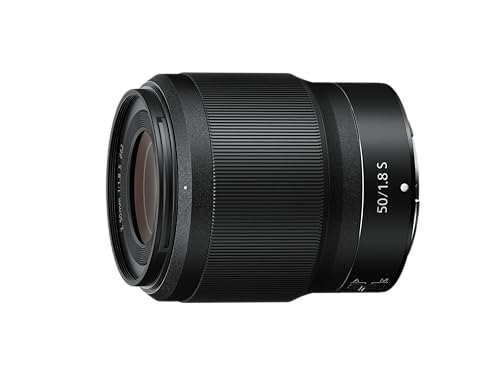
Nikon NIKKOR Z 50mm f/1.8 S
Twelve elements in nine groups make this the most complex f/1.8 design in the group, and resolution at wide apertures reflects that. Stepping motor autofocus stays silent, and weather sealing protects the mount against dust and light rain. A 62mm filter thread keeps accessories inexpensive compared with pro glass.
Pros
- Exceptionally sharp from f/1.8 onward
- Silent stepping motor suits video work
- Weather-sealed barrel and mount
Cons
- Longer and heavier than typical f/1.8 primes
- Sits above budget primes on outlay

Canon RF 50mm f/1.8 STM
About 160g and barely longer than a body cap, this is the lens that lives on an EOS R body permanently. A customisable control ring sets aperture, ISO or exposure compensation without moving your hand. Close focus of roughly 0.3m lets you fill the frame with a coffee cup or a flower.
Pros
- Around 160g, so it never comes off the body
- Control ring assigns aperture or ISO
- Focuses close for a standard prime
Cons
- Visible focus breathing during video pulls
- Plastic mount rather than metal

Canon RF 50mm f/1.2L USM
An f/1.2 aperture gathers roughly two stops more light than an f/1.8 lens, which changes what is possible in a dim reception hall. Fifteen elements in nine groups keep that speed usable rather than soft. Weather-resistant construction and a ring USM motor target working professionals shooting all day.
Pros
- f/1.2 opens up genuinely dark venues
- Subject separation no f/1.8 lens can match
- Sealed barrel handles working conditions
Cons
- Heaviest and largest lens in this comparison
- More capability than casual shooters will use

Canon EF 50mm f/1.8 STM
Canon’s EF nifty fifty has stayed in production for decades because the optics punch far above the outlay. A metal mount replaces the plastic one used on the older version, and STM focusing runs quietly enough for video. Mounting it on an EOS R body needs only the EF to RF adapter, which preserves full autofocus.
Pros
- Sharpness far beyond what the outlay suggests
- Metal mount despite the entry positioning
- Adapts to RF bodies with full autofocus
Cons
- Manual focus ring is narrow and short
- Barrel materials feel basic in the hand

Sony FE 50mm f/1.8
Six elements in five groups keep weight at roughly 186g, making it the light option for a full-frame Alpha kit. Aspherical glass controls distortion well enough for portraits and street work. Autofocus uses a DC motor rather than a linear one, so it hunts more audibly than newer Sony primes.
Pros
- Around 186g for all-day carry
- Pleasant subject separation at f/1.8
- Simple optical formula keeps it compact
Cons
- Autofocus is slower and audibly noisier
- No distance scale or focus hold button

Nikon AF-S 50mm f/1.8G
Silent Wave Motor focusing is built into the barrel, so it autofocuses on entry Nikon bodies that lack a screw drive. Seven elements in six groups produce crisp results from f/2 onward. Around 185g on an F-mount DSLR, it remains the obvious standard prime for anyone still shooting one.
Pros
- Built-in motor autofocuses on entry DSLR bodies
- Crisp results across the frame by f/2
- Light and compact at roughly 185g
Cons
- F mount only, so Z bodies need an adapter
- Plastic barrel construction throughout
How to choose
Which 50mm lens fits your camera mount? Start here, because nothing else matters if the lens will not attach. Canon mirrorless bodies use RF. Canon DSLRs use EF. Sony full-frame mirrorless uses FE, which is the same physical E mount. Nikon mirrorless uses Z, and Nikon DSLRs use F. Sigma, Panasonic and Leica share the L mount. Your mount is usually printed near the lens release button or listed on the first page of the manual. Buy only inside that group unless you plan to adapt.
What does the f-number actually change? Maximum aperture controls two things at once: light gathering and depth of field. Each full stop doubles the light, so f/1.2 pulls in roughly twice as much as f/1.8 and lets you keep shutter speeds usable indoors. Background blur grows alongside it, which is what separates a prime from a kit zoom. Weight and outlay climb steeply past f/1.8, though, and depth of field at f/1.2 is thin enough that one eye can land out of focus.
Is 50mm a good focal length for portraits? On a full-frame sensor, 50mm sits close to natural human perspective, so faces look normal rather than stretched or compressed. That makes it flattering for environmental portraits where you want some room in the frame. Head-and-shoulders work benefits from stepping back and cropping slightly. On an APS-C body the same lens frames like 75mm to 80mm, which many photographers prefer for headshots but find tight in small rooms.
Should you buy a budget prime or professional glass? The f/1.8 options here capture most of the look for a fraction of the weight. Sigma’s Art lens and Canon’s f/1.2L add corner sharpness at wide apertures, faster and quieter motors, weather sealing and better flare control. Those gains show up in paid work and on large prints. Start with an f/1.8, shoot it for a season, and upgrade only once you can name the specific limitation blocking a shot you want.
How they compare
| # | Model | Mount | Best for | Score | Price |
|---|---|---|---|---|---|
| 1 | Sigma 50mm f/1.4 DG DN Art | Sony E and L mount | Best overall | 9.4 | Check price |
| 2 | Nikon NIKKOR Z 50mm f/1.8 S | Nikon Z | Best for Nikon Z mount | 9.2 | Check price |
| 3 | Canon RF 50mm f/1.8 STM | Canon RF | Best for Canon RF mount | 9.0 | Check price |
| 4 | Canon RF 50mm f/1.2L USM | Canon RF | Best premium | 8.8 | Check price |
| 5 | Canon EF 50mm f/1.8 STM | Canon EF | Best budget | 8.6 | Check price |
| 6 | Sony FE 50mm f/1.8 | Sony FE | Best for Sony E mount | 8.3 | Check price |
| 7 | Nikon AF-S 50mm f/1.8G | Nikon F | Best for Nikon F DSLRs | 8.0 | Check price |
Questions worth asking
How do you know which 50mm lens fits your camera?
Look for the mount name near the lens release button or in the manual. Canon mirrorless is RF, Canon DSLR is EF, Sony full-frame is FE, Nikon mirrorless is Z and Nikon DSLR is F. Match that exactly.
What does f/1.8 or f/1.4 mean on a lens?
It is the widest the aperture opens. Lower numbers admit more light and blur backgrounds more strongly. f/1.4 gathers about twice the light of f/2, at the cost of size, weight and outlay.
Is a 50mm lens good for portraits?
Yes, particularly for portraits that include some surroundings. Full-frame bodies render natural proportions at 50mm. APS-C bodies turn it into a short telephoto around 75mm, which suits tighter headshots.
Can you use a 50mm lens on a crop-sensor camera?
You can, and the framing tightens to roughly 75mm to 80mm equivalent. That works well for portraits and detail shots. Indoor group photos become awkward because you have to back up further.
Do you need image stabilization in a 50mm lens?
Rarely. Wide apertures allow fast shutter speeds, and most current bodies stabilise the sensor instead. Stabilisation earns its place on telephoto lenses far more than on a standard prime.
Why do some 50mm lenses cost so much more than others?
Faster apertures demand larger, more precisely ground glass and stronger focus motors to move it. Weather sealing, metal barrels and advanced coatings add more. Simple f/1.8 designs skip all of that and stay small.
Can you adapt a DSLR 50mm lens to a mirrorless body?
Usually yes within the same brand. Canon EF lenses work on RF bodies through Canon’s adapter with full autofocus, and Nikon F glass adapts to Z bodies similarly. Cross-brand adapting is far less reliable.
Is a 50mm prime better than a kit zoom?
For low light and background separation, clearly. A kit zoom typically opens to f/3.5 or f/5.6, so a 50mm at f/1.8 gathers several times more light. Zooms still win on framing flexibility.
Which 50mm lens is best for video?
Silent focus motors and low focus breathing matter most. The Nikon Z 50mm f/1.8 S and Sigma Art both handle this well. The Canon RF 50mm f/1.8 STM breathes noticeably during focus pulls.
What is a nifty fifty?
It is the nickname for an affordable 50mm f/1.8 prime, a lens almost every manufacturer sells. Canon EF 50mm f/1.8 STM and Sony FE 50mm f/1.8 are typical examples.
Final word
Identify your mount first, because the best 50mm lens is simply the best one that attaches to your body. Sigma 50mm f/1.4 DG DN Art is the optical winner for Sony E and L mount shooters, and Nikon NIKKOR Z 50mm f/1.8 S holds the same position for Z bodies. Canon owners get excellent results for very little weight from the RF 50mm f/1.8 STM or the long-serving EF version.
Marcus Chen
Marcus covered consumer electronics for enthusiast tech publications for six years before joining ChoiceCrest. He specializes in translating manufacturer spec sheets into plain-language buying advice, with a focus on audio, computing accessories and smart-home gear.