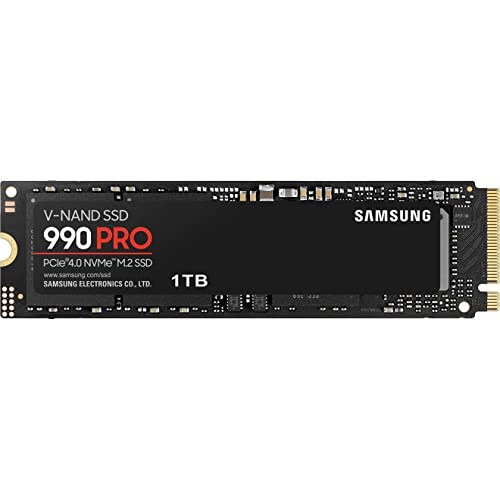
Turn a Spare NVMe Drive Into a Fast Portable SSD
The Sabrent EC-SNVE is our top pick for balancing 10Gbps speed, tool free access and a shell that actually sheds heat. The Acasis TBU405 is the pick for Thunderbolt speeds, and the UGREEN CM400 is the value option for everyday portable storage.
Sabrent’s EC-SNVE leads because it delivers the full speed a 10Gbps port can supply, opens without tools, and sheds enough heat that long transfers do not collapse partway through. Need speeds beyond USB? The Acasis TBU405 covers Thunderbolt machines, while the UGREEN CM400 handles the everyday job of turning a spare drive into fast portable storage.
Advertised numbers rarely tell the whole story, since almost every enclosure quotes a peak sequential figure that lasts only until the controller heats up. Bridge chipset, thermal path and whether your computer’s port can actually supply the bandwidth separate a good enclosure from a frustrating one. We compared interface generations, cooling design, drive length support and cable types, using published specifications alongside what owners report during long sustained transfers.
Before you buy
Does the enclosure or the port set your top speed? A 10Gbps enclosure plugged into a 5Gbps port runs at 5Gbps, and a Thunderbolt enclosure on a plain USB-C port falls back to USB speeds. Check what your computer actually offers before buying, since a USB-C shaped connector says nothing about its bandwidth. Laptop manuals and system information tools list the port generation, so match the enclosure to the slowest link in the chain.
Why does heat limit real world enclosure speed? NVMe drives run hot, and inside a sealed enclosure they reach throttling temperatures within a minute or two of sustained writing. That is why aluminium bodies, thermal pads and small fans matter more than the headline number. Long video transfers or disk imaging favor cooling design over a slightly larger housing.
What drive size and keying does your enclosure need? Most enclosures accept M.2 2280 drives, the common length, but shorter 2230 and 2242 drives need mounting points not every enclosure provides. Keying matters too, since an NVMe enclosure takes M key PCIe drives and will not work with a B key SATA M.2 drive. Some enclosures explicitly support both interfaces, worth checking if you have older drives to reuse.
Which cable and file system should you use after assembly? A USB-C cable rated only for USB 2.0 speeds strangles a fast enclosure regardless of the hardware, so keep the cable that came in the box and label it. After assembly, format the drive for how you plan to use it: exFAT for moving between Windows and macOS, or the native file system if the drive stays on one platform.
The top picks, ranked
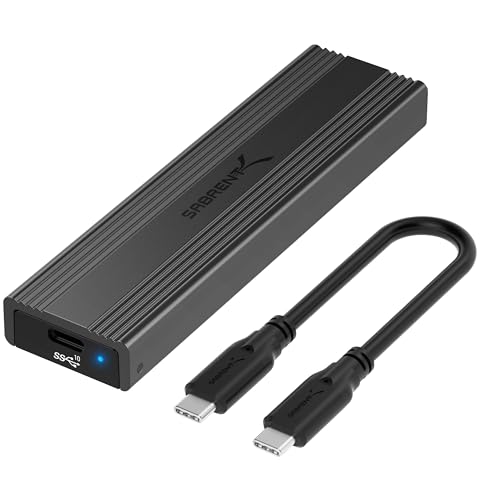
Sabrent EC-SNVE USB 3.2 Tool-Free NVMe Enclosure
A ribbed aluminium body, a thermal pad against the drive and a tool free clip cover the fundamentals that many rivals skip. Sustained transfers hold near the interface limit instead of dropping off after the first large file. Being a 10Gbps design, it cannot match a 20Gbps or Thunderbolt housing paired with a fast drive.
Pros
- Holds speed through long sustained transfers
- Tool free access makes drive swaps trivial
- Aluminium body genuinely helps with heat
Cons
- Capped at 10Gbps rather than 20Gbps
- Gets warm to the touch during heavy use

Acasis TBU405 Thunderbolt 3 NVMe Enclosure
Editing video directly from an external drive rather than copying it first is where Thunderbolt’s higher ceiling pays off. A chunky heatsink body, plus a fan option in the range, keeps a fast drive from throttling under editing loads. Full speed only appears on Thunderbolt ports, so a plain USB machine falls back to standard USB rates.
Pros
- Real editing speeds straight from the external drive
- Substantial heatsink for sustained work
- Includes the Thunderbolt cable it needs
Cons
- Full speed only on Thunderbolt ports
- Costs several times a USB enclosure
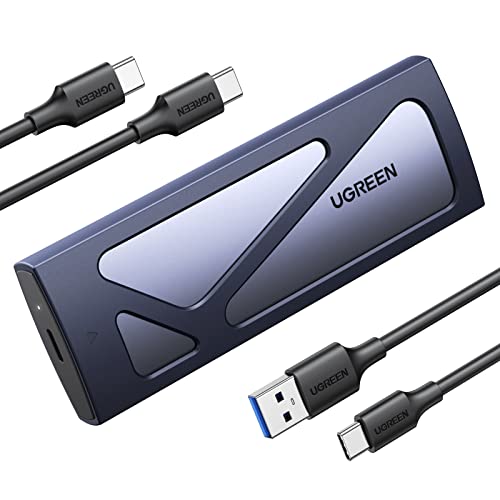
UGREEN CM400 M.2 NVMe Enclosure
A 10Gbps interface, an aluminium body and both USB-C and USB-A cables in the box mean UGREEN’s enclosure works with older laptops without an adapter. Assembly needs a small screwdriver, a minor inconvenience for a drive set up once. Owners report it runs warm under continuous writes, typical for a compact housing at this price.
Pros
- Both cable types included for older machines
- Solid 10Gbps performance for the outlay
- Compact enough for a pocket
Cons
- Needs a screwdriver to assemble
- Warms noticeably during long writes

OWC Express 1M2 Thunderbolt NVMe Enclosure
OWC has built Mac storage for years, and firmware here behaves properly through macOS sleep and wake rather than dropping the volume. A heatsink body with a quiet integrated fan suits video and photo libraries on a Mac laptop with little hassle. Price sits well above USB enclosures, and the fan is audible in a silent room.
Pros
- Reliable behaviour through Mac sleep and wake
- Active cooling prevents throttling on long jobs
- Strong support from an established storage brand
Cons
- Fan is audible in a quiet room
- Premium price for a single drive enclosure

ORICO M2PV-C3 NVMe Enclosure
Small and light enough to disappear in a laptop bag pocket, ORICO still uses an aluminium shell rather than plastic. Performance holds up for general file work and backups over a 10Gbps port. Less surface area means less heat headroom, so very long sustained writes slow down more than in a larger housing.
Pros
- Genuinely pocket sized with metal construction
- Tool free drive installation
- Fine for backups and general file work
Cons
- Less heat headroom than larger bodies
- Slows during very long sustained writes

Plugable USBC-NVME Tool-Free Enclosure
Detailed compatibility information and direct support are unusual in a category full of anonymous listings, and that matters when a drive is not detected. The enclosure itself is a straightforward tool free 10Gbps design with a metal body. Performance is competent rather than class leading, so buy this one for the support rather than the numbers.
Pros
- Real technical support if a drive misbehaves
- Clear published compatibility lists
- Tool free assembly with a metal shell
Cons
- Performance is mid pack rather than leading
- Plainer design than rivals

Satechi USB-C NVMe SSD Enclosure
Satechi builds accessories to sit alongside a modern laptop, and this enclosure follows suit with a slim anodised body that matches common laptop finishes. It handles everyday transfers and backups over USB-C without fuss. Screwed assembly replaces a tool free clip here, and the styling adds to the cost.
Pros
- Slim anodised body matches modern laptops
- Solid everyday transfer performance
- Good thermal contact through the metal shell
Cons
- Screwed assembly rather than tool free
- Styling adds to the cost
Compared at a glance
| # | Model | Interface | Best for | Score | Price |
|---|---|---|---|---|---|
| 1 | Sabrent EC-SNVE USB 3.2 Tool-Free NVMe Enclosure | USB 3.2 Gen 2, 10Gbps | Best overall | 9.4 | Check price |
| 2 | Acasis TBU405 Thunderbolt 3 NVMe Enclosure | Thunderbolt 3, up to 40Gbps | Best for maximum speed | 9.2 | Check price |
| 3 | UGREEN CM400 M.2 NVMe Enclosure | USB 3.2 Gen 2, 10Gbps | Best value | 9.0 | Check price |
| 4 | OWC Express 1M2 Thunderbolt NVMe Enclosure | Thunderbolt, up to 40Gbps | Best for Mac workflows | 8.8 | Check price |
| 5 | ORICO M2PV-C3 NVMe Enclosure | USB 3.2 Gen 2, 10Gbps | Best compact enclosure | 8.6 | Check price |
| 6 | Plugable USBC-NVME Tool-Free Enclosure | USB 3.2 Gen 2, 10Gbps | Best for reliable compatibility | 8.3 | Check price |
| 7 | Satechi USB-C NVMe SSD Enclosure | USB-C, 10Gbps | Best design match for laptops | 8.0 | Check price |
Good to know
How fast should an NVMe enclosure be?
A USB 3.2 Gen 2 enclosure at 10Gbps typically delivers around 900MB to 1000MB per second in practice. A 20Gbps enclosure roughly doubles that, and Thunderbolt goes considerably higher. Real world speed also depends on the drive inside and how hot it gets.
Why is my NVMe enclosure slower than advertised?
The usual causes are a slower port than expected, a cable not rated for the speed, thermal throttling during longer transfers, or a drive whose write cache has filled. Check the port generation first, since that accounts for most cases.
Do NVMe enclosures need active cooling?
For sustained work, yes. Aluminium bodies with thermal pads handle most use, while heavy continuous writing benefits from a heatsink or a fan. Occasional file copies rarely run long enough to reach throttling temperatures.
Can any M.2 drive go in an NVMe enclosure?
Only M key NVMe drives, unless the enclosure explicitly supports SATA M.2 as well. Check length support too, since many enclosures only fit 2280 drives, and shorter drives need a mounting point.
Is Thunderbolt worth the extra cost for external storage?
Only if your computer has Thunderbolt and your workflow reads or writes large files continuously, such as video editing directly from the external drive. For backups and general file storage, a 10Gbps USB enclosure is the better value.
Can you boot an operating system from an external NVMe enclosure?
Often yes, though it depends on the computer’s firmware and operating system. Macs generally boot from external Thunderbolt and USB drives reliably. Windows machines vary and may need specific settings, so treat bootability as a bonus rather than a guarantee.
How should I format an external NVMe drive?
Use exFAT if the drive moves between Windows and macOS. Use NTFS for Windows only, or APFS for macOS only, since native file systems handle large transfers and permissions better on their own platform.
Are tool free NVMe enclosures less reliable than screwed ones?
Not inherently. A well made tool free clip holds a drive as securely as screws and makes swapping drives far easier. Poor examples exist in both designs, so judge build quality rather than fastening method.
USB or Thunderbolt enclosure, which should I buy?
Choose USB if your machine lacks Thunderbolt or your work is general backups and file transfers. Choose Thunderbolt if your computer supports it and you edit large media files directly from the external drive.
The bottom line
The Sabrent EC-SNVE is the enclosure most people should buy, reaching the practical limit of a 10Gbps port while opening without tools and managing heat well enough to keep transfers steady. If your machine has Thunderbolt and you work directly from the external drive, the Acasis TBU405 removes the bandwidth ceiling entirely. For a spare drive that just needs to become portable storage, the UGREEN CM400 covers it for less.
Marcus Chen
Marcus covered consumer electronics for enthusiast tech publications for six years before joining ChoiceCrest. He specializes in translating manufacturer spec sheets into plain-language buying advice, with a focus on audio, computing accessories and smart-home gear.