Smart Socket Adapters for Lamps You Already Own
Sengled Smart Light Socket E26 leads for homes with a Zigbee hub, since schedules keep running when broadband drops. Treatlife Smart Light Socket E26 is the value choice on plain 2.4GHz Wi-Fi with no bridge. Feit Electric Smart Wi-Fi Light Socket covers a spare lamp with minimal setup.
Sengled Smart Light Socket E26 suits households already running a Zigbee hub, where commands travel locally instead of through a server. Schedules survive an internet outage, which cloud-only sockets cannot promise. Buying the hub is the catch, so a one-lamp project is better served by a Wi-Fi model such as Treatlife.
Listings make this category look identical: a white cylinder threaded E26 at both ends. Radio type, wattage ceiling, dimming support and body length are where the picks separate. We compared published specifications, app features and voice assistant support brand by brand. Owner feedback about dropouts, heat and fixtures that no longer close settled the order.
The best picks, ranked
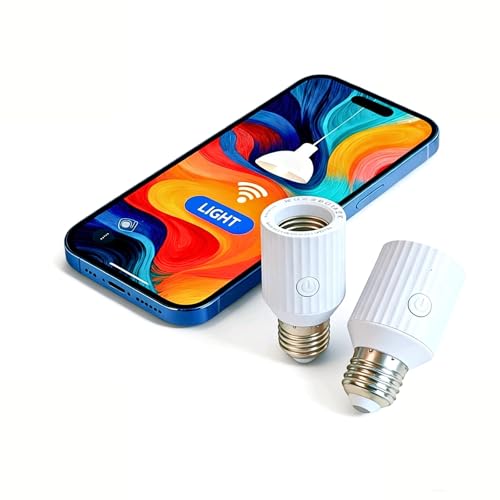
Sengled Smart Light Socket E26
Commands reach this socket through a Sengled Zigbee hub rather than your router, which keeps response quick and schedules local. Screw it into a table lamp or a covered porch fixture and an ordinary bulb gains timers plus voice control. Pairing goes smoothest when the hub sits within a room or two.
Pros
- Schedules keep running through an internet outage
- Responds faster than cloud-only Wi-Fi sockets
- Every added Zigbee device strengthens the mesh
Cons
- A separate hub is required to use it at all
- Switches power only, with no bulb dimming
Treatlife Smart Light Socket E26
Setup runs over 2.4GHz Wi-Fi with no bridge in the middle. Countdown timers, weekly programs and sunset triggers live in the Treatlife app, and routines carry into Alexa or Google Home. Choose this one to automate a single lamp without adding hardware to the shelf.
Pros
- Pairs with an existing router straight away
- Sunset triggers run porch lights without a timer
- One voice command can cover a group of sockets
Cons
- 5GHz networks are not supported
- Control stops while the internet is down
Feit Electric Smart Wi-Fi Light Socket
Feit keeps the feature list to pairing, on and off, schedules and voice control. Fewer settings means less to misread on a lamp you rarely think about, such as a closet or guest room fixture. A single Feit account also covers the brand’s bulbs and plugs.
Pros
- Short pairing process with few options to get wrong
- Shares one app with Feit bulbs and plugs
- Body fits under most table lamp harps
Cons
- Scheduling is thinner than Treatlife offers
- No energy monitoring of any kind
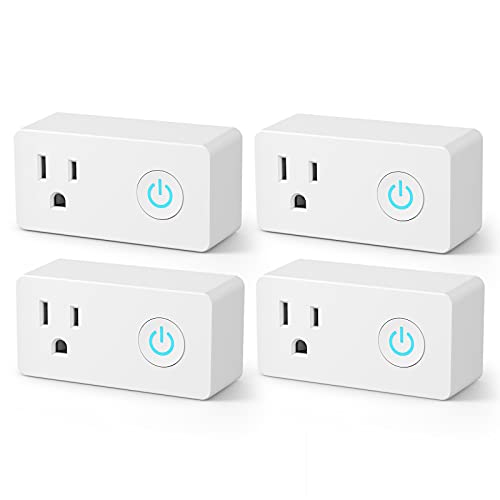
BN-LINK Smart Wi-Fi Light Socket
Scheduling is where BN-LINK spends its effort, and the app screen shows it. Repeating weekly programs, random vacation modes and countdown shutoffs sit together without menu digging. Housing carries a dry location rating, so a covered porch or a garage fixture marks the limit.
Pros
- Weekly and vacation programs are quick to edit
- Countdown shutoff suits closets and laundry rooms
- Same app as BN-LINK plugs and timers
Cons
- Not rated for exposed outdoor fixtures
- Longer body than the Feit socket
DEWENWILS Smart Wi-Fi Light Socket
Sunset and sunrise times come from your location instead of a photocell, so a nearby streetlight cannot fool the schedule. Entry lights, coach lamps and stairwell fixtures switch on at dusk and off at an hour you set. DEWENWILS sells matching outdoor timers if the setup later grows.
Pros
- Dusk to dawn timing follows the calendar by itself
- Good fit for entry lights nobody wants to think about
- Alexa and Google Assistant both supported
Cons
- Automation leans on a cloud connection
- Fewer third-party integrations than Zigbee models
Aoycocr Smart Light Socket E26
Multi-packs are the reason to look here, once a bedroom, hallway and porch all need matching control. App groups let one command switch every socket at the same moment. Feature depth stops short of Treatlife, though basic schedules and voice control are present.
Pros
- Multi-packs cut the work of outfitting several rooms
- Group commands switch a whole floor at once
- Pairing takes only a few steps
Cons
- App design lags the bigger brands
- Scheduling stays limited to basic repeats
MOES Smart Wi-Fi Light Socket E26
Running on Smart Life puts this socket beside your Tuya plugs, sensors and curtain motors in one dashboard. Cross-device scenes are the payoff, such as a motion sensor switching on a hallway lamp. Outside that ecosystem the appeal thins, since the standalone app adds little over Treatlife.
Pros
- Drops into existing Smart Life scenes
- Pairs with Tuya motion sensors for triggers
- Alexa and Google Assistant both supported
Cons
- Limited appeal outside the Tuya ecosystem
- Setup guide is thin for first-time users
How to choose
What to look for in a smart socket adapter Start with the base. Nearly every US lamp uses an E26 thread, and these adapters expect 120V household wiring. Wattage ceilings come next, since most stop around 60W of incandescent load. Added height surprises buyers more than anything else, because an adapter raises the bulb by roughly two inches. Decide which app you want to live in, then check whether the socket only switches power or passes dimming through to a dimmable bulb.
Wi-Fi vs Zigbee: which suits your home Wi-Fi sockets join a 2.4GHz network directly and need no extra box, which fits one or two fixtures. Add a dozen and your router carries a dozen more clients. Zigbee models such as the Sengled route through a hub instead, trimming router load and keeping schedules alive during an outage. Weigh that hub against how many devices you expect to run. No adapter in this group connects to a 5GHz band.
Best picks for table lamps, porches and garages Table lamps reward a short body, so Feit or Treatlife slide under a shade with least trouble. Covered porches and coach lights benefit from sunset scheduling, which is where DEWENWILS earns its spot. Garage and basement fixtures usually sit in bare ceramic holders with clearance to spare, letting BN-LINK use its longer housing freely. Outfitting a whole floor with matched behaviour is cheaper through Aoycocr multi-packs.
Where socket adapters fall short Enclosed glass fixtures trap heat, and stacking an adapter beneath a bulb makes that worse. Open or vented housings are the safer home. Nothing here carries a wet location rating, so outdoor use means a covered fixture only. Adapters switch whole-fixture power, not colour or brightness, unless the bulb itself is smart. Anyone who wants tunable white, colour scenes or real dimming should skip adapters and fit a smart bulb.
Compared at a glance
| # | Model | Radio | Best for | Score | Price |
|---|---|---|---|---|---|
| 1 | Sengled Smart Light Socket E26 | Zigbee, requires a compatible hub | Best overall | 9.4 | Check price |
| 2 | Treatlife Smart Light Socket E26 | 2.4GHz Wi-Fi, no hub | Best value | 9.2 | Check price |
| 3 | Feit Electric Smart Wi-Fi Light Socket | 2.4GHz Wi-Fi, no hub | Best budget | 9.0 | Check price |
| 4 | BN-LINK Smart Wi-Fi Light Socket | 2.4GHz Wi-Fi, no hub | Best for garage and porch schedules | 8.8 | Check price |
| 5 | DEWENWILS Smart Wi-Fi Light Socket | 2.4GHz Wi-Fi, no hub | Best for dusk to dawn lighting | 8.6 | Check price |
| 6 | Aoycocr Smart Light Socket E26 | 2.4GHz Wi-Fi, no hub | Best for multi-room setups | 8.3 | Check price |
| 7 | MOES Smart Wi-Fi Light Socket E26 | 2.4GHz Wi-Fi, no hub | Best for Smart Life and Tuya users | 8.0 | Check price |
Good to know
What is a smart bulb socket adapter?
It is a short cylinder that screws into an E26 lamp socket and accepts a normal bulb on top. Power to that bulb then answers to an app, a schedule or a voice assistant.
Do smart light sockets need a hub?
Only Zigbee models such as the Sengled do. Treatlife, Feit, BN-LINK, DEWENWILS, Aoycocr and MOES pair straight to a 2.4GHz router.
Can a socket adapter dim a normal bulb?
Most cannot, since they simply switch power on and off. Brightness control needs a dimmable smart bulb or a wall dimmer behind the fixture.
Do these work with Alexa and Google Assistant?
Every pick on this list links to both. Zigbee sockets pass the command through their hub, which usually shaves a fraction off response time.
Smart socket adapter vs smart bulb: which is better?
Adapters suit fixtures where you like the existing bulb or run several bulbs from one switch. Smart bulbs win when colour, tunable white or per-bulb dimming is the goal.
How many watts can a smart light socket handle?
Plan on standard household bulbs up to about 60W. LED bulbs draw a fraction of that, so the ceiling only bites with old incandescents.
Can you use a smart light socket outdoors?
Inside a covered fixture, yes. None of these adapters carry a wet location rating, so open yard and porch fittings need a weatherproof housing.
Why will my light fixture no longer close after fitting one?
Adapters add roughly two inches of height. Shallow ceiling domes and glass globes run out of room, so measure fixture depth before ordering.
Will a smart socket connect to a 5GHz network?
No. All the Wi-Fi models here use 2.4GHz, so a combined network may need its bands split briefly during pairing.
Are smart light sockets safe in an enclosed fixture?
Heat is the concern, because an adapter and bulb together generate more of it in a sealed globe. Vented or open fixtures are the safer choice.
The verdict
Sengled Smart Light Socket E26 is the one to fit first, because a Zigbee mesh keeps schedules honest even when broadband fails. Households with no hub and no plan to buy one should take Treatlife instead, which covers sunset triggers and grouping over plain Wi-Fi. Anyone chasing colour or genuine dimming should buy a smart bulb and leave adapters alone.
Marcus Chen
Marcus covered consumer electronics for enthusiast tech publications for six years before joining ChoiceCrest. He specializes in translating manufacturer spec sheets into plain-language buying advice, with a focus on audio, computing accessories and smart-home gear.


