Smart Thermostats Compared: Wiring, Sensors and Fit
ecobee Smart Thermostat Premium ranks first because it ships with a room sensor and works around a missing C wire. Google Nest Learning Thermostat automates scheduling without setup. Amazon Smart Thermostat covers basic single zone systems at the lowest cost among the seven models compared here.
ecobee Smart Thermostat Premium leads because a remote sensor comes in the box, fixing the common problem of a warm hallway and a cold bedroom. Google Nest Learning Thermostat suits anyone who would rather skip building a schedule entirely. Amazon Smart Thermostat handles a straightforward single zone system for far less.
Compatibility decides more than features here, since a thermostat that cannot draw power from your wiring is useless no matter how polished its app looks. We compared published wiring requirements, sensor support and assistant integrations across current listings, weighed recurring owner feedback on installation, and ranked each model on how much real control it adds to an ordinary home.
What matters most
What should you check before buying a smart thermostat? A missing C wire stops more installations than any other issue. Pull the old thermostat off the wall and photograph the terminals before ordering anything. ecobee’s power extender kit works around a missing C wire. Nest often runs without one on compatible systems. Amazon’s thermostat requires a C wire with no adapter included.
Do remote sensors matter more than smart scheduling? Uneven heating frustrates more owners than a clunky schedule ever does. Rooms far from the thermostat run too hot or too cold regardless of automation. Remote sensors average temperature across rooms or flag which ones are occupied. ecobee and Honeywell include one sensor in the box. Nest sells sensors separately, so factor that into the real cost.
Which model fits heat pumps and multi stage systems? Conventional gas furnaces work with nearly every thermostat on this list. Heat pumps with auxiliary heat, dual fuel systems and multi stage furnaces narrow the field fast. Every brand here publishes an online compatibility checker worth two minutes of your time. Emerson’s Sensi Touch has the widest reach among unusual setups, according to installer feedback.
How realistic are the advertised energy savings? Manufacturers base savings estimates on modeled scenarios, not your specific house. Homes already running a decent programmable schedule see only modest change. Bigger gains show up in homes that left heating running constantly before switching. Treat published percentages as a ceiling, not a guarantee.
Our top picks

ecobee Smart Thermostat Premium
ecobee bundles one SmartSensor in the box, so the system averages temperature between rooms instead of trusting a single hallway reading. Built in Alexa and air quality tracking sit alongside a full color touchscreen. A power extender kit handles homes that lack a C wire.
Pros
- Included sensor fixes uneven room temperatures
- Power extender kit works around a missing C wire
- Compatible with Alexa, Google Assistant and Siri
Cons
- Costs more than every other model here
- Air quality readings offer limited everyday value

Google Nest Learning Thermostat
Nest builds a schedule from about a week of manual adjustments, so nobody has to program it by hand. A rotating metal dial replaces touchscreen taps for quick changes. Room sensors, sold separately, extend coverage into other spaces.
Pros
- Builds a working schedule within about a week
- Physical dial makes quick adjustments simple
- Runs on many systems without a C wire
Cons
- Room sensors are an added purchase
- Learning mode struggles with irregular routines

Amazon Smart Thermostat
Amazon strips the category to essentials and prices it lowest among the seven. Alexa Hunches adjusts temperature automatically once everyone leaves. Control happens through the app or voice, since the unit skips a full display.
Pros
- Lowest cost among the seven models compared
- Alexa Hunches trigger reliably, according to owner reviews
- Installation stays simple on compatible systems
Cons
- No C wire adapter included in the box
- Skips remote sensors and on device controls
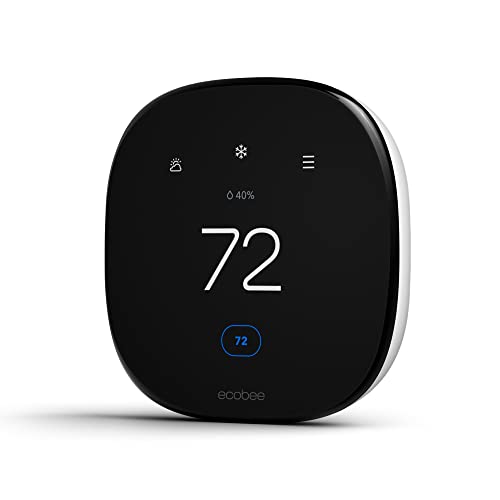
ecobee Smart Thermostat Enhanced
Enhanced keeps ecobee’s sensor support and app but drops the built in speaker and air quality monitor. Owners add SmartSensors one room at a time as budget allows. A full color touchscreen carries over from the Premium.
Pros
- Same multi room sensor averaging as the Premium
- Full touchscreen carries over from the flagship
- Works across Alexa, Google and HomeKit
Cons
- Sensors ship separately, adding to total cost
- Skips the built in voice assistant speaker
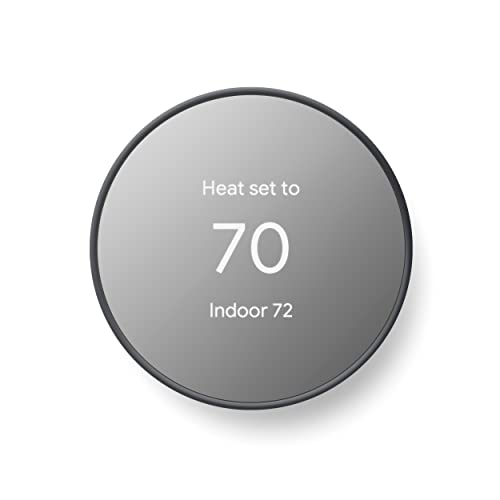
Google Nest Thermostat
This cheaper Nest swaps automatic learning for suggested adjustments you approve in the app. A touch strip and mirrored front replace the rotating dial. Energy history appears inside the Google Home app for tracking use over time.
Pros
- Lower entry cost into the Google ecosystem
- Mirrored front blends into a visible wall
- Energy history tracks usage inside the app
Cons
- Touch strip feels fiddlier than a dial
- Skips the Learning model’s automatic scheduling

Honeywell Home T9 Smart Thermostat
T9’s included sensor tracks motion alongside temperature, so the system favors rooms people actually occupy. Long sensor range extends coverage across larger floor plans. The app trades polish for straightforward function.
Pros
- Motion sensing prioritizes occupied rooms automatically
- Sensor range covers larger homes than average
- Ships with one sensor already in the box
Cons
- App interface lags behind ecobee and Nest
- Hardware design looks plainer than rivals

Emerson Sensi Touch Smart Thermostat
Installers turn to Sensi when a system trips up flashier brands, including some heat pump and multi stage setups. Its interface stays conventional rather than clever. Compatibility, not automation, is the reason to choose it.
Pros
- Handles wiring setups other brands reject
- Supports Alexa, Google Assistant and Apple Home
- Conventional interface needs no learning curve
Cons
- Skips learning and occupancy detection features
- Design looks dated next to Nest models
Side by side
| # | Model | Sensors | Best for | Score | Price |
|---|---|---|---|---|---|
| 1 | ecobee Smart Thermostat Premium | One SmartSensor included, supports more | Best overall | 9.4 | Check price |
| 2 | Google Nest Learning Thermostat | Learns from manual adjustments | Best for hands off scheduling | 9.2 | Check price |
| 3 | Amazon Smart Thermostat | Alexa | Best value for Alexa households | 9.0 | Check price |
| 4 | ecobee Smart Thermostat Enhanced | Supports SmartSensors, none included | Best for adding sensors gradually | 8.8 | Check price |
| 5 | Google Nest Thermostat | Suggested adjustments in app | Best entry point into Google Home | 8.6 | Check price |
| 6 | Honeywell Home T9 Smart Thermostat | One motion sensing sensor included | Best for whole home motion sensing | 8.3 | Check price |
| 7 | Emerson Sensi Touch Smart Thermostat | Broad, including multi stage and heat pump | Best for tricky heating system compatibility | 8.0 | Check price |
Common questions
What is a C wire and does my thermostat need one?
A C wire delivers constant low voltage power so the thermostat can run its screen and Wi-Fi radio. Most smart models expect one. ecobee’s power extender kit and Nest models built to run without one both offer a workaround.
Can I install a smart thermostat myself?
Most installations involve photographing existing wiring, matching terminals and mounting a new plate. Multi stage, dual fuel and heat pump systems with auxiliary heat are trickier. Hiring an electrician makes sense for those setups.
Do smart thermostats work with heat pumps?
Most support standard heat pump operation. Auxiliary and emergency heat stages are where compatibility varies between brands. Check the manufacturer’s compatibility tool against your exact wiring before buying.
Are remote sensors worth the extra cost?
They matter when one room in a home runs consistently hot or cold. Homes that heat evenly with a well placed thermostat gain little from them. ecobee Premium and Honeywell T9 include a sensor already, while Nest sells them separately.
Which smart thermostat works best for a Google Home setup?
Google Nest Thermostat and Google Nest Learning Thermostat both integrate natively with Google Home. The Learning model adds automatic scheduling and works with Nest Temperature Sensors. The standard Nest costs less and suits a simpler setup.
Is a smart thermostat worth it without a C wire?
Yes, if you pick a model built for that. ecobee’s included power extender kit and select Nest thermostats run without a dedicated C wire. Confirm compatibility against your exact HVAC system first, since not every low voltage system qualifies.
Does a smart thermostat work during an internet outage?
Heating keeps running on its last stored schedule, and physical controls stay active. Remote access, voice commands and app based schedule changes pause until the connection returns.
Do these thermostats work with Apple Home?
ecobee Premium, ecobee Enhanced and Emerson Sensi Touch all support Apple Home. Google Nest models and the Amazon Smart Thermostat do not. That matters if your household relies on iPhones and HomePods for control.
Can one smart thermostat control multiple heating zones?
No, each zone needs a separate thermostat because zones run on independent wiring. Multi zone homes install one unit per zone and manage all of them from a single app.
How does geofencing or away detection work?
The thermostat tracks your phone’s location or built in occupancy sensors to ease heating back when the house empties. It ramps back up as you approach home. Owners report solid results for regular routines, less so for households where people come and go at random.
Final word
ecobee Smart Thermostat Premium suits most homes because its included sensor fixes the uneven heating that irritates people more than any scheduling quirk. Google Nest Learning Thermostat wins for anyone who wants scheduling handled without touching an app. Amazon Smart Thermostat remains the practical pick for a single zone system with a C wire already in the wall.
Marcus Chen
Marcus covered consumer electronics for enthusiast tech publications for six years before joining ChoiceCrest. He specializes in translating manufacturer spec sheets into plain-language buying advice, with a focus on audio, computing accessories and smart-home gear.
You might also need

External Hard Drives Compared for Speed and Storage
Wired or Wireless Gaming Headset: Which Fits Your Setup?

Noise Cancelling Headphones Compared for Travel and Work
