Sleeping Pads That Keep Backpackers Warm and Rested
The Therm-a-Rest NeoAir XLite leads this list for its warmth-to-weight ratio on three-season trips. The Nemo Tensor All-Season suits side sleepers with gapless baffles, while the Exped MegaMat Duo 10 fits couples camping together by car.
The Therm-a-Rest NeoAir XLite tops this list for most backpackers, packing a 4.2 R-value into a pad under a pound. It suits three-season trips where weight matters most, though its crinkly fabric is noisier than foam-core alternatives.
We compared R-value, weight, packed size, and inflation method across backpacking and car-camping pads. Owner feedback on noise, durability, and comfort filled gaps the spec sheets leave out. Trip length and expected temperatures change which pad actually fits.
How to pick the right one
What R-value and weight actually mean R-value measures how well a pad resists heat loss into the ground, with higher numbers meaning warmer nights. Weight and packed size matter most for backpackers carrying the pad themselves. Thickness affects comfort more than warmth, cushioning hips and shoulders off the ground.
Inflation method: manual, pump, or self-inflating Manual pads need breaths or a separate pump sack to fill completely. Integrated pump bags, like Big Agnes uses, speed up setup without lung effort. Self-inflating foam-core pads do some of the work automatically but weigh more per inch of thickness than pure air pads.
Best for side sleepers and cold nights Side sleepers put more pressure on hips and shoulders, which benefits from wider pads and gapless baffle designs. Cold-weather and shoulder-season trips need a higher R-value, generally above 4.0. Combining both needs favors pads like the Nemo Tensor over thinner, warm-weather-only designs.
Best for car camping and basecamps Weight stops being a limiting factor once a vehicle carries the gear instead of a backpack. Thicker, wider pads like the Exped MegaMat Duo prioritize comfort over pack size. Self-inflating foam pads also suit basecamps where setup speed matters more than ounces.
The shortlist, ranked
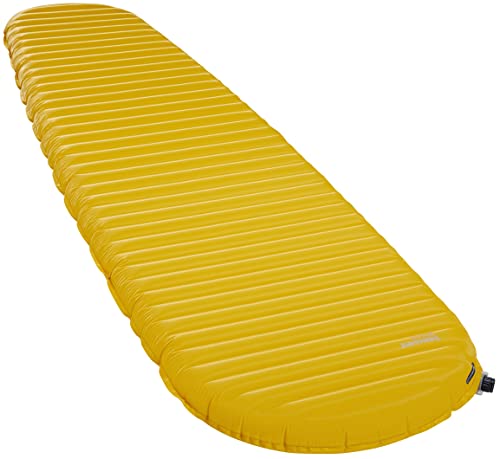
Therm-a-Rest NeoAir XLite
Therm-a-Rest tunes reflective internal baffles on the XLite to trap heat without adding foam or extra fill weight. That keeps the pad under a pound while still handling three-season trips. The crinkly fabric makes more noise than foam-insulated pads when you shift position.
Pros
- High warmth-to-weight ratio suits three-season backpacking
- Packs down small enough for minimalist backpacking setups
- Reflective baffle design avoids heavy foam or synthetic fill
Cons
- Fabric can feel noisy or crinkly when shifting position
- No integrated pump, so inflation takes manual breaths or a bag

Nemo Tensor All-Season
Nemo’s spiral-cut baffles remove the gaps between tubes that let side sleepers sink into firmer seams. The wider 20 inch body also gives shoulders and hips more room than narrower ultralight pads. Extra width and insulation add a bit of weight over the lightest competitors.
Pros
- Gapless baffle design reduces pressure points for side sleepers
- Wider body gives more room for shoulders and hips
- High R-value supports cold-weather, shoulder-season trips
Cons
- Heavier than the lightest ultralight pads on this list
- Wider shape adds a bit more packed bulk

Sea to Summit Ether Light XT Insulated
Sea to Summit builds the Ether Light XT four inches thick, more cushioning than most backpacking pads provide. Air sprung cell construction keeps that thickness supportive rather than bouncy. The extra air volume takes more breaths or a pump sack to fully inflate.
Pros
- Four inch thickness cushions hips and shoulders better than thinner pads
- Air sprung construction keeps a thick pad supportive, not bouncy
- Reasonable weight despite the added cushioning
Cons
- Takes more effort or a pump sack to fully inflate
- Taller profile sits higher off the ground inside a tent

Klymit Static V2
Klymit’s V-shaped air chambers limit air movement side to side, which helps keep a sleeper centered on the pad. The low R-value suits warm-weather trips rather than shoulder-season cold. Its lower price makes it an easy first pad for new backpackers.
Pros
- Lower price than most insulated backpacking pads
- V-shaped chambers help minimize side-to-side rolling
- Lightweight enough for casual backpacking trips
Cons
- Low R-value is not warm enough for cold or shoulder-season nights
- Side rails can feel firm compared to padded baffle designs

Big Agnes Rapide SL Insulated
Big Agnes bundles a pump bag into the stuff sack itself, so filling the pad takes a few bag squeezes instead of dozens of breaths. A one-way deflate valve speeds up packing the next morning. The pump bag adds a small amount of extra weight to the overall kit.
Pros
- Integrated pump bag fills the pad in under a minute
- One-way valve speeds up deflating and packing at camp
- Solid R-value handles most three-season conditions
Cons
- Pump bag adds a bit of extra weight to the full kit
- Slightly bulkier packed size than minimalist pads

Exped MegaMat Duo 10
Exped scales the MegaMat Duo wide enough for two sleepers, making it a basecamp or car-camping staple rather than a backpacking pad. Self-inflating foam inside handles most of the fill automatically. The nearly 8.5 pound weight only makes sense once a vehicle is doing the carrying.
Pros
- Double-wide design fits two sleepers on one connected pad
- Self-inflating foam core reduces manual inflation effort
- High R-value handles cold-weather car camping comfortably
Cons
- Weight and bulk rule out anything but car camping
- Takes up significant trunk or storage space when packed

Coleman Self-Inflating Camping Pad
Coleman’s open-cell foam core partially inflates itself once the valve opens, needing only a few extra breaths to firm up. The thinner 1.5 inch profile keeps cost and pack size down compared to premium air pads. Insulation and cushioning trail pads built with baffled air chambers.
Pros
- Self-inflating foam simplifies setup compared to manual air pads
- Lower price than most insulated backpacking air pads
- Foam core keeps working even with a small puncture
Cons
- Thinner profile offers less cushioning than baffled air pads
- Lower insulation value than premium three-season pads
Side by side
| # | Model | R-value | Best for | Score | Price |
|---|---|---|---|---|---|
| 1 | Therm-a-Rest NeoAir XLite | 4.2 | Best overall | 9.3 | Check price |
| 2 | Nemo Tensor All-Season | 5.4 | Best for side sleepers | 9.1 | Check price |
| 3 | Sea to Summit Ether Light XT Insulated | 4 inches | Best for cushioned comfort | 8.9 | Check price |
| 4 | Klymit Static V2 | 1.3, uninsulated | Best budget backpacking pad | 8.5 | Check price |
| 5 | Big Agnes Rapide SL Insulated | Integrated pump bag | Best for quick inflation | 8.8 | Check price |
| 6 | Exped MegaMat Duo 10 | 52 inches, double | Best for couples and car camping | 8.7 | Check price |
| 7 | Coleman Self-Inflating Camping Pad | Self-inflating open-cell foam | Best value self-inflating pad | 8.4 | Check price |
Frequently asked questions
What R-value do I need for a sleeping pad?
An R-value around 2 to 3 suits warm summer trips. Cold or shoulder-season camping generally needs an R-value of 4 or higher.
How do I inflate a backpacking sleeping pad without a pump?
Most manual pads inflate with a series of deep breaths through the valve. A dry pump sack reduces moisture buildup inside the pad compared to breathing directly into it.
Why is my sleeping pad noisy?
Some ultralight fabrics, especially reflective baffle designs, make a crinkling sound when a sleeper shifts position. Foam-core and self-inflating pads tend to run quieter.
Can two sleeping pads be combined for a double bed?
Some brands, like Exped, make dedicated double-wide pads built as one connected unit. Combining two single pads works but tends to separate during the night.
How thick should a sleeping pad be?
Around 2 to 3 inches suits most backpackers balancing comfort and weight. Four inches or more adds noticeably more cushioning for side sleepers or car camping.
Do self-inflating pads need any manual air added?
Yes, most self-inflating foam pads still need a few extra breaths after the valve opens to reach full firmness. The foam core does most, not all, of the work.
How do I patch a punctured sleeping pad?
Most pads ship with a small repair kit containing patches and adhesive. Locating the leak in water before patching makes the fix far more reliable.
Is a higher R-value always better?
A higher R-value traps more heat, which helps in cold weather but can feel too warm on hot summer nights. Matching R-value to expected temperatures works better than maximizing it.
What is the difference between an air pad and a self-inflating pad?
Air pads rely entirely on manual or pump inflation and pack smaller. Self-inflating pads use an open-cell foam core that partially fills on its own but weighs more.
How long do backpacking sleeping pads last?
A well cared for air pad can last many seasons if stored dry and protected from sharp rocks. Regular care, including a footprint under the tent, extends that lifespan.
The bottom line
The Therm-a-Rest NeoAir XLite remains the strongest overall pick for backpackers who want real warmth without excess weight. Side sleepers and anyone prioritizing comfort over ounces should choose the Nemo Tensor All-Season instead, since its wider, gapless baffles handle pressure points the NeoAir’s narrower tubes do not address as well.
Sierra Daniels
Sierra's background is in landscape design and nursery retail. She focuses on lawn and garden equipment, outdoor furniture and gear durability, weighing published specs against how materials actually hold up outside.