Indoor herb gardens that keep basil going all winter
AeroGarden Bounty Elite takes the top spot, running nine pods under a 50 watt hood with app scheduling. iDOO 12-Pod Hydroponic Growing System fits more plants per inch and accepts ordinary seeds. New growers wanting zero measuring should start with Click and Grow Smart Garden 9 PRO.
AeroGarden Bounty Elite earns the top slot for households that cook with herbs most days, since nine pods under a 50 watt hood keep basil regrowing through winter. Refills run on branded seed pods, an ongoing cost the open systems skip. Anyone happy sowing their own sponges should jump straight to the iDOO 12-Pod system.
Herb kits usually fail for dull reasons. Light runs too weak, a small tank empties in three days, or the pod format locks out cheap seed. Rankings here weigh published LED wattage, growing sites, reservoir capacity and grow height, plus repeated owner reports on germination, algae and pump noise after dark.
What we recommend

AeroGarden Bounty Elite
Nine pods sit beneath a 50 watt full spectrum hood that rises as stems climb, leaving about two feet of grow height. Wi-Fi handles light schedules and feeding reminders from a phone, and Alexa runs the same commands by voice. Stainless steel housing wipes clean and reads less plasticky on a kitchen counter.
Pros
- Strongest LED hood in this lineup
- Two feet of clearance suits basil and peppers
- App logs water and nutrient timing
Cons
- Branded seed pods keep costing after purchase
- Hood raised fully dominates a small counter

iDOO 12-Pod Hydroponic Growing System
Twelve growing sites and a 4.5 litre tank cover a family herb supply without a proprietary pod format. Baskets take plain sponges, so any supermarket seed packet works. Aerator noise gets handled by a cycling quiet mode rather than a constant hum through the evening.
Pros
- Most growing sites per inch of counter
- Plain sponges accept any seed packet
- Quiet cycle helps in open plan rooms
Cons
- Settings live on the panel, with no app
- Light arm height limits taller plants

Click and Grow Smart Garden 9 PRO
Pods arrive pre seeded with nutrients already blended into the medium, so nothing gets measured or mixed. Wicks draw water up from the tank, and a full reservoir typically covers three weeks. PRO adds Wi-Fi for light scheduling and refill prompts.
Pros
- No mixing, measuring or nutrient dosing
- Three weeks between reservoir refills
- Owners report consistent germination from sealed pods
Cons
- Refills only come from Click and Grow
- Nine small pods cap total harvest volume

LetPot LPH-Max 21-Pod Hydroponic System
Twenty one sites turn a windowless corner into a genuine production bed for basil, mint and lettuce. App scheduling covers light hours and pump intervals, and a low water alert fires before roots dry out. Width is the catch here, so measure the counter before ordering.
Pros
- Highest plant count here by a clear margin
- Light arm rises to follow growth
- Low water alert protects exposed roots
Cons
- Claims a wide stretch of counter
- Refilling 21 sites takes real time

Rise Gardens Personal Rise Garden
Eight sites with wide root spacing let lettuce, kale and chard head up instead of bolting early. Its app builds a nutrient schedule around whatever you planted. Herbs grow fine in the same tray, though a dedicated pod system packs more of them into the same width.
Pros
- Root spacing suits leafy greens
- App tailors nutrients to the crop
- Cabinet styling reads as furniture
Cons
- Eight sites, fewer than the pod systems
- More garden than a herbs only grower needs
AeroGarden Harvest
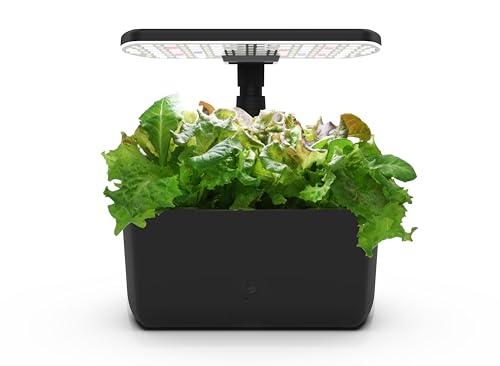
Six pods under a 20 watt LED tuck in beside a kettle without swallowing the worktop. Clearance stops near 12 inches, which suits parsley, thyme and dwarf basil rather than tall varieties. A button panel flashes when water or nutrients run low, and there is no app to pair.
Pros
- Smallest footprint among the powered systems
- Buttons only, nothing to install or pair
- Reminder lights catch a missed refill
Cons
- Twelve inch clearance limits tall herbs
- Runs on the same paid AeroGarden pods

Back to the Roots Organic Windowsill Herb Garden Kit
Seeds, organic growing medium and planters arrive ready for a sunny sill. Nothing plugs in, so there is no pump to replace and no running electricity. Output tracks window light directly, which makes a north facing room a poor host.
Pros
- Lowest outlay of anything here
- No pump, timer or power draw
- Organic seed and growing medium included
Cons
- Needs a genuinely bright window
- Slower to harvest than hydroponic units
How to pick the right one
What to look for in an indoor herb garden Four numbers decide most of this: growing sites, LED wattage, reservoir capacity and clearance under the lamp. Wattage drives leaf density, so a 20 watt lamp keeps thyme compact while basil turns leggy. Tank size sets your refill rhythm, from every few days on a small unit to three weeks on a wicking system. Check the pod format too, because a closed one commits you to the maker’s refills for years.
Hydroponic pods vs soil kits: which suits your home Roots in oxygenated nutrient water grow faster, and first harvests arrive weeks earlier than in soil. Soil kits ask less of you: no pump to fail, no noise, no power. Where a south facing window throws real light for most of the day, the Back to the Roots kit produces plenty of basil. Everywhere else the LED becomes the deciding component, and a powered system wins outright.
How much light, noise and counter space to plan for Herbs want 14 to 16 hours of light a day, which makes a built in timer more useful than raw brightness. Lamp arms that raise keep diodes close as stems climb, preventing stretched growth. Pumps cycle audibly overnight, so studios and bedrooms favour the iDOO quiet mode or a silent soil kit. Measure width and full hood height before ordering, since the Bounty Elite and LetPot LPH-Max both sprawl.
Which herbs actually thrive under an LED Basil, mint, parsley, chives and leaf lettuce regrow happily after repeated cutting. Rosemary and coriander are fussier, disliking constant warmth and permanently wet roots. Grow what you cook with weekly, or the unit turns into an ornament by spring. Planning greens alongside herbs pushes you toward the Rise Gardens tray, where root depth is the whole point.
Compared at a glance
| # | Model | Pods | Best for | Score | Price |
|---|---|---|---|---|---|
| 1 | AeroGarden Bounty Elite | 9 | Best overall | 9.4 | Check price |
| 2 | iDOO 12-Pod Hydroponic Growing System | 12 | Best value | 9.2 | Check price |
| 3 | Click and Grow Smart Garden 9 PRO | 9 pre seeded plant pods | Best for beginners | 9.0 | Check price |
| 4 | LetPot LPH-Max 21-Pod Hydroponic System | 21 | Best for large harvests | 8.8 | Check price |
| 5 | Rise Gardens Personal Rise Garden | 8 plants | Best for salad greens as well as herbs | 8.6 | Check price |
| 6 | AeroGarden Harvest | 6 | Best compact countertop | 8.3 | Check price |
| 7 | Back to the Roots Organic Windowsill Herb Garden Kit | Soil based starter kit | Best budget | 8.0 | Check price |
Common questions
How many hours of light do indoor herbs need?
Plan 14 to 16 hours under the LED, followed by a dark rest period. Timers on the AeroGarden and LetPot units run that cycle for you. Under 10 hours, stems stretch toward the lamp and leaves stay thin.
Are hydroponic herb gardens better than soil pots?
They grow faster, since roots sit in oxygenated nutrient water rather than waiting on you to water. Soil pots cost less, make no noise and forgive a skipped week. Window light is the real decider, because hydroponic units bring their own.
Which herbs grow best indoors under a grow light?
Basil, mint, parsley, chives, dill and leaf lettuce all perform reliably. Thyme and oregano grow slowly but steadily. Coriander bolts fast indoors, and rosemary sulks in permanently wet media.
Do I have to buy branded seed pods?
Only with closed systems. AeroGarden and Click and Grow expect their own pods, which keeps costing after the purchase. iDOO and LetPot use plain sponges and baskets, so any seed packet drops in.
How often do you top up water and nutrients?
Small tanks want water every few days, larger reservoirs every one to two weeks. Nutrient dosing usually falls on a two week rhythm. Click and Grow pods carry nutrients already, leaving only water to add.
AeroGarden Bounty Elite vs iDOO 12-Pod: which should I buy?
Bounty Elite brings the stronger hood, two feet of clearance and app control, so plants bush out more. iDOO offers more sites, no pod lock in and a lighter running cost. Frequent cooks lean AeroGarden, frugal growers lean iDOO.
Can an indoor herb garden grow lettuce or tomatoes?
Leafy greens suit most of these, and Rise Gardens is built around that root depth. Dwarf tomatoes and peppers need the 24 inch clearance of the Bounty Elite. Compact units such as the AeroGarden Harvest stay in herb and salad territory.
What causes algae and fungus gnats in an indoor garden?
Algae builds where light reaches the nutrient water or debris settles in the tank. Covering the reservoir and rinsing it between crops clears most of it. Fungus gnats favour soil kits kept too wet.
Is an indoor herb garden worth it versus buying herbs?
It pays off for anyone using fresh basil or parsley weekly, since a cut and come again plant keeps producing. Occasional cooks get less back, especially on branded pod refills. A bright windowsill kit covers light use with far less commitment.
Final word
AeroGarden Bounty Elite is the one to buy when herbs feature in weekly cooking, because the 50 watt hood and 24 inch clearance keep plants producing rather than stalling. Growers put off by branded refills should take the iDOO 12-Pod system and sow their own sponges. A bright south facing window makes the Back to the Roots kit entirely adequate.
Sierra Daniels
Sierra's background is in landscape design and nursery retail. She focuses on lawn and garden equipment, outdoor furniture and gear durability, weighing published specs against how materials actually hold up outside.