Portable Fans That Keep You Cool Without a Wall Outlet
JISULIFE’s Portable Neck Fan wins for hands-free cooling that lasts a full workday on one charge. The OPOLAR Handheld Misting Fan cools faster in direct sun, and the Vornado Zippi Personal Fan packs the most airflow into a travel-sized body. Rankings come from compared specs, battery capacity, and owner-reported runtime across seven current Amazon listings.
JISULIFE’s neck fan suits commuters and outdoor workers who need both hands free while walking or doing yard work. Its 4000mAh battery runs up to 16 hours on the lowest setting, longer than any handheld model here. Top speed still falls short of a handheld fan’s raw wind force, so buyers chasing maximum airflow should look at the options further down.
Neck, handheld, desk, and clip-on fans each solve a different cooling problem, which makes a side-by-side comparison useful before buying. We compared battery capacity, speed settings, noise, and weight across current Amazon listings, then checked owner feedback for real-world runtime and durability.
How to pick the right one
What matters most in a portable fan Airflow strength varies more between personal fans than blade size suggests. A turbine-style blade, like Honeywell’s TurboForce, pushes more air than a flat blade of the same diameter. Battery capacity matters just as much, since a 4000mAh cell lasts roughly twice as long as a 2000mAh one at the same speed. Weight and folding stands decide whether a fan travels well in a bag or stays put on a desk. USB-C charging is now common enough to share a cable with a phone.
Neck, handheld, clip-on, or desk: which style fits Neck fans free both hands but depend on a strap fit that varies by user. Handheld units aim air more precisely and often add extras like misting, at the cost of one occupied hand. Clip-on and desk fans work best where the fan can stay put, such as a stroller rail or office desk. Larger 10 inch fans like the O2COOL or Treva move more total air but give up the portability that makes neck and handheld models convenient.
Best picks for outdoor heat and travel Direct sun changes what a fan needs to do. Misting models, such as OPOLAR’s handheld, cool skin faster than air alone because evaporation pulls heat away. Campsites and patios favor larger battery packs, since there is no outlet to recharge from mid-afternoon. Neck and clip-on styles suit walking tours or stadium seating, where hands need to stay free. Packing a fan for a flight favors a compact stand like the one built into the Vornado Zippi.
Battery life for daily commuting versus occasional use Daily commuters drain a personal fan faster than occasional campers expect. A 4000mAh battery on medium speed typically lasts a workday, but high speed can cut that runtime in half. Fans built around D batteries skip recharging entirely, trading convenience for ongoing battery replacement. Larger capacity models, like the Geek Aire, take longer to recharge fully but need it less often. Topping off a partially drained battery is generally easier on long-term capacity than repeated full drains.
The top picks, ranked
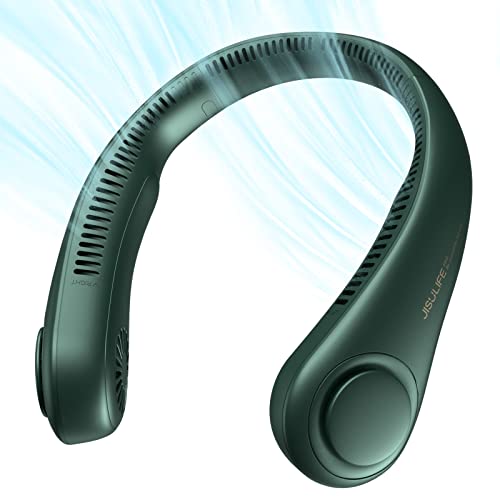
JISULIFE Portable Neck Fan
Dual bladeless vents direct air upward without catching hair or loose fabric. A 4000mAh battery powers three speed settings for up to 16 hours on low. USB-C charging shares a cable with most phones and tablets.
Pros
- Bladeless vents keep hair and jewelry safe
- Hangs hands-free during walks or yard work
- Long runtime on the lowest setting
Cons
- Airflow feels weak on the highest setting outdoors
- Neck strap fit varies by neck size

OPOLAR Handheld Misting Fan
A small water tank releases a fine mist alongside the airflow, which cools skin faster than air alone in direct sun. A folding handle turns the fan into a mini desk stand. The 2000mAh battery runs longer in fan-only mode than with misting on.
Pros
- Mist setting cools faster in direct sun
- Folds into a stand for desk use
- Compact enough for a bag or stroller pocket
Cons
- Mist mode drains the battery faster than fan-only
- Tank needs frequent refilling in hot weather

Vornado Zippi Personal Fan
Vornado’s signature vortex airflow pushes air further than its size suggests, unlike flat-blade personal fans. A built-in stand angles it on a nightstand or airplane tray table. USB-C charging uses the same port as most phones.
Pros
- Vortex airflow reaches further than flat-blade fans
- Compact enough for a carry-on bag
- Built-in stand needs no extra mount
Cons
- Costs more than basic clip-on fans
- Top speed can feel loud in a quiet room

Honeywell HTF090B TurboForce Personal Fan
A turbine-style blade pushes air harder than most personal fans this size, trading battery power for a cord. Two speed settings and a tilt head aim airflow at a monitor or workstation. Plugging into a standard outlet removes runtime as a concern.
Pros
- Stronger airflow than most personal fans this size
- No battery to charge or replace
- Tilts to aim air at a desk or chair
Cons
- Needs a nearby outlet, not portable outdoors
- Runs louder on high speed than USB fans
O2COOL 10 Inch Portable Fan
Six D batteries or a standard AC adapter power this 10 inch fan, so it works at a campsite or on a kitchen counter without switching devices. Two speed settings cover light air movement and a stronger breeze for warm rooms. The tilting head folds flat for storage.
Pros
- Works on batteries or wall power without extra parts
- Folds flat for easy storage in a car or closet
- Larger blade moves more air than handheld models
Cons
- Battery-only power source not included
- Bulkier than neck or clip-on styles

Geek Aire Rechargeable Outdoor Fan
A large capacity battery outlasts most handheld or neck fans by several hours, making this fan suited to patios and campsites. A tilting head and wide base let it stand on uneven ground without a table. Three speeds balance runtime against airflow strength.
Pros
- Runtime outlasts most personal fans on this list
- Wide base stands steady outdoors
- Tilting head adjusts airflow angle
Cons
- Too bulky to carry like a handheld fan
- Longer recharge time due to larger battery
Treva 10-Inch Portable Desk Fan
Four D batteries power this fan instead of a rechargeable pack, keeping the design simple and parts easy to replace. A single speed setting covers basic air movement for a desk, tent, or garage workbench. The stand doubles as a carry handle.
Pros
- Simple single-button operation
- No charging cable to track down
- Stand folds into a carry handle
Cons
- Single speed limits control over airflow
- Battery replacement adds ongoing upkeep
The lineup, side by side
| # | Model | Battery | Best for | Score | Price |
|---|---|---|---|---|---|
| 1 | JISULIFE Portable Neck Fan | 4000mAh, USB-C rechargeable | Best overall for hands-free cooling | 9.4 | Check price |
| 2 | OPOLAR Handheld Misting Fan | About 5ml capacity | Best for outdoor heat and mist cooling | 9.1 | Check price |
| 3 | Vornado Zippi Personal Fan | USB-C rechargeable | Best for travel and compact storage | 8.9 | Check price |
| 4 | Honeywell HTF090B TurboForce Personal Fan | AC plug-in, 120V | Best for desk and office use | 8.7 | Check price |
| 5 | O2COOL 10 Inch Portable Fan | 6 D batteries or AC adapter | Best value for dual power flexibility | 8.5 | Check price |
| 6 | Geek Aire Rechargeable Outdoor Fan | Large capacity, USB-C rechargeable | Best for camping and extended outdoor power | 8.3 | Check price |
| 7 | Treva 10-Inch Portable Desk Fan | 4 D batteries | Best budget option for occasional use | 8.0 | Check price |
Good to know
How long does a portable fan battery last?
Most personal fans run 4 to 16 hours per charge depending on speed and battery capacity. Neck fans with a 4000mAh cell tend to last longest on the lowest setting, while smaller handheld units often need a recharge after a few hours of continuous use.
Can a portable fan cool you down in direct sunlight?
A fan alone mostly moves warm air rather than cooling it, so effectiveness drops in direct sun. Misting fans add a cooling effect through evaporation, which owners report works better outdoors than airflow by itself.
What is the difference between a neck fan and a handheld fan?
A neck fan rests on the shoulders and blows air upward hands-free, while a handheld fan needs to be held or clipped in place. Handheld models generally offer stronger, more directional airflow, but they occupy one hand during use.
Are portable fans loud on the highest setting?
Noise depends more on blade design than size. Turbine-style blades, like Honeywell’s TurboForce, tend to run louder at top speed than bladeless neck fan designs, based on owner feedback across similar models.
Is a rechargeable portable fan better than one with disposable batteries?
Rechargeable fans cost less to run over time and usually charge through a shared USB-C cable. Battery powered models like the Treva skip needing an outlet or charger, which suits infrequent use or backup situations better than daily use.
Do portable fans work well for babies and strollers?
Clip-on and small desk-style fans attach to a stroller rail and provide gentle, adjustable airflow. Owners generally prefer lower speed settings and a fan angled away from a child’s face.
How much airflow does a small personal fan actually move?
Airflow depends on blade design and diameter rather than overall size alone. A 10 inch fan like the O2COOL moves more total air than a 3 inch neck fan blade, though the neck fan directs that air more precisely at the user.
Which portable fan is best for camping without an outlet?
Larger capacity battery fans, such as the Geek Aire, run considerably longer between charges than compact neck or handheld models. A wide, stable base also matters more at a campsite than at a desk, since the fan needs to stand on uneven ground.
What size portable fan works best for a desk at the office?
Corded desk fans like the Honeywell TurboForce skip battery limits entirely and push more air than most personal fans their size. A tilt head aims that airflow directly at a monitor or chair without repositioning the whole unit.
Final word
JISULIFE’s Portable Neck Fan remains the strongest all-around pick for anyone who wants hands-free cooling that lasts most of a workday on one charge. Campers and patio users who need longer runtime without recharging should choose the Geek Aire instead, since its larger battery outlasts every neck or handheld model here. Office workers who don’t need portability at all get more raw airflow from the plug-in Honeywell TurboForce.
Sierra Daniels
Sierra's background is in landscape design and nursery retail. She focuses on lawn and garden equipment, outdoor furniture and gear durability, weighing published specs against how materials actually hold up outside.


