What Tools Do You Actually Need for Resin Crafting?
LET’S RESIN’s silicone measuring cup set fixes the most beginner problems, since accurate ratios decide whether resin cures at all. A Bernzomatic ST2200T micro torch clears surface bubbles in seconds. A 3M 6200 half facepiece respirator covers the safety step most guides skip entirely.
Start with the LET’S RESIN silicone measuring cup set, since most failed pours trace back to a mismeasured ratio rather than bad resin. Add the Bernzomatic ST2200T micro torch for surface bubbles, faster and more controllable than a heat gun on small pieces. Treat the 3M 6200 half facepiece respirator as essential, not optional, for anyone pouring indoors.
Resin punishes small mistakes in ways other crafts do not, since a mix off by a small margin stays sticky forever and cannot be rescued. Temperature, humidity, trapped air and cure time all pull in different directions, and your tools decide how much of that you control. We compared measuring accuracy, bubble removal, cure control, safety gear and cleanup against what owners report about which items sit unused after the first month.
The shortlist, ranked

LET’S RESIN Silicone Measuring Cups Set
Clear molded graduations and a flexible silicone body let you hit a resin to hardener ratio precisely, then peel the cured leftovers straight out. Nothing sticks permanently, so the same cups last through many projects instead of getting tossed. Pour spouts cut down on the dribbles that ruin a mold edge.
Pros
- Cured resin peels away for reuse
- Clear graduations make ratios repeatable
- Pour spouts keep mould edges clean
Cons
- Volume markings are less exact than a scale
- Flexible walls can distort a reading if squeezed

Bernzomatic ST2200T Micro Torch
A quick pass of a small flame pops surface bubbles almost instantly by lowering surface tension. The ST2200T offers an adjustable flame size and a locking trigger, faster and far more precise than a heat gun on small pieces. Butane is sold separately, and the open flame demands respect around flammable solvents.
Pros
- Clears surface bubbles in seconds
- Precise enough for small moulds and bezels
- Adjustable flame for delicate work
Cons
- Butane sold separately
- Open flame needs a clear, ventilated workspace
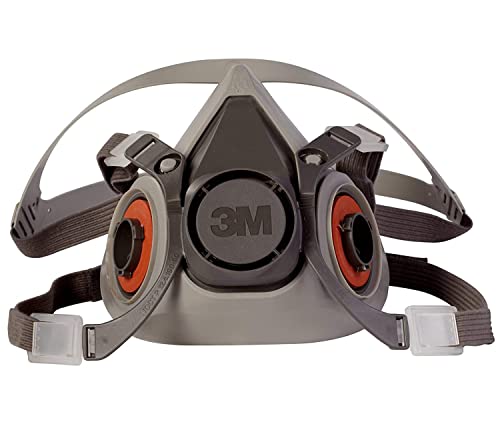
3M 6200 Half Facepiece Respirator
Epoxy fumes and sanding dust push experienced casters toward a proper respirator instead of a dust mask, and the 6200 is the reusable half facepiece most settle on. It takes organic vapor cartridges and particulate filters replaced on a schedule. Fit matters more than the mask itself, so check the seal and choose the size that matches your face.
Pros
- Proper protection for indoor pouring and sanding
- Replaceable cartridges rather than a disposable mask
- Comfortable enough for long sessions
Cons
- Cartridges are an ongoing purchase
- Beards prevent a reliable seal

Wagner Spraytech Furno 300 Heat Gun
A torch takes too long on a river table, where a heat gun covers the surface faster with less risk of scorching a wooden edge. Two temperature settings and enough airflow move bubbles without blowing resin out of the mold, if you keep your distance. Between projects it doubles as a shrink wrap and paint stripping tool.
Pros
- Covers large surfaces quickly
- No open flame near timber edges
- Useful beyond resin work
Cons
- Airflow can ripple a thin pour if held too close
- Less precise than a micro torch on small pieces

SUNUV SUN2C UV LED Lamp
UV resin only makes sense with a lamp strong enough to cure it fully, and this nail style lamp draws most UV crafters for being bright, cheap and timed. Small pieces cure in a few minutes instead of the hours a two part epoxy needs. Depth is the limit, since UV light cannot reach the bottom of a thick pour.
Pros
- Cures small UV resin pieces in minutes
- Timer settings remove guesswork
- Inexpensive for the time it saves
Cons
- Cannot cure thick or deep pours
- Only works with UV resin, not two part epoxy

LET’S RESIN Silicone Mat for Resin Casting
Cured epoxy bonds to almost anything except silicone, so spills that hit a dedicated mat peel off instead of ruining a work surface. Raised edges hold drips instead of letting them run onto the table. A flat, level base also matters more than beginners expect when a piece cures at a slight angle.
Pros
- Cured spills peel away cleanly
- Raised edges contain drips
- Rolls up for storage
Cons
- Creases if stored folded rather than rolled
- Attracts dust and lint between uses

VEVOR 2.5 Gallon Pressure Pot
Pressure crushes bubbles trapped inside a casting rather than just the ones on the surface, which is why anyone selling jewelry or clear cubes eventually buys a pot. This one needs modification and a compressor to run safely for resin, pushing the setup cost and learning curve into advanced territory. Flat art pours do not need it.
Pros
- Eliminates interior bubbles that torches cannot reach
- Transforms clarity on cast jewellery and cubes
- Large enough for multiple moulds at once
Cons
- Needs a compressor and careful setup
- Overkill for flat art and coasters
What matters most
How to measure resin by weight, not by eye Two part epoxy cures through a chemical reaction that needs the stated ratio, and getting it wrong leaves a surface that stays tacky no matter how long you wait. Some resins specify a ratio by volume, others by weight, and the two are not interchangeable because resin and hardener carry different densities. Read the bottle, use graduated cups for volume ratios or a digital scale for weight ratios, and mix for the full time stated, scraping the sides and bottom as you go.
Three ways to deal with resin bubbles Bubbles come from stirring air in, from porous materials like wood releasing it, and from the resin itself. Slow stirring reduces the first source, sealing porous inclusions with a thin coat before the main pour reduces the second, and heat or pressure handles what is left. A torch or heat gun only reaches the surface. Pressure is the honest answer for clear castings with nothing trapped inside, and nothing else substitutes for it.
How temperature and humidity change the cure Most epoxy resins want a workspace around normal room temperature. A cold room slows the cure while making resin thicker and more prone to holding bubbles. Warming the bottles in a water bath before mixing thins the resin and helps air escape, though warming the mixed resin shortens working time. High humidity can leave a cloudy or greasy surface on some formulas. Owners report that a consistently warm, dry space fixes more cure problems than switching brands does.
Why safety gear is not optional with epoxy Uncured epoxy is a sensitizer, meaning repeated skin contact can build an allergy that ends the hobby entirely. Nitrile gloves rather than latex, a respirator with organic vapor cartridges for indoor work, and ventilation form the baseline. Sanding cured resin creates fine dust that needs a particulate filter too. None of this costs much next to the resin itself, yet it is the part of a starter kit most often skipped.
How they stack up
| # | Model | Material | Best for | Score | Price |
|---|---|---|---|---|---|
| 1 | LET’S RESIN Silicone Measuring Cups Set | Flexible silicone | Best overall | 9.4 | Check price |
| 2 | Bernzomatic ST2200T Micro Torch | Refillable butane | Best for bubble removal | 9.2 | Check price |
| 3 | 3M 6200 Half Facepiece Respirator | Reusable half facepiece | Best for safety | 9.0 | Check price |
| 4 | Wagner Spraytech Furno 300 Heat Gun | Two temperature levels | Best for large pours | 8.8 | Check price |
| 5 | SUNUV SUN2C UV LED Lamp | UV LED lamp | Best for UV resin | 8.6 | Check price |
| 6 | LET’S RESIN Silicone Mat for Resin Casting | Silicone | Best for workspace protection | 8.3 | Check price |
| 7 | VEVOR 2.5 Gallon Pressure Pot | 2.5 gallon tank | Best for bubble free castings | 8.0 | Check price |
Common questions
What tools do I actually need to start with resin?
Graduated mixing cups, stirring sticks, nitrile gloves, a silicone mat and a heat source for bubbles cover the basics. A respirator belongs on that list for anyone working indoors. Everything else, including pressure pots and vacuum chambers, can wait until a specific project calls for it.
Why is my resin still sticky after 24 hours?
Almost always an incorrect ratio or incomplete mixing. Scraping the sides and bottom of the cup matters because unmixed hardener clinging to the wall never reacts. A cold room also slows curing considerably, so give a project in a cool space extra time before judging it.
Torch or heat gun for resin bubbles?
A micro torch works faster and more precisely on small pieces, while a heat gun covers large surfaces such as river tables without an open flame near timber. Both only affect surface bubbles. Keep either moving and at a distance, since holding heat in one spot can yellow or dent the surface.
Do I need a pressure pot for resin casting?
Only for castings that must be optically clear inside, such as jewelry, dice and solid cubes. Flat art pours, coasters and tabletops do not need one, since surface bubbles release with heat alone. A pot also requires an air compressor, so treat it as a later upgrade.
Is UV resin easier to work with than two part epoxy?
It cures faster and involves no mixing, which suits small jewelry and paper craft. The tradeoff is depth, since UV light cannot cure a thick pour, and cost per volume runs higher. Many crafters keep both and choose by project instead of replacing one with the other.
What kind of gloves should I use for resin?
Nitrile. Latex offers poor resistance to epoxy chemicals, and vinyl gloves tear easily. Change them as soon as resin gets on them rather than working on, since the point is keeping uncured resin off skin and avoiding a sensitivity.
How do I clean resin tools after a pour?
Wipe uncured resin off with paper towel first, then use isopropyl alcohol on non silicone tools. Silicone cups, mats and sticks are easier, since the residue cures and peels away on its own. Never pour liquid resin down a drain.
Can I use a kitchen scale for resin ratios?
Yes, for resins that state a ratio by weight, and a scale reads more accurately than a flexible cup. Keep it permanently in the craft space rather than moving it between resin and food, and use the tare function between resin and hardener.
The verdict
Buy three things and you cover the failures that trip up most beginners: accurate measuring cups, a bubble tool and a respirator, which handle ratio errors, trapped air and the health risk beginners underestimate. The LET’S RESIN cup set and the Bernzomatic ST2200T torch handle the first two cheaply. Add the VEVOR pressure pot only once you move on to clear castings that have to be flawless inside.
Jake Monroe
Jake worked as a residential contractor for over a decade before shifting to full-time writing. He evaluates power tools, hand tools and workshop gear through the lens of someone who has actually used them on job sites, not just read the box.


