Which Woodworking Saw Do You Actually Need First?
DEWALT’s DWE7485 compact table saw leads this list, because ripping boards accurately settles most workshop projects. Trim and framing work suit the Bosch GCM12SD glide mitre saw better, and breaking down sheet goods favors the Makita XSH04ZB cordless circular saw where a stationary machine cannot reach.
DEWALT’s DWE7485 compact table saw leads this roundup. A rack and pinion fence solves more shop problems per square foot than any other machine here. Trim, framing, and repeated angled cuts point instead toward the Bosch GCM12SD glide mitre saw. Sheet goods too large to carry to a machine call for the Makita XSH04ZB cordless circular saw.
Choosing a woodworking saw is confusing, because each type solves a different problem rather than competing for the same job. A table saw rips, a mitre saw crosscuts, a band saw curves, a scroll saw handles detail work, and a hand saw goes where power tools are clumsy. We compared fence and detent accuracy, crosscut and rip capacity, blade sizes, dust extraction, and shop footprint. Owner feedback on whether calibration holds after a year of use factored into the ranking too.
The top picks, ranked

DEWALT DWE7485 Compact Table Saw
A table saw turns rough boards into square, repeatable parts. DEWALT’s compact DWE7485 does that without dominating a one-car garage. Its rack and pinion fence moves both ends together and locks square, the main difference between a job site saw you trust and one you fight. Rip capacity tops out at 24-1/2 inches to the right, so very wide panels still need an outfeed table.
Pros
- Fence locks square and stays that way
- Fits a one-car garage shop easily
- 24-1/2 inch rip capacity covers most sheet work
Cons
- 8-1/4 inch blade limits maximum cut depth
- Long rips need extra outfeed support

Bosch GCM12SD 12-Inch Dual-Bevel Glide Miter Saw
An axial glide arm replaces the usual sliding rails on this Bosch mitre saw. That design lets it sit closer to a wall than a rail-slide saw with the same 14 inch crosscut capacity. Detents click in cleanly and the dual bevel scale holds its setting, which matters when cutting crown and casing. Weight makes it a stationary shop tool rather than something carried between job sites.
Pros
- Glide arm needs less wall clearance than rail saws
- Dual bevel scale holds accurate settings
- 14 inch crosscut handles wide boards
Cons
- Heavy enough to discourage moving it often
- Dust collection still misses a portion of the cut

Makita XSH04ZB 18V LXT Brushless Circular Saw
Breaking down plywood gets easier when the saw travels to the sheet instead of the other way around. Makita’s brushless motor keeps this 18V saw powering through a full sheet without stalling. A 6-1/2 inch blade keeps the tool light enough to guide one handed along a track. Cordless convenience trades away some depth of cut compared with a 7-1/4 inch corded saw.
Pros
- Goes to the material instead of the reverse
- Brushless motor holds speed through plywood
- Light enough for one handed control on a track
Cons
- Sold as a bare tool, battery and charger extra
- 2-1/4 inch cut depth trails corded 7-1/4 inch saws

WEN BA3959 9-Inch Benchtop Band Saw
Curved cuts, resawing, and small irregular parts all belong to a band saw rather than a table saw blade. WEN’s 9 inch benchtop model fits on a corner bench and still handles most furniture and craft shapes. Two speed settings cover wood and softer materials. Owners report the blade guides and tension need a careful setup session before the saw tracks straight.
Pros
- Safer choice for curves and small parts
- Compact enough for a bench or small stand
- Two speeds suit wood and softer materials
Cons
- Requires careful tuning to track properly
- 3-5/8 inch cut height limits thick resawing

SUIZAN Japanese Ryoba Pull Saw
Japanese pull saws cut on the pull stroke, so the thin blade stays in tension and leaves a cleaner kerf than a push saw. SUIZAN’s ryoba has rip teeth on one edge and crosscut teeth on the other, covering joinery and flush trims. No motor, power cord, or dust extraction gets involved. Forcing the thin 9-1/2 inch blade sideways can kink it.
Pros
- Clean kerf with minimal tearout
- Rip and crosscut teeth on a single blade
- No power or dust extraction required
Cons
- Thin blade kinks under sideways force
- Slower than powered saws for repetitive cuts

WEN 3921 16-Inch Two-Direction Variable Speed Scroll Saw
Tight interior curves, fretwork, and puzzle pieces need a scroll saw rather than a band saw or jigsaw. WEN’s 3921 varies speed from 400 to 1600 strokes per minute and rotates its head, so the operator moves around the work instead of twisting the piece. A tilting table bevels to 45 degrees for angled detail cuts. Bench space for a specialist tool like this pays off only when detail work is a regular task.
Pros
- Handles interior and tight curve cuts other saws cannot
- Variable speed suits thin stock and plastics
- Accepts both pinned and pinless blades
Cons
- Narrow use case outside detail woodworking
- Vibration calls for a solid bench or stand
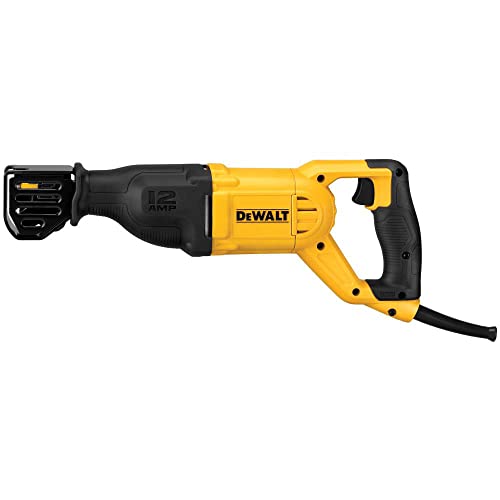
DEWALT DWE305 Corded Reciprocating Saw
Rough demolition work, cutting out old framing, and trimming timber in place call for a reciprocating saw rather than a finish tool. DEWALT’s DWE305 runs on 12 amp corded power, so output never fades halfway through a joist. A tool free blade clamp swaps wood and metal blades quickly. Fine woodworking has no place for this saw, so treat it as a companion to a precision saw, not a replacement.
Pros
- Cuts material in place where machines cannot reach
- Corded power holds output through long cuts
- Tool free blade changes between wood and metal
Cons
- Cut edges need cleanup afterward
- Heavy vibration during extended sessions
What matters most
Which saw should you buy first? Buy for the cut you repeat most, not the project you imagine. Furniture builders rip boards to width constantly, so a table saw removes that bottleneck first. Trim carpenters fit skirting, doors, and casing, and a mitre saw earns its keep from day one. Small shops working mostly from sheet goods often do better with a circular saw and a track than either stationary machine.
How much does the fence affect accuracy? Motor power rarely limits a table saw with a sharp blade. Accuracy depends on whether the fence locks parallel to the blade every time. Rack and pinion fences move both ends together and hold that setting under vibration. Single lock fences on budget saws drift more and need frequent rechecking.
What blade should you use for wood cutting? A blade that ships with a new saw is usually a compromise between ripping and crosscutting. A 24 tooth rip blade clears waste fast through thick stock. A 60 or 80 tooth blade leaves a clean edge in plywood and melamine. Swapping blades improves cut quality more than upgrading the saw, and costs far less.
How do you control dust from a woodworking saw? Fine dust lingers in a home shop long after the saw stops. Check each saw’s extraction port size against your shop vacuum hose before buying. Mitre saws throw dust backward and catch the least of it, so many owners add a hood or reposition the vacuum. Budget for extraction equipment as part of the saw purchase, not an afterthought.
How they compare
| # | Model | Blade | Best for | Score | Price |
|---|---|---|---|---|---|
| 1 | DEWALT DWE7485 Compact Table Saw | 8-1/4 inch | Best overall | 9.4 | Check price |
| 2 | Bosch GCM12SD 12-Inch Dual-Bevel Glide Miter Saw | 12 inch | Best mitre saw | 9.2 | Check price |
| 3 | Makita XSH04ZB 18V LXT Brushless Circular Saw | 6-1/2 inch | Best for sheet goods | 9.0 | Check price |
| 4 | WEN BA3959 9-Inch Benchtop Band Saw | 9 inch | Best for curves | 8.8 | Check price |
| 5 | SUIZAN Japanese Ryoba Pull Saw | Double edge ryoba | Best hand saw | 8.6 | Check price |
| 6 | WEN 3921 16-Inch Two-Direction Variable Speed Scroll Saw | 16 inch | Best for detail work | 8.3 | Check price |
| 7 | DEWALT DWE305 Corded Reciprocating Saw | 12 amp corded | Best budget rough cutting | 8.0 | Check price |
Common questions
What saw should a beginner buy first?
A circular saw paired with a straightedge, in most cases. It handles sheet goods and rough breakdown cheaply and needs no dedicated floor space. Move up to a table saw once repeated accurate rips start slowing projects down.
Table saw vs mitre saw: which comes first?
A table saw rips boards to width and handles sheet goods with a sled. A mitre saw crosscuts trim and framing lumber faster and more accurately. Furniture builders usually start with a table saw, while trim carpenters start with a mitre saw.
Do I need both a table saw and a mitre saw?
Not right away. A crosscut sled lets a table saw handle accurate crosscuts, and a mitre saw paired with a track saw covers a surprising range of work. Most shops eventually own both because each machine is faster at its own job.
Is a cordless circular saw powerful enough for hardwood?
A brushless cordless saw with a sharp blade cuts hardwood without trouble, though runtime drops in thick stock. Corded saws stay the more predictable choice for all day cutting in dense material.
What can a band saw cut that a table saw cannot?
Curves, resawn boards, and small or irregular parts that have no business near an exposed table saw blade. Kickback risk also runs far lower on a band saw, which is why many woodworkers switch tools when a cut feels awkward.
Are Japanese pull saws better than western hand saws?
Pull saws cut on the pull stroke with a thinner blade, producing a narrower kerf and less tearout. Many woodworkers find that easier to control for joinery. Western push saws with thicker blades still handle aggressive rough cutting better, where a thin blade might bind.
How often should you check that a saw is square?
Check table saw blade to mitre slot alignment and mitre saw fence square every few months. Check again after transporting the tool, since vibration during transport throws settings off. A quick check with a reliable square takes minutes, far less time than parts that will not fit together later.
What blade size is best for a table saw or mitre saw?
Ten inch blades are the table saw standard and offer the widest blade selection. Compact 8-1/4 inch table saws trade some depth for portability. Twelve inch mitre saw blades add crosscut capacity, while 10 inch blades run cheaper and lighter.
Do you need a riving knife or splitter on a table saw?
Yes. A riving knife keeps the kerf open behind the blade and guards against kickback when a board pinches shut. Never remove it for standard through cuts, and pick a saw where reinstalling it after non through cuts is quick.
The verdict
DEWALT’s DWE7485 unlocks the most projects in a general woodworking shop, because accurate repeatable rips limit most builds. Trim, door, and framing work favor the Bosch GCM12SD glide mitre saw first, with a table saw added later. Tight on space? The Makita XSH04ZB paired with a straightedge covers much of the same ground in far less floor area.
Jake Monroe
Jake worked as a residential contractor for over a decade before shifting to full-time writing. He evaluates power tools, hand tools and workshop gear through the lens of someone who has actually used them on job sites, not just read the box.