A Basic Jewelry Making Kit Covers Most Wirework Needs
Beadalon Jewelry Pliers Set wins for the three-tool core that covers wire and findings work in one purchase. Xuron 410 Micro-Shear Flush Cutter leaves the cleanest, burr-free wire ends. Paxcoo Jewelry Making Supplies Kit bundles tools with findings for the easiest complete start.
Chain nose, round nose and flush cutters cover the overwhelming majority of beading and wire work, and that trio is exactly what Beadalon Jewelry Pliers Set delivers with properly aligned jaws that grip without chewing wire. Xuron 410 Micro-Shear Flush Cutter earns a spot on its own for the clean ends it leaves behind. Paxcoo Jewelry Making Supplies Kit answers a different question, bundling tools and findings for anyone starting from zero.
Jewelry tool shopping goes wrong in two directions. Beginners buy a huge kit full of tools they never open, or they grab the cheapest pliers available and spend months fighting jaws that will not meet and springs that stick. Neither wastes as much time as a dull cutter, which leaves burred ends that catch on skin and refuse to sit flush in a loop. We compared jaw finish, alignment and taper, spring mechanisms, handle ergonomics and set composition, then weighed those against what owners report about jaws marring soft wire and cheap tools loosening at the pivot.
How to pick the right one
How many jewelry tools does a beginner actually need? Chain nose pliers grip and bend, round nose pliers form loops, and flush cutters trim wire cleanly. That trio handles nearly all beading, findings and simple wire wrapping. Everything else, from crimping pliers to bail formers to nylon jaw pliers, addresses one specific technique that may never come up. Buy the three well, use them until a project genuinely demands more, then add that one tool.
Smooth jaws or toothed jaws: which pliers should you buy? Toothed jaws grip hard and leave crosshatch marks in soft wire, fine for hidden structural bends and disastrous on a visible wrap. Smooth jaws leave the surface clean but need more grip pressure to hold. Nylon jaw pliers go further still, straightening wire without marking it at all. Check the jaw description carefully before buying, since general purpose hardware pliers are usually toothed.
Why do flush cutters matter more than they seem? Standard side cutters pinch wire, leaving a pointed end with a burr on one side. That point catches on clothing and skin, and it stops a wire end from sitting neatly inside a loop. Flush cutters shear from one side instead, so the cut face comes off flat. Even a flush cutter leaves a slight point on the opposite side, so orient the flat face toward the piece being kept.
How do you keep jewelry tools sharp and rust free? Cutting the wrong material ruins good cutters fastest, and memory wire is the classic offender since it is hardened steel that nicks jewelry blades permanently. Keep a cheap dedicated pair for hard wire. Wipe tools down after use, since skin oils and silver polish residue encourage rust at the pivot, and add a drop of light oil to box joints occasionally. Store tools so jaws never knock together in a drawer, since a fine round nose tip bends easily.
The best picks, ranked

Beadalon Jewelry Pliers Set
Chain nose, round nose and cutters arrive together here, genuinely everything needed for wire loops, jump rings and finishing work. Jaws meet cleanly along their full length, so wire does not slip sideways under grip. Handles stay comfortable through an evening session without cramping.
Pros
- Covers the three tools that matter most
- Jaws align properly along their length
- Comfortable for extended sessions
Cons
- Cutters are less precise than dedicated flush cutters
- Round nose taper is not the finest available
Xuron 410 Micro-Shear Flush Cutter
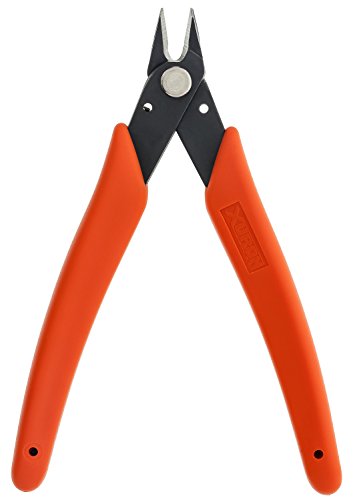
A shearing action, not a pinching one, is why the cut end comes off flat instead of pointed and burred. That single difference removes the filing step from most wire work. Blades suit soft wire only, so keep them away from memory wire or hardened steel to avoid a permanent nick.
Pros
- Genuinely flush cuts with no burr
- Light spring return reduces hand fatigue
- Precise enough for tight spaces
Cons
- Blades damage instantly on hard wire
- Not suited to heavy gauge work
Paxcoo Jewelry Making Supplies Kit
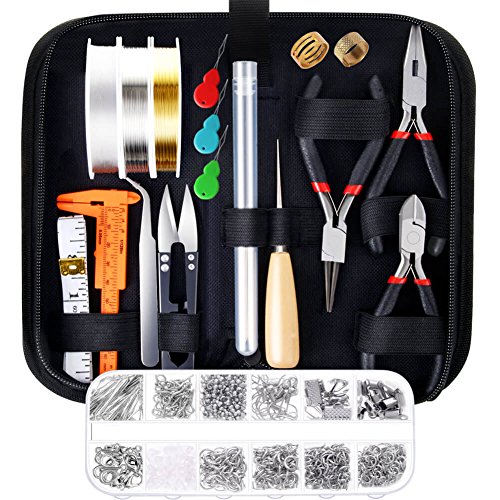
Pliers arrive bundled with jump rings, findings, wire and a storage box, so a first project can finish the day it arrives. Tool quality stays basic but functional, and the included findings alone justify the outlay. Expect to upgrade the pliers as skills improve while keeping the components.
Pros
- Everything needed for a first project
- Findings and wire included in the box
- Sorted storage keeps small parts findable
Cons
- Tools are entry level and will be outgrown
- Findings are base metal rather than precious

The Beadsmith Chain Nose Pliers
Smooth, untoothed jaws grip wire firmly without leaving the crosshatch marks that ruin a visible wrap. A fine taper reaches into small spaces where wider pliers cannot fit. Like any smooth jaw plier, grip slips on anything slick or hardened.
Pros
- Smooth jaws do not mark visible wire
- Fine taper reaches tight wraps
- Spring return speeds up repetitive work
Cons
- Smooth jaws slip on hardened wire
- Fine tips can bend under heavy force

Lindstrom RX Series Chain Nose Pliers
Tool quality becomes the limiting factor eventually, and this is where people move once it does. Tightly controlled jaw alignment pairs with an ergonomic handle built for hours of bench work. Fine gauge silver shows the difference most clearly, where cheaper jaws leave marks this one avoids.
Pros
- Best jaw alignment and finish here
- Ergonomics designed for long bench sessions
- Holds precision over years of use
Cons
- Substantially more expensive than alternatives
- Overkill for occasional hobby projects

Wubbers Bail Making Pliers
Stepped cylindrical jaws form every bail or loop at the same diameter, the difference between matched earrings and nearly matched earrings. Results become repeatable once the right size is found. This is a specialist tool rather than a first purchase.
Pros
- Produces identical loops every time
- Removes guesswork from matched pairs
- Doubles as a jump ring mandrel
Cons
- Only useful for a narrow set of tasks
- Fixed diameters limit flexibility

ImpressArt Metal Stamping Kit
Letters and shapes stamp into soft metal blanks here, opening up a different branch of jewelry making entirely. Stamps, a bench block and blanks arrive together, so a first attempt does not need three separate purchases. Expect noise and the need for a solid work surface, since this is not a quiet evening craft.
Pros
- Complete kit for a first stamping project
- Opens up personalized work
- Stamps last for many projects
Cons
- Loud and needs a very solid bench
- Practice required before results look even
How they compare
| # | Model | Contents | Best for | Score | Price |
|---|---|---|---|---|---|
| 1 | Beadalon Jewelry Pliers Set | Chain nose, round nose and cutters | Best overall | 9.4 | Check price |
| 2 | Xuron 410 Micro-Shear Flush Cutter | Micro shear flush cutter | Best for clean cuts | 9.2 | Check price |
| 3 | Paxcoo Jewelry Making Supplies Kit | Pliers, findings, jump rings, wire, storage | Best value | 9.0 | Check price |
| 4 | The Beadsmith Chain Nose Pliers | Chain nose pliers | Best for wire wrapping | 8.8 | Check price |
| 5 | Lindstrom RX Series Chain Nose Pliers | Chain nose pliers | Best for precision work | 8.6 | Check price |
| 6 | Wubbers Bail Making Pliers | Bail making pliers | Best for consistent loops | 8.3 | Check price |
| 7 | ImpressArt Metal Stamping Kit | Letter stamps, bench block, metal blanks | Best for personalised pieces | 8.0 | Check price |
Common questions
What tools does a complete beginner need?
Chain nose pliers, round nose pliers and flush cutters cover most beginner projects. A bead mat keeps components from rolling away, and a ruler helps with consistent lengths. Everything else can wait until a project requires it.
What is the difference between chain nose and needle nose pliers?
Chain nose pliers taper to a point with smooth inner jaws made for wire work, while hardware needle nose pliers usually have toothed jaws and often include a cutter. Teeth are the problem, since they mark soft wire. Buy tools sold for jewelry rather than repurposing a toolbox pair.
Why does my wire end feel sharp after cutting?
A pinching cutter is almost always the cause, or the flush side of the cutter faces the wrong way. Turn the flat face toward the piece being kept, and file lightly if a small point remains. A good flush cutter removes the need to file at all.
Can I use regular household pliers for jewelry?
For rough structural work, sometimes. Toothed jaws leave permanent marks on anything visible. A basic jewelry plier set costs far less than the wire and beads that get ruined learning this lesson.
How do you make consistent loops?
Mark the spot on round nose pliers with a permanent marker and form every loop at that same point, since the jaw tapers. Stepped bail making pliers do the same job with fixed diameters. Consistency comes from a fixed reference point rather than a steady hand.
What is memory wire and why does it damage cutters?
Memory wire is a hardened steel wire that holds a coil shape, far harder than the copper, silver and craft wire jewelry cutters are built for. Cutting it with fine cutters puts a permanent nick in the blade. Use dedicated memory wire cutters or heavy duty shears instead.
Are expensive pliers worth it for a hobbyist?
Not at the start. Mid range pliers with properly aligned smooth jaws handle everything a beginner needs. Precision brands earn their cost once fine gauge precious metal work runs for hours and tool marks become the limiting factor.
How should jewelry tools be stored?
Keep them where the jaws cannot knock against other tools, since bent round nose tips are the most common avoidable damage. A roll up pouch or a drawer with dividers works well. Wipe tools dry after use and add a drop of oil to the joints occasionally.
Which jewelry tools work best for beading versus wire wrapping?
Beading leans on round nose pliers for loops and flush cutters for trimming headpins. Wire wrapping adds chain nose pliers for gripping and bending, plus a bail making tool for consistent coil diameters.
Our pick
Beadalon Jewelry Pliers Set covers the fundamentals properly for most people starting out, and it keeps working for years of hobby projects. Clean cut ends improve every piece made, which is reason enough to add the Xuron 410 Micro-Shear Flush Cutter early. Paxcoo’s kit is worth considering too, since components and tools arrive together in one box.
Jake Monroe
Jake worked as a residential contractor for over a decade before shifting to full-time writing. He evaluates power tools, hand tools and workshop gear through the lens of someone who has actually used them on job sites, not just read the box.