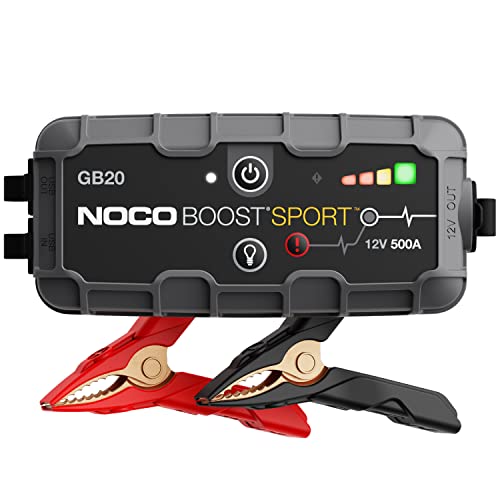
Professional jump starters for mechanics, compared
NOCO Boost Pro GB150 anchors most repair bays at 3000 amps, covering gas engines to roughly 9 litres. Clore Automotive Jump-N-Carry JNC660 handles bays jumping several vehicles a shift on sealed AGM power. HULKMAN Alpha 100 delivers the most output for the money, with an LCD that reports connection faults.
NOCO Boost Pro GB150 is the default for a general repair bay. Its 3000 amp rating spans gas engines to about 9 litres and diesels to 7 litres, from a case one technician can carry. Recharging is the catch, since a flat GB150 needs hours to refill, so keep a second pack charged.
Spec sheets mislead here in one specific way. Peak amps record a brief surge into a near short circuit. Cranking amps record what a pack sustains against a turning starter motor, and only some brands publish that figure. We compared output ratings, engine displacement limits, cable gauge, clamp construction and recharge times, then weighed what technicians report after repeated use across a shift.
The top picks, ranked
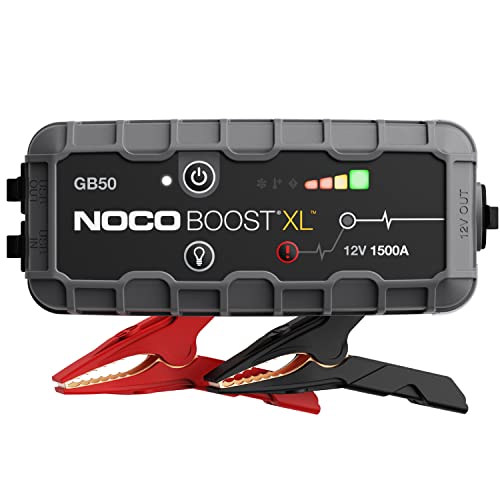
NOCO Boost Pro GB150
Rated at 3000 amps, this pack turns gas engines up to about 9 litres and diesels near 7 litres. Heavy jaws bite through the oxide on neglected terminals, while spark-proof connection and reverse polarity protection forgive a misplaced clamp. A 4000 lumen light is built into the case, which earns its keep on a night tow-in.
Pros
- Output covers most light truck diesels
- Jaws grip corroded top posts and side posts
- Manual override starts packs reading zero volts
Cons
- Refilling from empty takes hours
- Bulkier than pocket-sized lithium packs
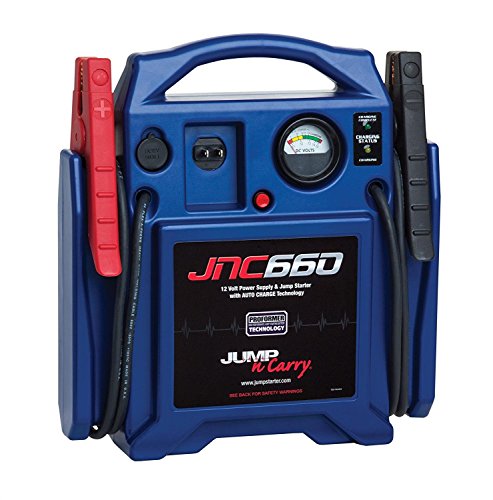
Clore Automotive Jump-N-Carry JNC660
Clore builds this on a sealed AGM battery instead of lithium, rated 1700 peak and 425 cranking amps. Cables run 46 inches in number 2 gauge, long enough to reach a bulkhead battery without moving the unit. Weight passes 20 pounds, and it expects to sit on a charger between jobs, which suits a fixed bay more than a service truck.
Pros
- Long number 2 gauge cables reach awkward batteries
- Sustains cranking longer than comparable lithium packs
- Tolerates permanent charger duty
Cons
- Over 20 pounds to carry across a lot
- Sitting discharged sulfates the AGM plates

HULKMAN Alpha 100
A 2000 amp rating spans gas engines to roughly 8.5 litres and diesels near 6 litres, covering passenger cars and half-ton trucks. Its LCD reports state of charge and why a start attempt was blocked, replacing guesswork about blinking LEDs. A 20000mAh cell also feeds scan tools and phones over USB.
Pros
- Screen names the fault that blocked a start
- Holds charge well across weeks of standby
- Runs shop electronics as a USB power bank
Cons
- Short of what large diesels demand
- Case is bulkier than its capacity suggests
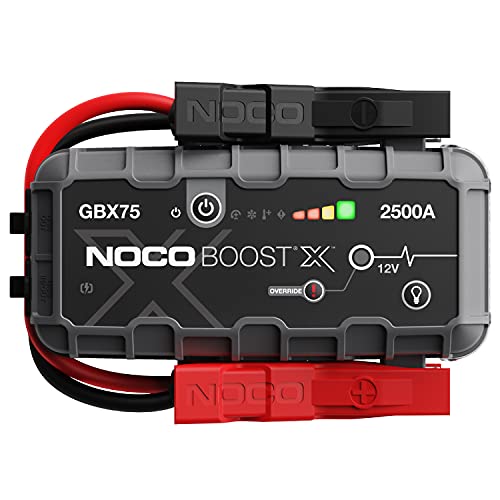
NOCO Boost X GBX155
USB-C Power Delivery at 60 watts refills this pack over a lunch break rather than overnight. Output peaks at 4250 amps, with ratings near 10 litres gas and 8 litres diesel, the widest engine coverage in this group. One cable serves double duty, charging the pack and then a diagnostic laptop.
Pros
- Quickest recharge among the lithium packs here
- Highest displacement rating in the lineup
- Single USB-C cable covers pack and laptop
Cons
- Needs a 60 watt USB-C source for fast refills
- Heavier than mid-size lithium units

GOOLOO GT4000S
Peak output reaches 4000 amps from a 26800mAh cell, enough for big gas engines and mid-size diesels. USB-C works in both directions, so one charger serves the pack, a phone and a tablet. Clamp construction sits below the NOCO and Clore units, so clean terminals carefully before connecting.
Pros
- High output for a budget lithium pack
- 26800mAh makes it a serious power bank too
- USB-C input avoids proprietary charging bricks
Cons
- Clamps are lighter than professional grade
- Leads are shorter than bay work prefers

DEWALT DXAEPS2 Portable Power Station Jump Starter
Jump starting comes rated at 1400 peak and 700 instant amps, and a 120 PSI digital compressor shares the case. Roadside calls often pair a soft tire with a dead battery, so one trip covers both. Lead acid construction adds weight and asks for a charger between jobs.
Pros
- Preset compressor shutoff replaces a separate inflator
- AC outlet runs small mains tools
- Publishes instant amps, not just a peak figure
Cons
- Heavy and bulky for the output it gives
- Not rated for large diesel engines

Antigravity Batteries XP-10 Micro-Start
Door pocket sized, this 18000mAh pack still pushes around 600 cranking amps. Four and six cylinder engines start reliably on it, and laptop plus phone tips ship in the case for mobile calls. Large displacement engines fall outside its range, so treat it as a backup rather than the shop pack.
Pros
- Genuinely pocketable at 600 cranking amps
- Laptop and phone tips included in the case
- Holds charge through months of storage
Cons
- Not enough for diesels or large V8s
- Short leads force placement beside the battery
How they compare
| # | Model | Peak output | Best for | Score | Price |
|---|---|---|---|---|---|
| 1 | NOCO Boost Pro GB150 | 3000 amps | Best overall | 9.4 | Check price |
| 2 | Clore Automotive Jump-N-Carry JNC660 | 1700 amps | Best for daily shop use | 9.2 | Check price |
| 3 | HULKMAN Alpha 100 | 2000 amps | Best value | 9.0 | Check price |
| 4 | NOCO Boost X GBX155 | 4250 amps | Best for fast recharge | 8.8 | Check price |
| 5 | GOOLOO GT4000S | 4000 amps | Best budget high output | 8.6 | Check price |
| 6 | DEWALT DXAEPS2 Portable Power Station Jump Starter | 1400 amps | Best all-in-one with compressor | 8.3 | Check price |
| 7 | Antigravity Batteries XP-10 Micro-Start | About 600 amps | Best compact carry | 8.0 | Check price |
How to choose
What peak amps and cranking amps actually mean Peak amps record a momentary surge into a near short circuit, which is how a lunch box sized pack claims 4000. Cranking amps record sustained delivery against a starter motor, and that number decides whether a cold engine turns. Clore publishes both for the JNC660: 1700 peak against 425 cranking. When a brand quotes peak alone, fall back on the engine displacement rating, since that figure comes from starting real engines rather than a bench short.
Lithium packs vs lead acid and AGM units Weight and standby retention favour lithium. A NOCO or HULKMAN pack rides in a service truck for months and still fires. Sustained cranking favours AGM, which is why the JNC660 and DEWALT DXAEPS2 tolerate long attempts and back-to-back cycles without a thermal cutoff. Busy bays jumping several vehicles an hour should keep an AGM unit on a charger by the door. Mobile techs covering scattered calls are better off with lithium in the cab.
Cables, clamps and everyday bay handling Gauge and length decide how usable a pack feels at seven in the morning. Number 2 gauge at 46 inches, as on the JNC660, reaches a bulkhead battery in a cargo van without repositioning anything. Short leads leave you balancing a pack on a fender while someone cranks. Jaw design counts equally, because corroded posts need teeth that cut oxide instead of sliding off. One shop habit prevents most failures: put one person in charge of recharging every pack at close, since a half-charged unit is the one that quits on the truck that will not start.
Diesel, fleet and cold weather work Diesels demand more cranking energy than gas engines of the same displacement, because glow plugs draw first and compression ignition needs speed. Read the diesel rating, not the gas one: 7 litres for the GB150, 8 litres for the GBX155. Cold compounds the problem, thickening oil while battery chemistry slows. Keep packs indoors overnight in winter, and let a cold lithium unit warm before the first attempt. Fleet bays running several diesels daily should size up one tier rather than buying to the exact displacement.
Common questions
How many amps do you need to jump start a diesel?
Read the displacement rating rather than the amp number. A 6.7 litre diesel wants a pack rated to at least that size, which here means the NOCO GB150 or GBX155. Undersized packs crank briefly, then cut out on thermal protection before the engine catches.
What is the difference between peak amps and cranking amps?
Peak amps measure a brief surge into a near short circuit and inflate easily on a spec sheet. Cranking amps measure sustained delivery into a real starter motor. A pack listing 425 cranking amps tells you more about starting ability than one listing 4000 peak.
Is lithium or lead acid better for a repair shop?
Lead acid units such as the Jump-N-Carry JNC660 absorb repeated jumps across a shift and live on a charger between them. Lithium suits mobile work, where weight and months of standby retention matter more than duty cycle. Many shops keep one of each.
Can a jump starter damage a vehicle ECU?
Reverse polarity is the real risk, and every pick here guards against it. Clamp to the battery posts or the manufacturer’s designated jump points, never a random bracket on a modern vehicle. Let the pack settle for a moment before cranking.
How often should a jump starter be recharged?
Lithium packs hold usable charge for months, though a top-up every three months keeps them dependable. AGM units like the JNC660 and DEWALT DXAEPS2 belong on a maintainer, because sitting discharged sulfates the plates and permanently cuts output.
Can you jump start a completely dead battery?
Sometimes. A battery reading zero volts confuses the safety circuit, which is why NOCO builds in a manual override mode. A battery with a shorted cell will not hold a start regardless of which pack you connect.
Which jump starter is best for a mobile service truck?
NOCO Boost X GBX155, since USB-C Power Delivery refills it between calls and its 8 litre diesel rating covers most work trucks. Keeping an Antigravity XP-10 in the cab gives you a backup for four cylinder cars without adding weight.
Do jump starters work in freezing weather?
Output falls in the cold for every chemistry, and lithium packs may refuse to deliver until they warm up. Store the unit inside the cab rather than a truck bed box. Expect longer cranking and more attempts once temperatures drop below freezing.
Is a jump starter with an air compressor worth it?
Worth it for roadside and fleet work, where a soft tire and a weak battery often arrive on the same call. DEWALT DXAEPS2 covers both at 120 PSI. Bay techs with a wall-mounted air line gain nothing from the extra weight.
Final word
NOCO Boost Pro GB150 is the pack to buy first for a general bay, because its 9 litre gas and 7 litre diesel ratings cover nearly everything that rolls through the door. Shops jumping vehicles all day should run the Clore Jump-N-Carry JNC660 alongside it, since AGM shrugs off repeated cranking and lives permanently on a charger. Mobile techs get more from the GBX155, which refills over USB-C between calls.
Tony Russo
Tony trained as an automotive technician and spent years in service and parts retail before moving into writing. He focuses on garage tools, car care products and accessories from a hands-on maintenance perspective.