Bluetooth jump starters: what mechanics really get
NOCO Boost X GBX155 suits most working bays, with 4250 peak amps and 60 watt USB-C both ways. NOCO Boost Pro GB150 steps up for big diesels. Clore Automotive Jump-N-Carry JNC660 keeps starting cars all shift on sealed lead acid.
NOCO Boost X GBX155 is the pick for a general repair bay, since 4250 peak amps covers gas engines to 10.5 litres and diesels to 8 litres. Working mechanics get fast USB-C recharging between jobs and clamps safe enough for an apprentice. Bluetooth is the honest limit: this unit has none, and neither do its rivals.
Amp claims on booster listings are inflated constantly, and peak amps say nothing about the fifth start of the morning. We compared stated peak and cranking figures, rated engine displacement, cable length and gauge, recharge times and connectivity, then weighed owner reports on clamp durability, hot storage and cold weather behaviour.
Our top picks
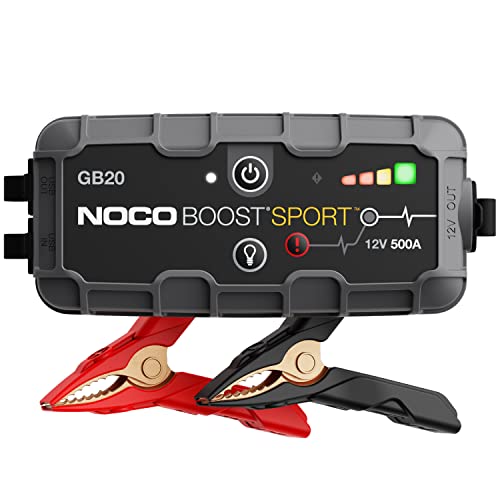
NOCO Boost X GBX155 Jump Starter
Rated for gas engines to 10.5 litres and diesels to 8 litres, GBX155 covers nearly everything that rolls into a general bay. USB-C Power Delivery moves 60 watts in both directions, so it refills fast and can keep a scan tablet alive mid job. Spark proof clamps and reverse polarity protection make it safe to hand to an apprentice.
Pros
- Covers light and medium duty engines without a second unit
- Refills over USB-C between jobs instead of overnight
- Spark proof clamps with reverse polarity protection
Cons
- No Bluetooth radio or companion app
- Heavier than pocket sized lithium packs
NOCO Boost Pro GB150 Jump Starter
Thick cables and 4000 peak amps put GB150 in the heavy duty tier, where voltage drop decides whether a cold diesel turns. Vans, tractors and work trucks fall inside its 10 litre gas and 8 litre diesel rating. An integrated LED work light runs several modes, including a strobe for roadside stops.
Pros
- Thick cable gauge limits voltage drop on big diesels
- Work light switches to an emergency strobe
- Holds charge across shifts without a top up
Cons
- Bulky to carry on a service call
- No app connectivity of any kind
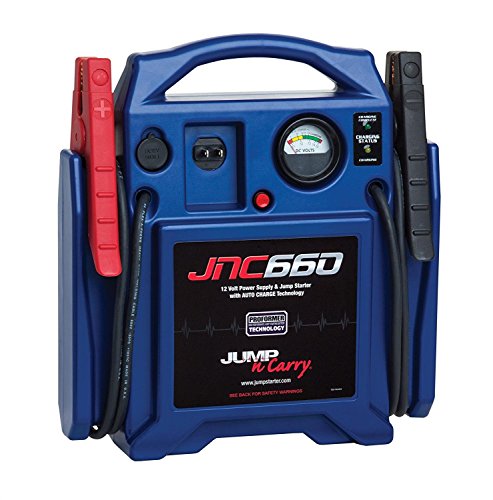
Clore Automotive Jump-N-Carry JNC660 Jump Starter
Sealed lead acid inside shrugs off heat and repeated deep discharges, the two things that shorten lithium pack life in a busy bay. Cables measure 46 inches, long enough to reach a battery behind a wheel arch without dragging the case across paint. Recharging runs for hours, so most shops park it on a wall bracket and leave it plugged in.
Pros
- Handles back to back starts through a full shift
- Long cables reach awkward battery locations
- Tolerates a hot bay better than lithium chemistry
Cons
- Heavy to lift and slow to recharge
- No USB power or diagnostic output

HULKMAN Alpha 85 Jump Starter
A full colour LCD reports charge level, output state and fault codes with no phone pairing involved. Its 20000 mAh cell delivers 2000 peak amps, which covers gas engines to 8.5 litres and diesels to 6 litres. Smart clamps refuse to pass current when reversed, so a tired tech cannot arc them.
Pros
- On unit screen shows status an app would otherwise report
- Recharges far faster than a lead acid booster
- Small enough to live in a door pocket
Cons
- Amp rating sits below the big NOCO units
- Screen washes out in direct sunlight

GOOLOO GT4000S Jump Starter
Peak output reaches 4000 amps from a 26800 mAh cell, matching the big NOCO packs on paper for far less outlay. Gas engines to 10 litres and diesels to 8 litres sit inside the rating. Clamp hardware is the compromise, with jaws lighter than the pro grade units above it.
Pros
- High amp rating without a pro tool budget
- Doubles as a 26800 mAh bank for phones and tablets
- Built in light offers several beam modes
Cons
- Clamp jaws feel lighter than pro grade hardware
- No Bluetooth or diagnostic readout

DEWALT DXAEPS2 Professional Power Station Jump Starter
Three tools share one case here: 1400 peak amps, a 120 PSI air compressor and a household AC outlet. Roadside callouts gain the most, since a flat tyre and a dead battery get solved on a single visit. Sealed lead acid keeps the mass high, so it rides on a cart or in a truck bed.
Pros
- Compressor removes a separate tool from the van
- AC outlet runs small chargers away from mains
- Rugged case survives sliding around a truck bed
Cons
- Too heavy to carry far by hand
- Peak amps trail the lithium units here

Antigravity Batteries XP-10 HD Micro-Start Jump Starter
An 18000 mAh lithium pack delivers 600 cranking amps from a body that fits a glove box. Motorcycles, cars and light trucks suit it, while large diesels sit outside its rating. Laptop and 12V outputs keep a diagnostic tablet running through a long driveway job.
Pros
- Smallest and lightest booster in this group
- Powers laptops and diagnostic tablets on site
- Well matched to bikes, ATVs and small engines
Cons
- Not rated for large diesel engines
- Short cables force careful placement
How they compare
| # | Model | Peak amps | Best for | Score | Price |
|---|---|---|---|---|---|
| 1 | NOCO Boost X GBX155 Jump Starter | 4250 amps | Best overall | 9.4 | Check price |
| 2 | NOCO Boost Pro GB150 Jump Starter | 4000 amps | Best for diesel fleets | 9.2 | Check price |
| 3 | Clore Automotive Jump-N-Carry JNC660 Jump Starter | 1700 peak amps | Best for all day shop use | 9.0 | Check price |
| 4 | HULKMAN Alpha 85 Jump Starter | 2000 amps | Best value | 8.8 | Check price |
| 5 | GOOLOO GT4000S Jump Starter | 4000 amps | Best budget high amp | 8.5 | Check price |
| 6 | DEWALT DXAEPS2 Professional Power Station Jump Starter | 1400 peak amps | Best for mobile mechanics | 8.3 | Check price |
| 7 | Antigravity Batteries XP-10 HD Micro-Start Jump Starter | 600 amps | Best compact carry | 8.0 | Check price |
What to look for
What matters on a jump starter for shop work Peak amps sell the box, yet cranking amps and cable gauge decide whether a cold diesel turns over. Short thick cables lose less voltage than long thin ones. Check the rated engine displacement in litres, because that figure reflects the maker’s own testing rather than a marketing number. Clamp jaws deserve a look too, since copper jaws bite a corroded post that cheap plated steel slides off. Storage temperature is the last factor: a booster kept in an unheated bay loses capacity by January.
Does Bluetooth belong on a jump starter? Very few boosters carry a radio, and the handful claiming app control add little beyond a battery gauge. Useful cranking data comes from a dedicated Bluetooth battery tester such as the TOPDON BT100 or ANCEL BM300, paired with whichever booster you own. That split gives you cranking voltage graphs, state of health percentages and printable results. Screens can replace apps too. HULKMAN Alpha 85 reports charge, output and fault codes on its own LCD, which is faster than unlocking a phone under a bonnet.
Lithium versus lead acid in a busy bay Lithium packs weigh a fraction as much and refill over USB-C, which suits van based work. Sealed lead acid units such as the JNC660 handle repeated deep discharges and hot storage far better, so they stay on a wall bracket by the lift. Duty cycle is the deciding question. One or two starts a week favours lithium; a dozen a day favours lead acid. Fleet yards commonly run both, one on the shop cart and one in the service truck.
Picks for mobile service vans and roadside calls Carrying distance changes the answer completely. DEWALT DXAEPS2 bundles a compressor and an AC outlet, which removes a second tool from an already full van. Antigravity XP-10 HD goes the opposite way, living in a glove box for bikes and small cars. Techs who do a bit of everything should keep the GBX155 as the middle ground, since it starts almost anything and still fits a tool bag. Avoid the DEWALT if your job involves carrying gear up a driveway on foot.
Common questions
Which jump starters have Bluetooth and an app?
Almost none from the established brands. Radios show up on battery testers and smart chargers instead, so pair a tester like the TOPDON BT100 with a high amp booster and you get both jobs covered.
How many amps does a mechanic need in a jump starter?
Around 2000 peak amps handles most mixed gas and diesel work, which is where the HULKMAN Alpha 85 sits. Shops seeing heavy diesel trucks should move to the 4000 amp class, such as GB150 or GBX155.
Lithium vs lead acid jump starter: which suits a shop?
Lead acid units like the JNC660 take repeated deep cycling and hot storage, so they survive daily bay use for years. Lithium wins on weight and recharge speed, which matters more for mobile service work.
Can a jump starter damage vehicle electronics?
Not when it carries reverse polarity and spark protection, which every pick here includes. Damage usually traces back to clamping in the wrong order, or to an unprotected budget pack with no detection circuit.
Will a jump starter start a completely dead battery?
Many will, through a manual override or boost mode that bypasses the detection circuit. Read the manual first, because overriding also removes the polarity check that protects the vehicle.
What is the best jump starter for diesel trucks?
NOCO Boost Pro GB150 handles diesels to 8 litres on thick low resistance cables. GBX155 matches that rating and adds 60 watt USB-C recharging, which helps when the booster gets used daily.
How often should a jump starter be recharged in storage?
Lithium packs hold charge for months but prefer a top up every three months. Lead acid units should stay on a maintenance charger or get recharged monthly, otherwise sulfation eats their cranking ability.
Is a built in air compressor worth the extra weight?
For roadside and mobile work, usually yes. DEWALT DXAEPS2 covers a flat tyre and a dead battery on one visit, which saves a return trip. Bay based techs already have shop air and should skip it.
Do I need a separate Bluetooth battery tester?
Only if you charge for battery diagnosis or warranty claims. Testers log cranking voltage and state of health, information no booster on this list reports. For pure starting duty, a high amp pack alone is enough.
The bottom line
NOCO Boost X GBX155 is the booster to buy for general shop and mobile work, since its rating covers almost every engine and USB-C keeps it topped up between jobs. Shops doing repeated starts in a hot bay should take the lead acid Clore JNC660 instead, and heavy diesel yards should size up to the GB150. If logged battery data is the real goal, put that money into a Bluetooth battery tester rather than hunting for an app on a booster.
Tony Russo
Tony trained as an automotive technician and spent years in service and parts retail before moving into writing. He focuses on garage tools, car care products and accessories from a hands-on maintenance perspective.

