Portable Jump Starters Built for Shop and Roadside Work
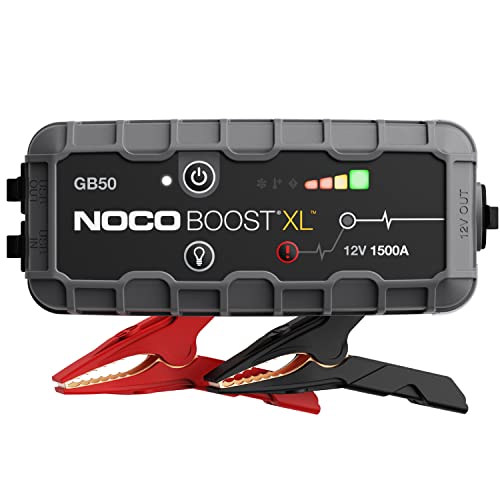
NOCO Boost Pro GB150 tops the list at 3000 amps, rated for engines up to 10L diesel. Clore Automotive Jump-N-Carry JNC660 stays the bay favourite for back to back cranks on 46 inch cables. For daily 4 and 6 cylinder work, NOCO Boost Plus GB40 fits a door pocket.
NOCO Boost Pro GB150 belongs in a mobile toolbox, because its 10L diesel rating covers pickups that stall smaller packs. Weight runs about 7.3 lbs and a full recharge takes hours, so it never becomes a glovebox unit. Technicians who mostly revive passenger cars move faster with the pocket sized NOCO Boost Plus GB40.
Peak amp claims vary wildly between brands, so displacement ratings and cable gauge tell a truer story. We compared listed peak amps, rated gas and diesel limits, clamp cable length, recharge time and secondary outputs such as USB ports and compressors. Owner reports on cold morning behaviour, clamp bite on corroded posts and reverse polarity protection settled the close calls.
The shortlist, ranked
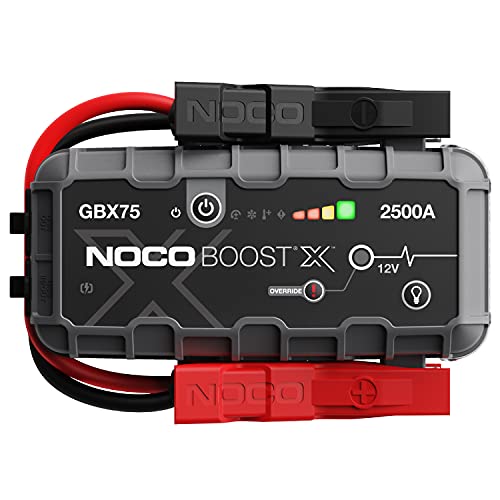
NOCO Boost Pro GB150
Rated at 3000 amps, this covers engines up to 10L gas or 10L diesel, which spans nearly everything rolling into a bay. Heavy gauge clamps bite through corroded posts, and spark proof connection plus reverse polarity protection make it safe to hand an apprentice. At about 7.3 lbs it is the heaviest lithium unit here, and a full recharge runs into hours.
Pros
- Starts large diesels that defeat smaller packs
- Spark proof clamps with reverse polarity protection
- Doubles as a 12V supply and USB power bank
Cons
- Too heavy and bulky for a glovebox
- Full recharge takes several hours
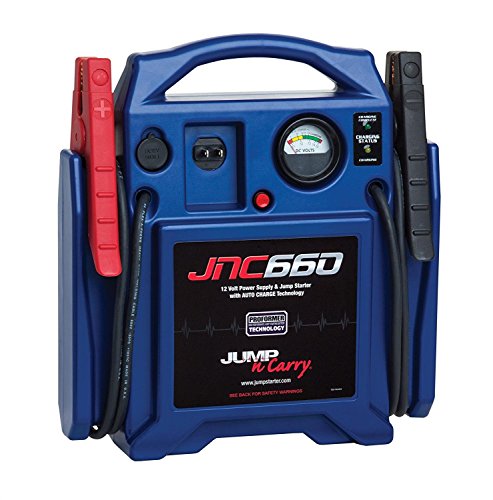
Clore Automotive Jump-N-Carry JNC660
Lead acid chemistry sounds dated until ten starts arrive in a row with no gap for recharging. Cables run 46 inches in 4 gauge, long enough to reach a boot mounted battery without pushing the car. Weight sits around 18 lbs, so this one lives on a cart or bench rather than in a tool bag.
Pros
- Handles repeated cranks better than lithium packs
- Long heavy cables reach boot and under seat batteries
- Onboard charger allows simple wall top ups
Cons
- Around 18 lbs, not a carry anywhere unit
- Needs charging between jobs or it sulphates

NOCO Boost Plus GB40
Roughly 2.4 lbs makes this the pack that actually stays in a door pocket. Engines up to 6L gas or 3L diesel sit inside its range, and an IP65 rating shrugs off a damp car park. Cables are short, so rest the unit on the engine cover instead of the ground.
Pros
- Small enough to keep in every vehicle
- Weather rating suits roadside call outs
- Work light includes a strobe mode for night jobs
Cons
- Short cables limit reach to the battery
- Not rated for large diesel engines

HULKMAN Alpha85
A 20000 mAh cell backs the 2000 amp rating, covering engines up to 8.5L gas or 6L diesel. Boost mode wakes deeply discharged batteries that standard safety circuits refuse to recognise, and the LCD reports exact charge instead of four vague lights. Owners in cold regions report dependable winter starts, though available cranking still drops below freezing.
Pros
- LCD removes guesswork about remaining charge
- Boost mode tackles very flat batteries
- Clamps grip well on greasy or corroded posts
Cons
- Cold weather still cuts available cranking
- Bulkier than the compact NOCO units

GOOLOO GT4000S
Behind the 4000 amp peak claim sits a 26800 mAh pack rated for engines to 10L gas or 10L diesel. Spare outputs turn it into a field power bank for phones, tablets and scan tools. Clamps and cable feel lighter than the premium units, and that headline amp figure is hard to verify independently.
Pros
- Very high capacity for the outlay
- Charges phones, tablets and scan tools on site
- Rated for big diesel displacement
Cons
- Clamps and cables feel lighter than premium rivals
- Peak amp claim is hard to verify independently

DEWALT DXAEPS2 Professional Power Station
Pairing 1200 peak amps with a 120 PSI digital compressor covers the two failures that often arrive together on a call out. USB ports keep phones and tablets alive through a long job. Sealed lead acid internals push weight past 18 lbs, so it rides in a truck bed rather than a tool bag.
Pros
- Preset shutoff on the compressor saves a second tool
- Digital gauge sets tire pressure accurately
- Solid clamps and a handle that suits a truck bed
Cons
- Heavy for one handed carrying
- Fewer peak amps than the lithium leaders

Antigravity Batteries XP-10
600 cranking amps aim this lithium pack at cars, motorcycles and track days rather than heavy trucks. Weighing just over a pound, it disappears into a toolbox drawer or a bike tail bag. A 19V output runs laptops and diagnostic gear between jump starts.
Pros
- Smallest footprint of any pick here
- 19V output runs laptops and diagnostic gear
- Popular with motorcycle and track day riders
Cons
- Not enough cranking power for diesels
- Small capacity limits repeated attempts
What matters most
What the amp ratings actually tell you Peak amps make the headline but describe a brief surge, not sustained cranking. Cranking amps and rated engine displacement carry far more meaning. NOCO publishes limits such as 6L gas and 3L diesel on the GB40 for exactly that reason. Diesels demand more current because compression is higher, so a unit fine for a petrol sedan may never turn a 6.7L truck. Cable gauge belongs in the same conversation, since thin wire drops voltage before it reaches the posts. Treat a 4000 amp claim on a value brand with healthy scepticism until a displacement rating backs it up.
Lithium or lead acid for shop work Lithium wins on weight and storage, holding charge for months in a drawer. Lead acid wins on repeated cranking. Units such as the Jump-N-Carry JNC660 and DEWALT DXAEPS2 deliver start after start without the thermal cutouts lithium uses to protect its cells. A bay jumping ten cars a day is better served by lead acid on a cart. Mobile technicians running scattered call outs gain more from a 2.4 lb pack in the door pocket. Many shops simply keep one of each.
Cable length, clamps and reaching the battery Short cables draw the most complaints about compact lithium units, and placement fixes it better than an extension. Rest the pack on the engine cover or wing, never on the ground, so the clamps reach without strain. Cars with the battery in the boot or under a rear seat need long leads, which is where 46 inch 4 gauge cable earns its keep. Jaw depth decides whether you can grip a side terminal or a remote jump post. Before buying, check the clamps open wide enough for the marine and truck posts you actually service.
Safety features and cold weather care Reverse polarity protection and spark proof connection should be non negotiable on any unit an apprentice might pick up. Look for a manual override or boost mode as well, because a battery under roughly 2 volts will not be recognised by a standard safety circuit. Cold cuts lithium capacity sharply, so keep packs in the cab overnight instead of an unheated truck bed. Recharge straight after use too. A partly drained lithium pack left for months can fall below its wake up threshold and refuse a charger. Lead acid units need regular top ups or they sulphate and lose cranking power.
Compared at a glance
| # | Model | Peak amps | Best for | Score | Price |
|---|---|---|---|---|---|
| 1 | NOCO Boost Pro GB150 | 3000 | Best overall | 9.4 | Check price |
| 2 | Clore Automotive Jump-N-Carry JNC660 | 1700 | Best for a busy shop | 9.2 | Check price |
| 3 | NOCO Boost Plus GB40 | 1000 | Best value | 9.0 | Check price |
| 4 | HULKMAN Alpha85 | 2000 | Best for cold climates | 8.8 | Check price |
| 5 | GOOLOO GT4000S | 4000 | Best for large diesel engines on a budget | 8.6 | Check price |
| 6 | DEWALT DXAEPS2 Professional Power Station | 1200 | Best for roadside and tire work | 8.3 | Check price |
| 7 | Antigravity Batteries XP-10 | 600 | Best ultra compact | 8.0 | Check price |
Common questions
How many amps do I need to jump a diesel?
Match the displacement rating rather than the peak number. A 6.7L diesel wants a unit rated for at least that displacement, which points to NOCO Boost Pro GB150 or GOOLOO GT4000S.
Can a portable jump starter damage a car battery?
Not when connected correctly. Reverse polarity protection blocks the most common mistake, and modern units stop delivering current once the engine fires or the clamps are wrong.
Is a lithium jump starter better than a lead acid one?
Lithium is lighter and holds charge far longer in storage. Lead acid absorbs repeated cranks better, which is why shops keep a Jump-N-Carry JNC660 on a cart alongside compact lithium packs.
Will a jump starter work on a completely dead battery?
Below about 2 volts the safety circuit often refuses to engage. Manual override or boost mode solves it, and the HULKMAN Alpha85 includes exactly that for deeply discharged batteries.
What is the best compact jump starter for a toolbox?
Antigravity Batteries XP-10 suits motorcycles and small cars in a drawer sized package. NOCO Boost Plus GB40 gives more cranking power and still fits the same drawer.
Do jump starters work in freezing weather?
They do, with reduced capacity. Store the pack in a heated cab overnight, and expect fewer attempts per charge once temperatures fall below freezing.
How often should I recharge a jump starter I never use?
Every three to six months for lithium, and monthly for lead acid. A pack left flat for a year often refuses to accept a charge at all.
NOCO GB40 vs GB150, which should a mechanic buy?
GB40 covers 6L gas and 3L diesel at about 2.4 lbs, ideal for passenger car work. GB150 handles 10L diesel but weighs roughly 7.3 lbs, so pick it when trucks are part of the day.
Can a jump starter with a compressor replace a separate inflator?
For tire top ups, yes. DEWALT DXAEPS2 runs a 120 PSI digital compressor with a preset shutoff, fine for cars and light trucks but slow on large truck tires.
Which jump starter suits a mobile mechanic doing call outs?
Carry two. NOCO Boost Pro GB150 handles whatever displacement turns up, while NOCO Boost Plus GB40 lives in the door pocket for quick passenger car starts.
Our take
NOCO Boost Pro GB150 is the buy when diesels are part of the day, since the 10L rating and heavy clamps remove any doubt about whether a start happens. Shops jumping several cars an hour should put a Clore Automotive Jump-N-Carry JNC660 on a cart instead, because lead acid tolerates back to back cranks that force lithium packs to pause. Keep a NOCO Boost Plus GB40 in the door pocket either way, and add the DEWALT DXAEPS2 if flat tires show up as often as flat batteries.
Tony Russo
Tony trained as an automotive technician and spent years in service and parts retail before moving into writing. He focuses on garage tools, car care products and accessories from a hands-on maintenance perspective.