Mini LED TVs Pack Local Dimming Zones Into Budget Sets
Hisense U8N leads this comparison for class-leading brightness paired with dense local dimming. TCL QM851G brings the same zone-count advantage at a lower cost, undercutting pricier rivals on value. Hisense U6N is the simplest budget mini LED to recommend, trading refresh rate for an entry price that still delivers real contrast.
Hisense U8N, TCL QM851G and Hisense U6N lead the mini LED field for anyone chasing HDR punch without an OLED budget. Each pairs a bright backlight with strong contrast at a fair cost.
Raw specs like zone counts and nits do not always translate into what a viewer actually sees. We compared measured brightness, blooming control, motion handling and gaming support so the ranking reflects real viewing rather than marketing numbers.
The best picks, ranked
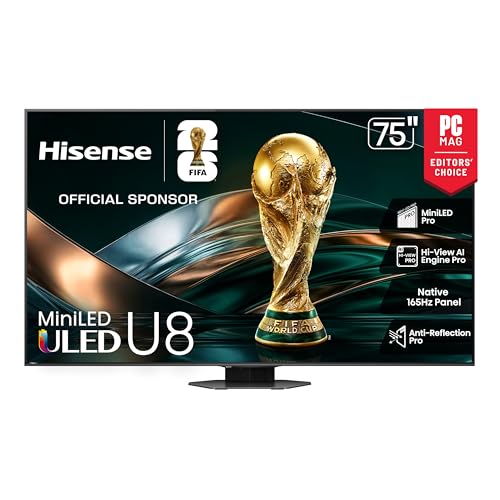
Hisense U8N
Extreme peak brightness meets a dense mini LED backlight here, so highlights pop while dark scenes stay clean. Bright rooms are no problem, and a 144Hz panel adds gaming headroom. Owners report excellent HDR impact for the price.
Pros
- Exceptional peak brightness for HDR
- High local dimming zone count
- 144Hz panel with low input lag
Cons
- Some blooming on bright objects
- Off-angle contrast drops slightly

TCL QM851G
One of the highest dimming zone counts in its price range keeps blooming tightly controlled on this set. Brightness holds up for daytime viewing, and the 144Hz panel suits console and PC gaming. Based on specifications it competes with sets costing far more.
Pros
- Huge number of dimming zones
- Strong brightness for the price
- Large sizes available
Cons
- Software can feel busy
- Sound needs a soundbar

Hisense U6N
Entry pricing still buys real mini LED contrast here, with solid black levels and accurate HDR color. A 60Hz panel suits movies and casual play more than fast console gaming. Owners report a big step up from basic LED sets.
Pros
- Great contrast for the price
- Accurate out-of-box color
- Wide size range
Cons
- Only 60Hz panel
- Lower peak brightness than pricier sets

Samsung QN90D Neo QLED
Anti-glare coating paired with a bright mini LED backlight makes this excel in sunlit rooms. Wide viewing angles and a full slate of 4K 144Hz gaming features round it out. Based on specifications it ranks among the most polished mini LED sets sold.
Pros
- Excellent glare handling
- Wide viewing angles
- Complete gaming feature set
Cons
- No Dolby Vision support
- Premium price

Sony Bravia 7
Sony’s image processing delivers natural motion and refined shadow detail that film fans notice. Backlight control keeps blooming subtle during dark scenes. Owners report it looks especially good with movies and streaming in a dim room.
Pros
- Superb image processing
- Clean shadow detail
- Excellent motion handling
Cons
- Costs more than rivals
- 120Hz rather than 144Hz

TCL QM751G
Console and PC gamers get a fast 144Hz panel, low input lag and a bright mini LED backlight at a friendly price. Variable refresh rate keeps modern consoles tear-free. Based on specifications it is a strong pick for a mid budget.
Pros
- Fast panel with low lag
- Bright for the price
- Good VRR support
Cons
- Fewer zones than pricier TCL sets
- Speakers are weak

LG QNED90T
Daylight viewing stays punchy thanks to a bright mini LED backlight paired with a fast 120Hz panel and LG’s webOS interface. Full gaming inputs round out the package. Owners report smooth motion and reliable everyday performance.
Pros
- Bright, glare-resistant image
- Smooth, intuitive interface
- Full gaming input support
Cons
- Fewer zones than top rivals
- Contrast trails the U8N
How to pick the right one
What does mini LED actually improve? Thousands of tiny backlight LEDs sit behind the panel, grouped into dimming zones. More zones let a TV brighten highlights and darken shadows independently, raising contrast and cutting the gray glow around bright objects. Results land between standard LED and OLED, brighter than OLED but with slightly less perfect black.
Brightness or dimming zones: which matters more? Peak brightness decides how much HDR content pops and how well a set fights glare, while zone count controls blooming. High-end models pair both, though many good sets trade one for the other. Bright rooms favor brightness first; dark movie rooms favor a high zone count and tight dimming control.
Is a 144Hz mini LED TV worth it for gaming? Console or PC gaming benefits from a 120Hz or 144Hz panel plus variable refresh rate and auto low latency mode, since these cut tearing and input lag. Casual viewers and movie fans can save money with a 60Hz set, since film content is mastered at lower frame rates anyway.
Do mini LED TVs need a soundbar? Nearly every mini LED TV ships with thin built-in speakers, so budget for a soundbar if audio matters. Size affects perceived sharpness, so measure seating distance before choosing. Best value often comes from a previous flagship or step-down model that keeps most of the picture quality for less.
How they compare
| # | Model | Backlight | Best for | Score | Price |
|---|---|---|---|---|---|
| 1 | Hisense U8N | Mini LED | Best overall | 9.4 | Check price |
| 2 | TCL QM851G | Mini LED | Best value | 9.2 | Check price |
| 3 | Hisense U6N | Mini LED | Best budget | 8.9 | Check price |
| 4 | Samsung QN90D Neo QLED | Neo QLED mini LED | Best premium | 9.3 | Check price |
| 5 | Sony Bravia 7 | Mini LED | Best for movies | 9.1 | Check price |
| 6 | TCL QM751G | Mini LED | Best for gaming | 8.8 | Check price |
| 7 | LG QNED90T | QNED mini LED | Best for bright rooms | 8.7 | Check price |
Good to know
Is mini LED better than OLED?
Neither wins outright. Mini LED gets brighter and resists burn-in, which suits bright rooms and static content. OLED offers deeper black and wider viewing angles for dark-room movie watching. Room lighting and viewing habits should decide.
What do dimming zones actually mean?
Zones are independently controlled clusters of backlight LEDs. More zones let a TV place light more precisely, sharpening contrast and reducing the halo around bright objects on dark backgrounds. It is one of the biggest factors in mini LED picture quality.
Do you need a 144Hz mini LED TV?
Only if you game on a PC or newer console and want the smoothest motion. For movies, streaming and general TV, a 60Hz or 120Hz panel is plenty, since most video is not delivered at 144 frames per second.
Will a mini LED TV work in a bright living room?
Yes, and it is one of the format’s strengths. High peak brightness, and on some models anti-glare coatings, keep mini LED sets punchy under sunlight or lamps where OLED can look washed out.
What is blooming and can you avoid it?
Blooming is a faint halo of light around bright objects on a dark background. Sets with more dimming zones and better backlight control show far less of it. You cannot eliminate it entirely, but higher-end models keep it hard to notice.
Is a mini LED TV good for watching sports?
Yes. High brightness makes daytime games vivid, and a 120Hz panel keeps fast motion clear. Look for good motion handling and low input lag if you also game, and consider a larger size for more immersion.
How long do mini LED TVs last?
Mini LED backlights are LED based and typically rated for years of normal use. Unlike OLED, they are not prone to burn-in, so static logos and news tickers are not a long-term concern.
Do mini LED TVs still need a soundbar?
For most people, yes. Even premium mini LED TVs use slim speakers with limited bass. A basic soundbar noticeably improves dialogue clarity and overall impact, and it is the single best upgrade after the TV itself.
Our pick
Hisense U8N hits the sweet spot of brightness, contrast and gaming features without an OLED price tag. TCL QM851G is the smarter value pick thanks to its dense dimming zones. Hisense U6N brings real mini LED quality to an entry budget, and a soundbar finishes any of these setups well.
Marcus Chen
Marcus covered consumer electronics for enthusiast tech publications for six years before joining ChoiceCrest. He specializes in translating manufacturer spec sheets into plain-language buying advice, with a focus on audio, computing accessories and smart-home gear.