What Should You Look for in an LED Video Light?
The Neewer 660 RGB stands out for most creators, pairing wide color control with strong output. The Godox VL150 delivers the brightest continuous light for bigger sets, while the GVM 800D-RGB brings app controlled RGB at a lower cost.
One dependable panel points to the Neewer 660 RGB, which covers the widest range of shooting situations with full color control and an even beam. Larger spaces need the extra output of the Godox VL150. Tighter budgets do well with the app controlled RGB on the GVM 800D-RGB.
Brightness ratings rarely tell the full story, and a light that looks fine to the eye can still render skin tones poorly on camera. We compared these seven using published CRI and TLCI figures, output specs, power and mounting options, and how owners report each performs across streaming, interviews and product work.
What we recommend
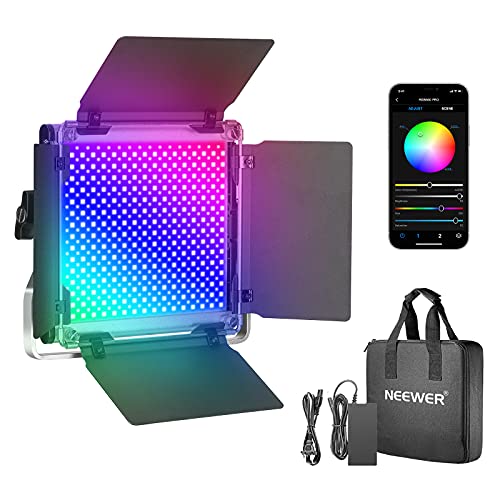
Neewer 660 RGB LED Video Light
A wide RGB range pairs with strong bidirectional output, flexible enough for interviews, product shots and creative color work. The included app and barn doors add practical control for a fixed setup. Owners report color holds up reasonably well across the dimming range.
Pros
- Wide color and effect range
- Bright, even output for its size
- App and on panel control
Cons
- Runs on AC or optional batteries only
- Bulkier than compact panels
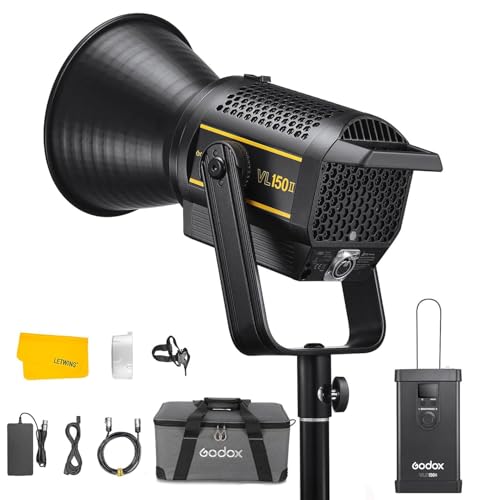
Godox VL150 LED Video Light
This Bowens mount COB light throws serious output across a full room. High wattage suits larger studios and modifier work with softboxes. Owners note a quiet fan and stable color output for interview and product setups.
Pros
- Very high daylight output
- Bowens mount fits common modifiers
- Stable, accurate color
Cons
- Single daylight color, not bi-color
- Needs a sturdy stand

Aputure Amaran 100d S LED Video Light
Praised for clean, accurate rendering, this daylight COB point source light pairs a reliable build with faithful skin tones. It works well with softboxes and reflectors for controlled key lighting. Based on specifications, it targets creators who prioritize color over raw output.
Pros
- Excellent color fidelity
- Solid, reliable housing
- Works with standard modifiers
Cons
- Daylight only
- Modifiers add to the total cost

Elgato Key Light
A softbox style panel clamps to a desk and largely vanishes from the workspace. App and software control run the whole unit, suiting streamers who want tap to adjust brightness and temperature. Owners like the diffused, glare free output for talking head video.
Pros
- Clean desk mounting
- Soft, diffused output
- Easy software control
Cons
- No physical dials on the unit
- Not full RGB color

GVM 800D-RGB LED Video Light
Strong brightness and a wide color range come at a lower cost here, backed by app control and preset scene effects. Creators building a two or three light kit on a tight budget benefit most. Owners report good output, though color accuracy trails premium panels.
Pros
- Strong brightness for the price
- Full RGB and effects
- App control included
Cons
- Color accuracy below premium units
- App interface feels basic

Neewer RGB176 LED Video Light
A small on camera panel packs a built in battery and full RGB range for run and gun and vlogging use. It slots onto a camera shoe or small stand for quick fill light. Owners appreciate the portability, though it works as fill rather than a main key.
Pros
- Very portable and light
- Wide temperature range
- Built in battery
Cons
- Limited output for large spaces
- Short runtime at full power
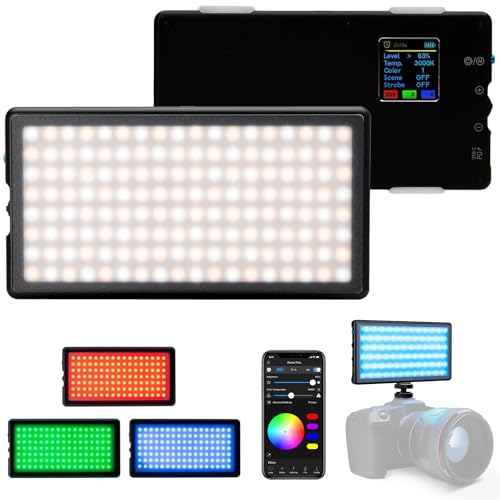
Lume Cube Panel Pro LED Light
This slim bi-color panel packs a built in battery and diffuser into a shape that fits a bag. Brightness and temperature adjust through straightforward onboard controls with no companion app. Owners find it handy for interviews and social clips away from a studio.
Pros
- Thin and packable
- Simple onboard controls
- Built in battery and diffuser
Cons
- Not full RGB
- Modest maximum output
How they stack up
| # | Model | Color modes | Best for | Score | Price |
|---|---|---|---|---|---|
| 1 | Neewer 660 RGB LED Video Light | RGB full color plus bi-color | Best overall | 9.4 | Check price |
| 2 | Godox VL150 LED Video Light | COB with Bowens mount | Best for large sets | 9.2 | Check price |
| 3 | Aputure Amaran 100d S LED Video Light | Daylight COB point source | Best for color accuracy | 9.1 | Check price |
| 4 | Elgato Key Light | Edge-lit softbox panel | Best for streamers | 8.9 | Check price |
| 5 | GVM 800D-RGB LED Video Light | RGB with scene effects | Best value | 8.7 | Check price |
| 6 | Neewer RGB176 LED Video Light | On-camera RGB panel | Best compact panel | 8.4 | Check price |
| 7 | Lume Cube Panel Pro LED Light | Slim bi-color panel | Best for travel | 8.1 | Check price |
Before you buy
Match light output to the size of your space A small desk setup needs far less output than a full room shoot. Edge lit panels and on camera lights work well up close, while COB lights like the Godox VL150 push enough output to fill larger areas and drive softboxes. Consider the distance from light to subject before chasing raw wattage.
Color accuracy matters more than raw brightness CRI and TLCI ratings above 95 mean skin tones and product colors render faithfully on camera. A dim but accurate light usually beats a bright one that skews green or magenta. Prioritize the color figures over headline brightness for work involving people or products.
Bi-color panels versus full RGB Bi-color lights adjust between warm and cool white, covering most interview and talking head work. Full RGB panels add hue and saturation control for creative backgrounds and effects. Bi-color keeps things simple for face lighting, while RGB pays off for set design and mood work.
Power, mounting and modifier compatibility Decide whether battery portability matters or AC power at a fixed desk is fine. Bowens mount COB lights accept a wide range of softboxes and reflectors, while flat panels are more limited. Factor in stands, clamps and diffusers, since accessories shape how usable a light really is.
Frequently asked questions
What CRI should a video light have?
Aim for a CRI of 95 or higher for accurate skin tones and colors. Most quality panels here publish figures at or above 95, and several claim 97 or more.
Do I need RGB or is bi-color enough?
Bi-color covers standard interviews, streaming and talking head video by adjusting warm to cool white. Full RGB only pays off for colored backgrounds, mood effects or set accents.
Are on camera panels bright enough for a key light?
Compact panels like the Neewer RGB176 work best as fill or accent light up close. A COB light or a bigger panel gives more output and control for a main key in a larger space.
Can LED video lights run on batteries?
Several, including on camera and travel panels, have a built in battery. Larger panels and COB lights typically run on AC with optional external batteries sold separately.
What is a Bowens mount and does it matter?
A Bowens mount is a common attachment standard on COB lights that fits softboxes, reflectors and grids from many brands. A Bowens mount gives the widest modifier choice for shaping light.
How many video lights does a beginner need?
A single key light produces clean results for talking head video on its own. Adding a second light for fill or a background accent gives more depth, which is why many creators build toward a two or three light kit over time.
Do brighter LED lights run hot or noisy?
High output COB lights use fans for cooling, and owners generally report the noise stays low enough for interviews. Flat panels run cooler and often skip a fan, which limits their maximum output.
Is app control worth paying extra for?
App control makes it easy to adjust brightness, temperature and color from a phone, useful once a light sits mounted high or far away. Models with both on panel and app control suit anyone who prefers physical dials.
Best LED video light for a home streaming setup?
The Elgato Key Light suits streamers best, since it clamps to a desk, runs through software and stays out of frame while talking.
Neewer 660 RGB vs GVM 800D-RGB: what is the real difference?
The Neewer holds color more accurately across its dimming range and includes barn doors, while the GVM costs less and still offers full RGB with app control at slightly lower color fidelity.
Our pick
For most creators the Neewer 660 RGB balances color control, output and cost better than the rest of this group. Larger sets or heavy softbox use call for the Godox VL150. The GVM 800D-RGB remains the pick for RGB flexibility on a tighter budget.
Marcus Chen
Marcus covered consumer electronics for enthusiast tech publications for six years before joining ChoiceCrest. He specializes in translating manufacturer spec sheets into plain-language buying advice, with a focus on audio, computing accessories and smart-home gear.