Travel Tripods Small Enough to Actually Pack
The Peak Design Travel Tripod wins on packability with its flat-folding leg design. The Manfrotto Befree Advanced balances stability and weight for most photographers. Best value goes to the K&F Concept TM2515 for its capability per dollar.
Packability decides whether a tripod gets used at all, and the Peak Design Travel Tripod wins that contest outright. The Manfrotto Befree Advanced balances steadiness and weight for general photography, while the K&F Concept TM2515 covers the basics for far less.
Every travel tripod trades stability for size, since a five-section leg that folds small also wobbles more at full extension. We compared folded lengths, weights, stated load ratings, leg section counts, and head designs, then weighed owner reports on lock reliability, center column sag, and how legs handle sand and salt water.
The best picks, ranked
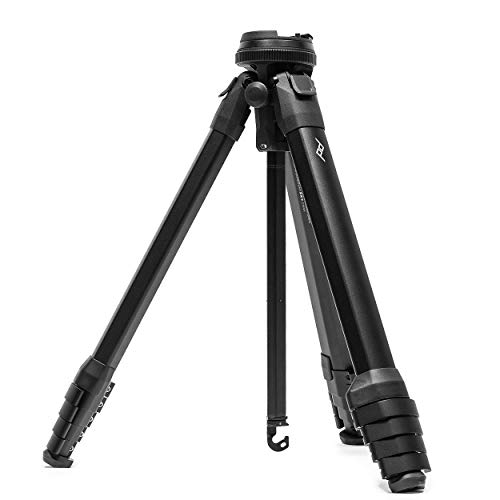
Peak Design Travel Tripod (Aluminum)
Legs wrap tightly around the center column here, shrinking the folded profile to close to that of a water bottle. No knob protrudes from the integrated ball head, which is a big reason it packs so well. Weight runs higher than carbon rivals, and the adjustment ring takes some getting used to compared with a conventional knob.
Pros
- Exceptionally small folded diameter
- Head is built in, nothing to attach
- Quick release plate suits mobile phone mounts
Cons
- Aluminium version runs heavy for its size
- Head adjustment ring takes time to learn

Manfrotto Befree Advanced Travel Tripod
An eight-kilogram load rating pairs with a proper ball head and independent friction control here, making this the sensible middle ground. Leg angle selectors drop the whole rig low for close work, and M-lock twist collars deploy quickly. A full-frame body with a mid-size zoom sits comfortably on it, according to owner reports, a point where lighter travel tripods often struggle.
Pros
- Strong load rating for the weight class
- Independent friction control on the head
- Leg angle selectors allow low angles
Cons
- Centre column limits how low it goes
- Head plate follows a proprietary pattern

Gitzo GT1545T Series 1 Traveler
Legs fold back 180 degrees around the head on this carbon fiber reference tripod, shortening the packed length noticeably. Vibration settles faster in carbon than in aluminium, a real benefit for long exposures in wind. Cost runs highest in this group, and the payoff is weight saved on every hike for years.
Pros
- Light carbon build for long carries
- Vibration settles quickly after a knock
- Excellent build quality and serviceability
Cons
- Highest cost in this group
- Small top plate needs a careful head match

Vanguard VEO 3T+ 234AB Travel Tripod
One leg separates to form a monopod on this model, and a multi-action head covers static landscape work and follow shots without a second support. An angling center column helps with macro and overhead framing. That flexibility adds mechanisms, and mechanisms add both weight and upkeep.
Pros
- Monopod conversion saves carrying a second support
- Angled column helps macro and overhead shots
- Head handles panning as well as stills
Cons
- Heavier than dedicated stills tripods
- More moving parts to maintain

K&F Concept TM2515 Travel Tripod
A detachable monopod leg, an Arca-style ball head, and a reversible center column all come packed into this aluminium tripod. Build tolerances fall short of premium brands, though capability per dollar is hard to beat. Twist locks need occasional cleaning after beach use to stay smooth, per owner reports.
Pros
- Arca style plate works with most gear
- Monopod leg included
- High extended height for the class
Cons
- Locks need cleaning after sandy trips
- Heavier and less refined than premium rivals
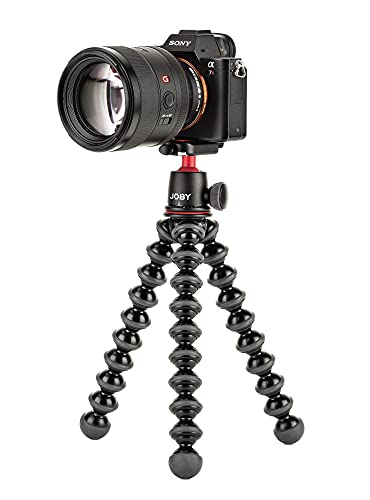
JOBY GorillaPod 3K PRO Kit
Flexible ball-and-socket legs wrap around railings, branches, and posts, reaching camera positions a conventional tripod cannot. Stiffer joints on the 3K PRO version carry roughly three kilograms alongside an Arca-compatible head. Standing height is absent, so it cannot replace a full tripod on uneven ground.
Pros
- Wraps around railings, poles and branches
- Very light and packs into a small bag
- Doubles as a table top support
Cons
- No standing height for landscapes
- Joints loosen with heavy repeated bending

Ulanzi Zero Y Carbon Fiber Travel Tripod
A carbon frame with an integrated head strips this design back for hikers and creators counting grams. Short packing and low weight are the entire point here. Load rating and max height stay modest, so mirrorless bodies with small lenses fit better than heavy telephoto setups.
Pros
- Very light for carbon at this size
- Compact folded profile
- Integrated head keeps the package tidy
Cons
- Limited load for heavy lenses
- Lower maximum height than rivals
Before you buy
Folded length usually matters more than weight A tripod that will not fit your bag stays at home regardless of how light it is. Measure the outside pocket or side strap of the bag you actually travel with first. Most travel tripods land between 15 and 18 inches folded, and a two-inch difference decides whether one fits an airline carry-on side pocket.
Leg sections trade packing size for stability Four-section legs pack shorter than three, but the bottom section runs thinner and less rigid, and five sections magnify that further. Long exposures in wind favor fewer, thicker sections. Daylight shooting makes the extra section a fair trade for a smaller package.
Carbon versus aluminium comes down to more than weight Carbon fiber is lighter and damps vibration faster, which shows up as sharper long exposures. Aluminium costs less and shrugs off knocks without the risk of cracked fibers. Carbon also stays comfortable to hold in freezing weather, a real benefit for winter landscape work.
Head and plate standards decide compatibility An Arca-style plate works across most brands of head, L-bracket, and clamp, making it the safer standard to buy into. Proprietary plates lock a photographer into one ecosystem and become a nuisance if the plate goes missing. Confirm the head’s load rating separately from the legs, since the head is usually the weaker link.
Side by side
| # | Model | Folded length | Best for | Score | Price |
|---|---|---|---|---|---|
| 1 | Peak Design Travel Tripod (Aluminum) | About 15.5 in | Best overall | 9.4 | Check price |
| 2 | Manfrotto Befree Advanced Travel Tripod | About 16 in | Best for stills photographers | 9.2 | Check price |
| 3 | Gitzo GT1545T Series 1 Traveler | Carbon fibre | Best premium option | 9.0 | Check price |
| 4 | Vanguard VEO 3T+ 234AB Travel Tripod | Multi action ball head | Best for video and stills | 8.8 | Check price |
| 5 | K&F Concept TM2515 Travel Tripod | Aluminium | Best value | 8.6 | Check price |
| 6 | JOBY GorillaPod 3K PRO Kit | About 6.6 lb | Best for awkward positions | 8.3 | Check price |
| 7 | Ulanzi Zero Y Carbon Fiber Travel Tripod | Carbon fibre | Best for minimal weight | 8.0 | Check price |
Common questions
How much load rating do I need for a travel tripod?
Add the weight of your heaviest camera and lens combination, then leave a comfortable margin, since ratings assume even loading and no wind. A body with a mid-range zoom typically needs around four kilograms of rating, while a telephoto setup should sit well under a support’s rated maximum.
Can travel tripods handle a full frame camera?
Most modern travel tripods handle a full-frame mirrorless body with a standard zoom without complaint. Long telephoto lenses shift the center of gravity forward and can make the ball head creep, so heavier setups need a sturdier support.
Should I use the centre column on a travel tripod?
Only for the last few inches of height. Raising the column turns the tripod into a lever and becomes the main source of vibration in an otherwise steady setup. Extend the legs first, from the thickest section down, and treat the column as a final adjustment.
Are twist locks or flip locks better on a tripod?
Twist locks pack smaller, keep grit out better, and have nothing to snag on a bag. Flip locks check at a glance and operate easier with gloves. Both prove reliable in modern designs, so preference plays the deciding role.
How do I care for a tripod used at the beach?
Rinse the legs with fresh water the same day, then extend every section and dry them fully before storing. Salt crystals inside twist locks cause most seizing, and a periodic strip-and-clean of the leg sections keeps them moving smoothly for years.
Can I take a travel tripod on a plane?
Most airlines allow a travel-size tripod in carry-on baggage, which is why folded length matters, though rules vary and some crews object to larger models. Checking with the carrier before departure avoids a difficult conversation at the gate.
Does a heavier tripod always mean steadier shots?
Mass helps resist wind, but rigidity and damping matter more. A rigid carbon tripod often outperforms a heavier, flimsier aluminium one. Hanging a bag from the center hook adds stabilizing weight without adding anything to carry.
Do I need a separate video head for a travel tripod?
For panning shots, yes. Ball heads lock in position rather than move smoothly, so pans look jerky on them. A fluid head or a multi-action head like the one on the VEO 3T+ delivers far more controlled movement for video.
The bottom line
Packed size above all else points toward the Peak Design Travel Tripod, since its flat-folding legs make it the easiest to bring along. Serious stills work favors the Manfrotto Befree Advanced for its balance of stability and weight, and the K&F Concept TM2515 covers the essentials for a fraction of the outlay.
Marcus Chen
Marcus covered consumer electronics for enthusiast tech publications for six years before joining ChoiceCrest. He specializes in translating manufacturer spec sheets into plain-language buying advice, with a focus on audio, computing accessories and smart-home gear.