Faster Load Times Start With the Right Gaming Storage
For most PC builds, the Samsung 990 Pro balances speed and price well. PS5 owners should look at the WD Black SN850X, which meets Sony’s heatsink and speed requirements. Budget shoppers get strong value from the Crucial P3 Plus.
Storage speed decides how fast a level loads, not how many games a drive can hold.
PS5, Xbox and PC storage follow separate rules, so picks are grouped by platform and checked against published spec sheets and compatibility lists.
The shortlist, ranked

Samsung 990 Pro 2TB NVMe SSD
Sequential reads hit close to 7450 MB/s in Samsung’s published testing, among the fastest PCIe 4.0 speeds sold today. A nickel-coated controller and updated firmware keep thermals steady during long install sessions. PC builders chasing headroom for open-world titles and fast level streaming gain the most from this drive.
Pros
- Very high sustained transfer speeds
- Included heatsink option for PS5 use
- Strong endurance rating for its class
Cons
- Costs more per terabyte than budget drives
- Needs a motherboard with PCIe 4.0 to hit rated speeds

WD Black SN850X 2TB NVMe SSD
Western Digital sells a version with a heatsink sized to drop straight into the PS5 expansion bay. Reads reach roughly 7300 MB/s, well above Sony’s 5500 MB/s minimum for console upgrades. Picking this model skips the cost of a separate cooler.
Pros
- Heatsink model drops straight into a PS5
- Fast enough for near-instant fast travel loads
- Game Mode 2.0 software for PC tuning
Cons
- Heatsink version does not fit slim laptops
- Non-heatsink model needs a separate cooler for PS5

Crucial P3 Plus 1TB NVMe SSD
PCIe 4.0 signaling keeps this drive priced closer to older PCIe 3.0 models. Sequential reads top out at 5000 MB/s, plenty for a secondary game library drive. Offloading a crowded boot SSD becomes affordable with this option.
Pros
- Among the cheapest PCIe 4.0 options
- Available up to 4TB for large libraries
- Low idle power draw
Cons
- Slower sustained writes once cache fills
- No included heatsink for console use

Seagate Storage Expansion Card for Xbox Series X/S 2TB
This proprietary card slots into the back of an Xbox Series X or S with no tools or setup screens. Speed matches the console’s internal SSD, so Quick Resume and installed titles run identically to onboard storage. Swapping the card between two consoles moves a full library in seconds.
Pros
- Zero configuration, works immediately
- Matches internal Xbox Velocity Architecture speed
- Easy to swap between consoles
Cons
- Only works with Xbox Series X/S, not older Xbox One
- Priced high per terabyte versus PC SSDs

Sabrent Rocket 4 Plus 2TB NVMe SSD
A Phison E18 controller pushes sequential reads to about 7100 MB/s, near flagship territory. Pricing typically undercuts Samsung’s top drive by a noticeable margin. Long game installs stay stable thanks to solid sustained-transfer handling.
Pros
- Available in capacities up to 8TB
- Fast enough for demanding open-world installs
- Runs cooler than some rivals under sustained load
Cons
- No bundled heatsink on the base model
- Software toolkit is less polished than Samsung Magician
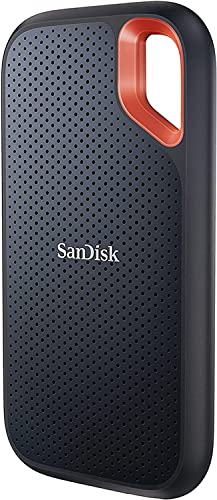
SanDisk Extreme Portable SSD 2TB
USB-C 3.2 delivers up to 1050 MB/s, fast enough to run some PC titles directly from the drive. An IP65 rating shields it from dust and splashes at LAN parties or on trips. Cross-platform support covers PC, PS5 app storage, and Xbox app storage for archived games.
Pros
- Works across PC, PS5, and Xbox app libraries
- IP65 rating survives drops and spills
- Compact enough to carry in a pocket
Cons
- Slower than internal NVMe for active gameplay
- PS5 external drives can only store, not run, PS5 titles

Kingston NV2 1TB NVMe SSD
This DRAM-less drive targets buyers who need extra install space without spending much. Real-world reads settle near 3500 MB/s, closer to PCIe 3.0 performance than to flagship NVMe. A single-sided design fits tight laptop bays as easily as a desktop.
Pros
- Very low entry price for NVMe storage
- Compact single-sided design fits tight laptops
- Easy plug-in upgrade for older PCs
Cons
- Lacks DRAM cache, slower under heavy multitasking
- Shorter 3-year warranty than most rivals here
How they stack up
| # | Model | Interface | Best for | Score | Price |
|---|---|---|---|---|---|
| 1 | Samsung 990 Pro 2TB NVMe SSD | PCIe 4.0 x4, NVMe 2.0 | Best overall | 9.4 | Check price |
| 2 | WD Black SN850X 2TB NVMe SSD | PCIe Gen4 x4, NVMe | Best for PS5 | 9.2 | Check price |
| 3 | Crucial P3 Plus 1TB NVMe SSD | PCIe 4.0 x4, NVMe | Best budget | 8.5 | Check price |
| 4 | Seagate Storage Expansion Card for Xbox Series X/S 2TB | Custom PCIe (Xbox only) | Best for Xbox Series X/S | 9.0 | Check price |
| 5 | Sabrent Rocket 4 Plus 2TB NVMe SSD | PCIe 4.0 x4, NVMe | Best for PC builders on a budget | 8.8 | Check price |
| 6 | SanDisk Extreme Portable SSD 2TB | USB-C 3.2 Gen 2 | Best external drive | 8.6 | Check price |
| 7 | Kingston NV2 1TB NVMe SSD | PCIe 4.0 x4, NVMe | Best for a secondary game drive | 8.0 | Check price |
How to choose
What actually speeds up game load times? Sequential read speed matters most for level loading, while random read and write speed affects open-world streaming. Once a drive clears about 5000 MB/s, most current bottlenecks disappear. Beyond that mark, CPU and game engine limits matter more than the SSD itself.
PS5 vs Xbox: which storage upgrade fits your console? Sony requires an NVMe SSD rated at least 5500 MB/s with a heatsink for the PS5 expansion slot. Xbox Series X/S instead uses a proprietary expansion card, since the console has no open NVMe slot. Mixing the two up wastes money on hardware that will not fit.
How much gaming storage do you actually need? Modern AAA titles often need 100GB or more, so a 500GB drive fills fast. Casual libraries suit 1TB, while 2TB or larger fits anyone installing several large titles at once. External drives work well as overflow storage for games played rarely.
Is an external SSD good enough for gaming? Portable drives let a library travel between a PC and a console without a full reinstall. PS5 and Xbox can store games externally but must copy them back internally to run. USB-C speeds above 1000 MB/s keep that copy step reasonably quick.
Questions worth asking
What is the best gaming storage upgrade for PS5?
A PCIe 4.0 NVMe SSD rated at 5500 MB/s or faster with a heatsink, such as the WD Black SN850X heatsink model, meets Sony’s official requirement.
Can I use a regular NVMe SSD in an Xbox Series X?
No. Xbox Series X/S only accepts its proprietary storage expansion card in the rear slot; internal upgrades are not supported by the console design.
Is more storage better for gaming performance?
Extra capacity does not speed up load times on its own. Sequential and random read speeds affect performance far more than total terabytes.
How much gaming storage do I actually need?
1TB covers a modest library, but many players outgrow it after installing three or four large modern titles, making 2TB a safer long-term choice.
Do external SSDs work for PS5 games?
External SSDs can store PS5 games but cannot run them directly; titles must be moved back to internal storage before launching.
PCIe 4.0 vs PCIe 3.0 for gaming, does it matter?
PCIe 4.0 roughly doubles maximum throughput, which shortens large install and load times, though the gap narrows once a game is already loaded into memory.
Does an SSD heatsink actually matter for gaming drives?
Sustained heavy writes, like installing a large game, can throttle an uncooled NVMe drive; a heatsink helps it hold peak speed for longer sessions.
What is the difference between NVMe and SATA SSDs for games?
NVMe drives connect via PCIe and reach several times the speed of SATA SSDs, which cap around 550 MB/s regardless of drive quality.
Which gaming SSD is best for PC builders on a budget?
Drives like the Sabrent Rocket 4 Plus and Crucial P3 Plus deliver near-flagship or solid PCIe 4.0 speed while costing less per terabyte than premium options like the Samsung 990 Pro.
Our take
Match the drive to the platform first, since PS5 and Xbox carry different physical and speed requirements. PC gamers gain the most flexibility and the best price per terabyte from NVMe drives like the Samsung 990 Pro or Crucial P3 Plus. Console owners should stick to officially compatible parts to avoid a wasted purchase.
Marcus Chen
Marcus covered consumer electronics for enthusiast tech publications for six years before joining ChoiceCrest. He specializes in translating manufacturer spec sheets into plain-language buying advice, with a focus on audio, computing accessories and smart-home gear.