Wooden and Recycled Geography Toys That Skip the Plastic
Melissa & Doug’s Wooden USA Puzzle suits younger kids starting with state shapes, PlanToys’ rubberwood Globe adds FSC-certified sourcing for world geography, and Hape’s Wooden World Map Puzzle handles country-level detail for kids past age five. All three skip plastic laminate in favor of sustainably sourced wood.
Melissa & Doug’s Wooden USA Puzzle gives younger children a tactile way to learn all 50 states, using water-based paint on sustainably sourced wood, though its scope stops at U.S. borders.
Toy listings apply eco-friendly loosely, so we checked verifiable sourcing marks like FSC certification, paint chemistry, and recycled content against age range and geographic depth.
The shortlist, ranked
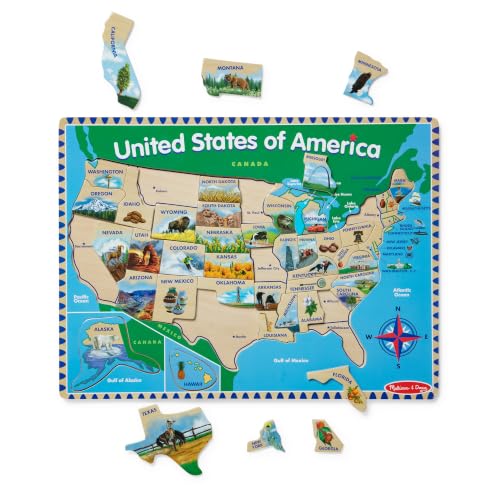
Melissa & Doug Wooden USA Puzzle
Fifty individually shaped state pieces snap into a correctly mapped board, turning geography into hands-on placement practice. Water-based, non-toxic paint covers every piece, a detail that matters for kids who still mouth toys. A wooden tray keeps pieces sorted between play sessions.
Pros
- Non-toxic water-based paint suits younger children
- Wooden storage tray keeps 50 pieces organized
- Correctly shaped states build spatial memory
Cons
- Covers only United States geography
- Small pieces pose a choking risk under age 3

PlanToys Wooden Globe
PlanToys sources this globe from FSC-certified rubberwood harvested after the trees stop producing latex, avoiding fresh timber demand. Continents and oceans are colored with water-based dye rather than a plastic coating. A rotating stand lets kids spin the globe during hands-on exploration.
Pros
- FSC certification verifies responsible forestry
- Reclaimed rubberwood reduces new timber use
- Rotating stand supports independent exploration
Cons
- Fewer labeled details than a printed classroom globe
- Costs more than a basic plastic globe
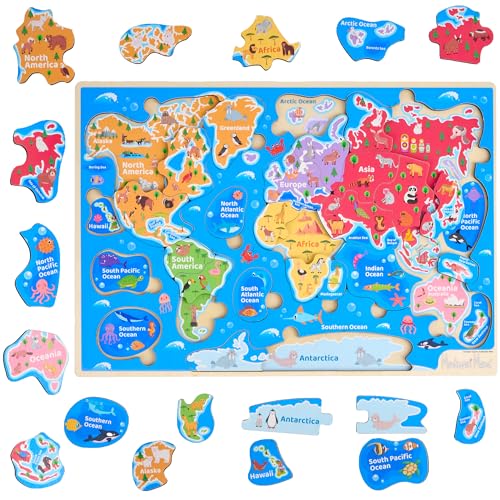
Hape Wooden World Map Puzzle
Continent-shaped wooden pieces subdivide into labeled countries, giving kids past the basics something to grow into. Formaldehyde-free glue and water-based paint keep indoor air cleaner during assembly. A sealed finish resists warping through repeated handling.
Pros
- Country-level labeling suits learners past age five
- Formaldehyde-free glue improves indoor air quality
- Sealed wood finish withstands daily handling
Cons
- Too detailed for preschool-age kids
- Small country pieces are fiddly to place correctly
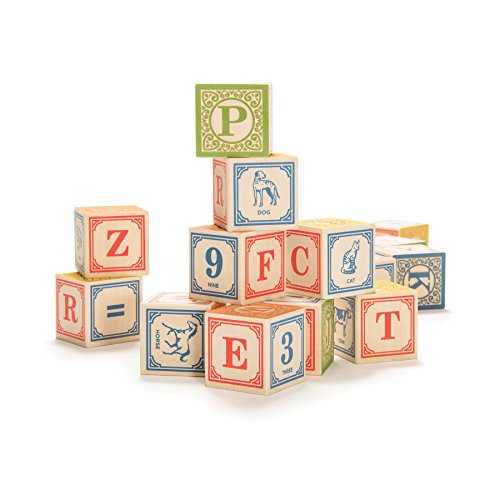
Uncle Goose Geography Blocks
American basswood forms each block, printed with flags, capitals, and outlines using soy-based ink instead of petroleum-based dye. Rounded, sanded edges skip the plastic laminate found on cheaper sets. Kids stack, sort, and rearrange them by continent rather than following one fixed layout.
Pros
- Soy-based ink skips petroleum-derived pigments
- Domestic basswood shortens the supply chain
- Open-ended stacking suits varied learning styles
Cons
- Offers less structure than a map-shaped puzzle
- Costs more per piece than a boxed puzzle

Begin Again Wooden Continents Puzzle
Chunky, continent-shaped pieces suit toddlers just starting to grasp that the world splits into landmasses. Sustainably managed forests supply the wood, and water-based paint keeps the finish non-toxic. Larger grips make placement easier than detailed country puzzles allow.
Pros
- Chunky pieces suit developing motor skills
- Continent-only focus avoids overwhelming beginners
- Water-based paint stays non-toxic for young kids
Cons
- Lacks the country-level detail older kids want
- Outgrown quickly once a child reaches elementary age

Green Toys My First Puzzle Set
Recycled milk jugs become this puzzle’s plastic, diverting household waste instead of drawing on virgin material. Oversized pieces fit small hands still building fine motor control. Skipping small parts entirely removes the choking risk that detailed wooden puzzles carry.
Pros
- Recycled plastic diverts milk jugs from landfills
- Dishwasher-safe pieces simplify cleanup
- Oversized shapes suit toddler-sized hands
Cons
- Simplified shapes teach less geographic detail
- Lacks the tactile feel of a wooden puzzle

Wooden World Map Wall Puzzle by Little Room Studio
Baltic birch plywood forms the base map, sealed with a low-VOC finish instead of a solvent-heavy coating. Kids remove and replace individual countries rather than packing the whole thing into a box. Mounting hardware ships in the box for wall installation.
Pros
- Doubles as ongoing wall decor, not just a boxed toy
- Low-VOC sealant limits indoor air impact
- Wall display keeps geography visible daily
Cons
- Needs wall mounting instead of tabletop play
- Priced above a standard boxed puzzle
How they compare
| # | Model | Material | Best for | Score | Price |
|---|---|---|---|---|---|
| 1 | Melissa & Doug Wooden USA Puzzle | Sustainably sourced wood | Best overall | 9.4 | Check price |
| 2 | PlanToys Wooden Globe | FSC-certified rubberwood | Best for FSC-certified sourcing | 9.1 | Check price |
| 3 | Hape Wooden World Map Puzzle | Sustainably sourced wood | Best for older kids learning countries | 8.9 | Check price |
| 4 | Uncle Goose Geography Blocks | American basswood | Best for open-ended learning | 8.7 | Check price |
| 5 | Begin Again Wooden Continents Puzzle | Sustainably managed wood | Best for early continent learners | 8.5 | Check price |
| 6 | Green Toys My First Puzzle Set | 100% recycled plastic (milk jugs) | Best for toddlers | 8.3 | Check price |
| 7 | Wooden World Map Wall Puzzle by Little Room Studio | Baltic birch plywood | Best for a lasting wall display | 8.0 | Check price |
How to pick the right one
What eco-friendly actually means on a toy label FSC certification, seen on the PlanToys globe, is a verifiable sourcing standard rather than a marketing buzzword. Water-based and soy-based paints replace solvent-heavy pigments across most of these picks. Recycled plastic, like the milk jugs in Green Toys’ set, counts as eco-friendly by diverting existing waste instead of drawing on new material.
Which age group fits which geographic scope Toddlers and preschoolers grasp continent-level shapes faster than country outlines, which is why Begin Again and Green Toys stick to broad landmasses. Kids around five and older handle labeled countries, the level Hape and Uncle Goose target. Pushing a toddler straight into detailed country pieces usually produces frustration instead of learning.
Wood versus recycled plastic, and when each wins Wood holds up longer and offers a more tactile surface, but sourcing needs verification through certification like FSC. Recycled plastic costs less and survives a dishwasher cycle, useful during potty-training or after snack-time messes. Neither material wins outright; both count as genuinely sustainable when sourced and finished responsibly.
Formats beyond the standard puzzle box Blocks, like Uncle Goose’s set, support open-ended sorting instead of one fixed correct layout. A wall-mounted map keeps geography visible day to day rather than stored in a closet between play sessions. Rotating between formats holds a child’s interest longer than a single puzzle ever could.
Good to know
What makes a geography toy actually eco-friendly?
Look for verifiable claims like FSC certification, a stated recycled material percentage, or water-based and soy-based paints rather than a vague word like natural.
Are wooden geography toys safer than plastic ones?
Both can be safe with non-toxic, water-based finishes; wood generally avoids the petroleum-based plastics found in cheaper toy lines.
What age should a child start learning geography with toys?
Continent-shaped puzzles suit kids starting around age 3, with country-level detail becoming appropriate closer to age 5 or older.
Is FSC certification worth checking before buying a wooden toy?
Yes, it confirms the wood came from a responsibly managed forest, something a generic sustainably sourced label doesn’t guarantee alone.
Can recycled plastic toys really count as eco-friendly?
Yes, toys built from recycled material like milk jugs divert existing plastic waste instead of drawing on new production.
Do these toys cover continents, countries, or both?
It varies by product; Begin Again’s puzzle stays at continent level, while Hape’s map goes down to individual countries.
Are small wooden puzzle pieces a choking hazard?
Detailed country-level pieces can pose a risk for children under 3; chunkier continent pieces are generally safer for that age.
What paint or finish should I look for on an eco toy?
Water-based paint, soy-based ink, or a low-VOC sealant point to a lower chemical footprint than solvent-based coatings or plastic laminate.
Wooden blocks or a map puzzle, which teaches geography better?
A puzzle reinforces correct map placement, while blocks support open-ended sorting; the better fit depends on how a child likes to learn.
Final word
Melissa & Doug’s Wooden USA Puzzle remains the strongest starting point for most families with a child under six, pairing sustainable materials with an approachable scope. Families chasing broader world geography and verified sourcing should choose the PlanToys Globe instead. Anyone with a toddler under three should skip detailed wooden puzzles entirely and pick the Green Toys set, since its oversized recycled pieces remove the choking risk smaller pieces carry.
Rachel Simmons
Rachel previously worked in child-product retail and brings a practical, detail-first eye to gear reviews, focusing on safety standards, ease of use and the fine print that matters most for new caregivers.