Reading toys by age, from first words to sight words
LeapFrog LeapStart 3D spans the widest age range, carrying a child from letter sounds to early comprehension on swappable books. Osmo Little Genius fits families who already own a compatible iPad. Yoto Mini is the screen free answer, playing story cards a three year old can load alone.
LeapFrog LeapStart 3D has the longest useful life here, because one stylus works across books covering ages two to seven. Letter sounds, vocabulary and early comprehension all sit in the same library. Books sell separately, so the first purchase is only a starting point.
Comparing reading toys is awkward, since they target different stages. Letter naming bores a child already blending sounds, and sight word games frustrate a two year old. We checked stated age ranges against the skill actually taught, noted whether an adult has to sit alongside, and weighed how much each system leans on extra books, cards or a tablet.
The best picks, ranked

LeapFrog LeapStart 3D Interactive Learning System
A chunky stylus reads whatever page it touches, so a child who cannot decode yet still hears the words spoken. Books slot into the hinged frame and swap as skills move on, which is how one device serves a two year old on letter names and a six year old on comprehension. A headphone socket keeps the repeated audio out of the rest of the room.
Pros
- One device covers roughly five years of development
- Child operates it without an adult alongside
- Headphone socket keeps car journeys quiet
Cons
- Books are an ongoing purchase
- Bulkier than a tablet in a travel bag

Osmo Little Genius Starter Kit for iPad
A reflector clips over the iPad camera so the tablet sees wooden sticks, rings and costume pieces laid on the table. Children build letter shapes with their hands, then watch the result appear on screen. Four games cover letter formation, early phonics and storytelling across the three to five band.
Pros
- Physical pieces cut passive screen time
- Letter formation practice before pencil control arrives
- Difficulty adapts as the child improves
Cons
- Works only with supported iPad models
- Needs a clear, well lit table surface

Yoto Mini Screen-Free Audio Player
Slot a card into the top and a story plays, with no display, no adverts and nothing to scroll. That independence suits three and four year olds who want control but cannot work an app. USB-C charging keeps the routine simple, and the unit doubles as a bedside clock and nightlight.
Pros
- No screen or advertising at any point
- Simple enough for a three year old to run alone
- Audio stories build vocabulary ahead of decoding
Cons
- Cards add up as the library grows
- Listening alone does not teach letter sounds

Educational Insights Hot Dots Jr. Let’s Master Kindergarten Reading Set
Ace the talking pen glows green and cheers a correct answer, then buzzes softly for a wrong one. That feedback loop lets a child practise without an adult marking every page. Two workbooks cover letter sounds, rhyming and beginning reading at kindergarten level, printed on wipe clean card that survives a second child.
Pros
- Immediate feedback keeps a child working solo
- Wipe clean pages carry over to siblings
- Content maps to typical kindergarten reading goals
Cons
- Narrower age window than LeapStart
- Pen audio cannot be muted in quiet rooms

VTech Touch and Learn Activity Desk Deluxe
Three configurations come out of one frame: a seated desk with touch sensitive pages, an easel, and a chalkboard. Pages cover letters, numbers, music and colours, with further page sets available later. Assembly takes a while and the footprint is real, so a playroom suits it better than a shared living room.
Pros
- Converts from desk to easel to chalkboard
- Attached seat keeps a toddler in one spot
- Extra page sets extend the content later
Cons
- Takes up genuine floor space
- Volume adjusts in only a few steps
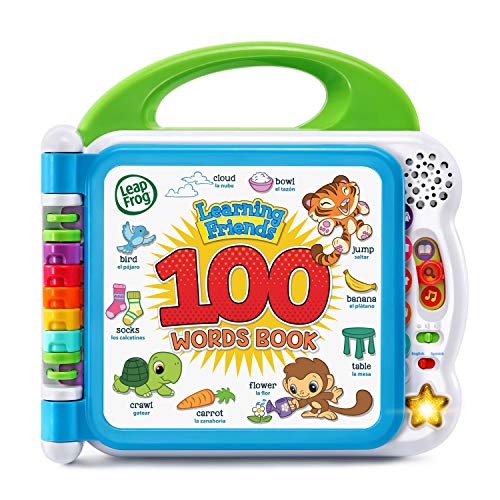
LeapFrog Learning Friends 100 Words Book
One hundred words sit across twelve themed pages, each spoken aloud when a toddler presses the picture. A switch flips every word between English and Spanish, which helps bilingual households hear both labels. Simplest item on this list, and the one a walking toddler will actually carry from room to room.
Pros
- Bilingual switch covers all 100 words
- Light enough to live in a changing bag
- Runs on two AAA batteries with no app to set up
Cons
- Vocabulary only, with no phonics or blending
- Most toddlers outgrow it near age three
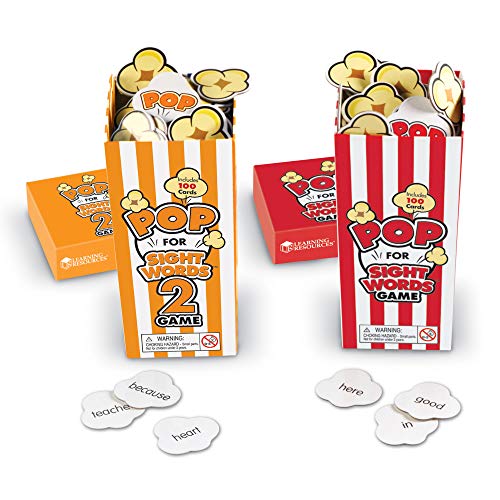
Learning Resources Pop for Sight Words Game
Players pull popcorn pieces from the tub and keep any sight word they can read aloud. Draw a pop piece and the whole pile empties, which is the twist that keeps a five year old playing. Two to four players are needed, so this one works as family practice rather than solo drilling.
Pros
- Turns sight word drilling into a game
- No batteries, screens or charging
- Covers 100 high frequency words
Cons
- Needs an adult or sibling to play
- Small pieces rule it out under age three
What matters most
What reading toys can and cannot do These toys build the scaffolding around reading: letter names, letter sounds, vocabulary, print awareness and the habit of picking up a book. None replaces an adult reading aloud, still the strongest single predictor of early literacy. Treat the toy as practice between story sessions. Instant feedback separates the good ones, since a child hears the correct sound at the moment of the guess rather than ten minutes later.
How to match a toy to your child’s reading stage Under three, vocabulary and print awareness are the target, which the LeapFrog 100 Words Book and the VTech desk both cover. Ages three to five call for letter sounds and letter formation, squarely Osmo Little Genius territory. From five onward, blending practice and high frequency words take over, handled by Hot Dots Jr. and Pop for Sight Words. LeapStart 3D spans the whole span because the books change while the stylus stays.
Best screen-free options for reading practice Yoto Mini and Pop for Sight Words involve no display at all, which suits homes already rationing tablet time. Audio players build listening vocabulary well ahead of decoding ability, so a four year old follows stories they could never read alone. Listening never teaches letter sounds directly, though. Pair an audio player with a phonics toy instead of treating it as the whole plan.
Reading toys for a reluctant or anxious reader Children who resist practice usually object to being corrected, not to books. Private feedback helps, which is why the Hot Dots pen suits a child who freezes while a parent watches. Games shift the framing further, since losing a round of Pop for Sight Words feels nothing like getting a word wrong in front of an adult. Owners report that letting the child choose the next book or card matters about as much as the content itself.
The lineup, side by side
| # | Model | Ages | Best for | Score | Price |
|---|---|---|---|---|---|
| 1 | LeapFrog LeapStart 3D Interactive Learning System | 2 to 7 years | Best overall | 9.4 | Check price |
| 2 | Osmo Little Genius Starter Kit for iPad | 3 to 5 years | Best for tablet households | 9.2 | Check price |
| 3 | Yoto Mini Screen-Free Audio Player | 3 years and up | Best screen-free choice | 9.0 | Check price |
| 4 | Educational Insights Hot Dots Jr. Let’s Master Kindergarten Reading Set | 5 to 6 years | Best for independent practice | 8.8 | Check price |
| 5 | VTech Touch and Learn Activity Desk Deluxe | 2 to 5 years | Best for toddlers | 8.6 | Check price |
| 6 | LeapFrog Learning Friends 100 Words Book | 18 months to 4 years | Best first vocabulary toy | 8.3 | Check price |
| 7 | Learning Resources Pop for Sight Words Game | 5 years and up | Best for playing together | 8.0 | Check price |
Good to know
What age should a child start using reading toys?
Vocabulary toys such as the LeapFrog 100 Words Book suit children from around 18 months. Letter sound toys land best between three and five. Sight word games are aimed at five and up, once a child recognises most letters.
Do reading toys actually teach a child to read?
They teach the components: letter names, letter sounds, vocabulary and word recognition. Reading itself comes from blending those sounds in real books with an adult. Use a toy for practice, never as a replacement for reading aloud together.
Which reading toy is best for a four year old?
Osmo Little Genius, if a compatible iPad is already in the house, because it covers letter formation and early phonics through physical pieces. LeapStart 3D is the better pick when you would rather avoid a tablet and want content that continues past age five.
Are screen-free reading toys better for young children?
They sidestep screen time arguments and let a three year old work the toy alone, which builds independence. Yoto Mini is the strongest example here. Phonics is the gap, so most families pair one with a letter sounds toy.
LeapStart vs Osmo: which should you buy?
LeapStart runs standalone, covers ages two to seven and needs no tablet. Osmo requires a supported iPad but puts real objects on the table and adjusts difficulty automatically. Longevity points to LeapStart, an existing iPad points to Osmo.
How do you help a child who resists reading practice?
Remove the audience. Toys with private feedback, like the Hot Dots Ace pen, let a child be wrong without anyone watching. Games such as Pop for Sight Words reframe practice as play, which owners report works with children who refuse worksheets.
Do reading toys need extra books or cards to keep working?
LeapStart needs extra books, Yoto needs extra cards, and the VTech desk accepts further page sets. Hot Dots Jr. and Pop for Sight Words arrive complete. Factor those ongoing purchases in before committing to a system.
Can reading toys help in a bilingual household?
Some can. LeapFrog Learning Friends 100 Words Book switches every word between English and Spanish, so a toddler hears both labels for one picture. Most other toys on this list are English only.
Is a reading toy worth it for a five year old already at school?
Yes, when it targets blending or sight words rather than letter names. Hot Dots Jr. mirrors kindergarten reading goals, and Pop for Sight Words drills the high frequency words schools test. Skip vocabulary toys built for toddlers.
The bottom line
LeapStart 3D is the buy for a household that wants one system from age two to seven, and the swappable books are what make that stretch possible. Families with a compatible iPad already on the shelf will see faster engagement from Osmo Little Genius, since shaping letters by hand beats tapping glass. For a home avoiding screens entirely, Yoto Mini alongside Pop for Sight Words covers listening and word recognition with no display involved.
Rachel Simmons
Rachel previously worked in child-product retail and brings a practical, detail-first eye to gear reviews, focusing on safety standards, ease of use and the fine print that matters most for new caregivers.


