Door Alarms That Actually Catch Someone at the Door
GE’s 45115 Personal Security Door Alarm is the most dependable standalone pick for most households. Fortress Security’s GSM alarm suits detached structures without reliable Wi-Fi, and Ring’s or SimpliSafe’s contact sensors fit anyone already building a connected security system.
GE’s 45115 Personal Security Door Alarm leads this list because its magnetic sensor is simple to test and its adhesive mount skips drilling, though it only sounds a local siren with no phone alert. Households that need a phone notification instead will want a connected option further down.
We compared sensor type, alert method, and installation requirements, since a loud local siren and a phone-notifying smart sensor solve different problems even though both get labeled a door alarm.
What we recommend

SABRE Wedge Door Stop Alarm
Doubles as a physical door stop and a siren, with no mounting hardware needed. Suits apartments and hotel rooms where drilling is not an option.
Pros
- No drilling or adhesive needed, fully reversible for renters
- Works as a physical door stop in addition to the siren
- Compact enough to pack for hotel or travel use
Cons
- Only works on doors that open inward over a hard or carpeted floor gap
- Siren sounds locally only, no app or phone notification
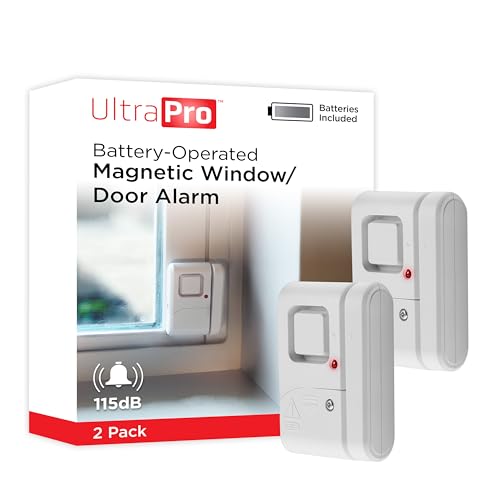
GE 45115 Personal Security Door Alarm
A magnetic contact sensor triggers when the door separates from the frame. A widely available basic alarm with a long track record.
Pros
- Simple magnetic contact design is easy to test and verify
- Adhesive mount avoids drilling into door frames
- Long-standing product with broad retailer availability for replacements
Cons
- No smartphone alert, siren is the only notification method
- Battery status is not visible except through the manual test button

Doberman Security SE-0137 Door and Window Alarm (2-Pack)
Sold as a 2-pack, covering a door and a window or two entry doors from one purchase. Uses the same magnetic sensor approach as single-unit alarms.
Pros
- Two units per pack covers more than one entry point for less than buying two singles
- Magnetic sensor is simple to install and reposition
- Switches between alarm and chime mode for different uses
Cons
- Siren is quieter than SABRE or GE at 100 dB versus 120 dB
- No cellular or app notification if the household is away
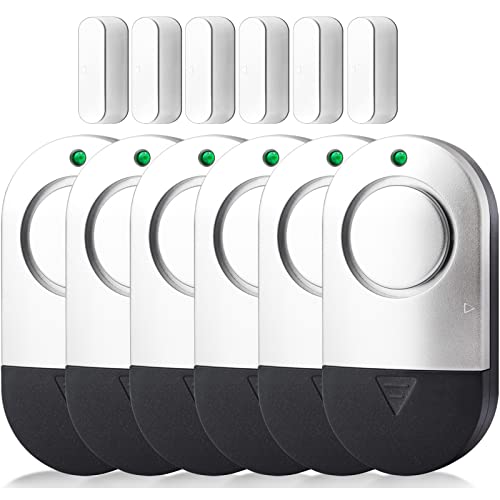
Fortress Security Store GSM Door Alarm
Sends a call or text through a GSM SIM card rather than relying on Wi-Fi. Useful for a detached structure or vacation property without reliable internet.
Pros
- Cellular alert works even without home Wi-Fi or a smart hub
- No recurring monitoring subscription beyond the SIM card’s own plan
- Suits detached garages, sheds, or vacation homes with spotty internet
Cons
- Requires sourcing and maintaining a separate SIM card
- Setup is more involved than a plug-and-play magnetic alarm

Mengshen Mini Door Window Sensor Alarm
A smaller housing than most contact alarms blends into door trim. Aimed at buyers who want the siren without a bulky visible unit.
Pros
- Low-profile housing is less visible than bulkier alarm units
- Sold in multi-packs for covering several doors affordably
- Switch toggles between alarm and entry chime modes
Cons
- Smaller battery compartment means more frequent battery changes for some users
- Adhesive strength can weaken on textured or painted door frames over time

Ring Alarm Contact Sensor (2nd Gen)
Requires a Ring Alarm base station to function as part of a monitored system. Sends phone alerts and logs activity instead of relying on a local siren alone.
Pros
- Sends a phone notification instead of only a local siren
- Integrates with other Ring devices like cameras and the base station
- App shows battery level instead of relying on a manual test button
Cons
- Needs a Ring Alarm base station purchased separately to function
- Full monitoring features require an optional Ring Protect subscription

SimpliSafe Entry Sensor
Designed as an add-on sensor for an existing SimpliSafe system. Pairs door status with the same app used for cameras and the base station.
Pros
- Rated for a multi-year battery life before replacement
- Pairs into a broader monitored system rather than standing alone
- Professional monitoring option escalates beyond a local siren if needed
Cons
- Only useful if the household already has or plans to buy a SimpliSafe base station
- Professional monitoring tier adds a recurring cost beyond the sensor itself
The lineup, side by side
| # | Model | Alarm Volume | Best for | Score | Price |
|---|---|---|---|---|---|
| 1 | SABRE Wedge Door Stop Alarm | 120 dB siren | Best for Renters | 8.5 | Check price |
| 2 | GE 45115 Personal Security Door Alarm | 120 dB siren | Best Overall Basic | 8.9 | Check price |
| 3 | Doberman Security SE-0137 Door and Window Alarm (2-Pack) | 100 dB siren | Best Value Multipack | 8.3 | Check price |
| 4 | Fortress Security Store GSM Door Alarm | Cellular GSM call or text alert | Best for Remote Notification | 8.4 | Check price |
| 5 | Mengshen Mini Door Window Sensor Alarm | 110 dB siren | Best Discreet/Compact | 8.0 | Check price |
| 6 | Ring Alarm Contact Sensor (2nd Gen) | Works with Ring Alarm base station | Best Smart Home Integration | 8.7 | Check price |
| 7 | SimpliSafe Entry Sensor | Works with SimpliSafe base station | Best Whole-Home System Add-on | 8.6 | Check price |
What matters most
Standalone Sirens vs Connected Sensors GE, SABRE, and Doberman alarms sound a local siren on their own with no app required, while Ring and SimpliSafe sensors need a base station but send a phone notification wherever the owner happens to be.
Covering a Single Door vs Multiple Entry Points A single entry door only needs one unit, but households covering several doors save money with Doberman’s 2-pack or Mengshen’s multi-pack rather than buying singles repeatedly.
When Cellular Alerts Make Sense A detached garage, shed, or vacation property without reliable Wi-Fi benefits from Fortress Security’s GSM alert, which works over a cellular SIM rather than depending on an internet connection.
Building Toward a Monitored System Anyone planning a broader monitored security setup gets more value adding Ring or SimpliSafe door sensors into that ecosystem than buying a standalone siren that can’t connect to cameras or a central app.
Questions worth asking
Do door alarms need Wi-Fi to work?
Standalone alarms like GE’s 45115 and SABRE’s Wedge alarm need no Wi-Fi at all, sounding a local siren off battery power. Ring and SimpliSafe sensors need a base station, and Fortress’s GSM alarm uses cellular service instead of Wi-Fi.
What is the difference between a local siren alarm and a smart contact sensor?
A local siren alarm sounds on its own near the door with no phone notification, while a smart contact sensor like Ring’s reports status to an app so the alert reaches a phone anywhere.
How loud does a door alarm siren need to be to deter an intruder?
Most standalone alarms in this lineup range from 100 to 120 decibels, loud enough to be heard throughout a home and to startle someone at the door.
Can a door alarm send a notification to my phone?
Only the connected options here, Ring’s Alarm Contact Sensor and SimpliSafe’s Entry Sensor, send a phone notification, and both require their respective base station to do so.
Do magnetic door alarms work on sliding doors as well as hinged doors?
Magnetic contact sensors from GE, Doberman, and Mengshen work on sliding doors as long as the two sensor halves are mounted close enough together to trigger when separated.
Is a GSM door alarm better than Wi-Fi for a detached garage?
For a structure without reliable Wi-Fi coverage, yes, since a GSM alarm like Fortress Security’s relies on cellular signal rather than a home network.
How long do batteries last in a typical door alarm?
Standard alarms with replaceable batteries typically last several months to a year depending on use, while SimpliSafe’s Entry Sensor is rated for multiple years before a replacement is needed.
Can renters install a door alarm without damaging the door frame?
SABRE’s Wedge Door Stop Alarm requires no drilling or adhesive at all, making it the most rental-friendly option in this lineup.
Do Ring or SimpliSafe door sensors work without their base station?
No, both are designed as add-on sensors and require their respective base station purchased separately to function as part of the system.
What is the difference between alarm mode and chime mode on these devices?
Alarm mode sounds a loud siren when the door opens, while chime mode plays a quieter tone, useful for tracking door activity during the day without the full alarm.
The bottom line
GE’s 45115 Personal Security Door Alarm is the most dependable standalone pick for most households that just need a loud local siren. Anyone already running a Ring or SimpliSafe system should add their matching contact sensor instead, and a detached structure without reliable Wi-Fi is better served by Fortress Security’s GSM alarm.
Marcus Chen
Marcus covered consumer electronics for enthusiast tech publications for six years before joining ChoiceCrest. He specializes in translating manufacturer spec sheets into plain-language buying advice, with a focus on audio, computing accessories and smart-home gear.