Which Conference Webcam Actually Improves Video Calls?
The Logitech MeetUp is the top overall conference webcam thanks to its wide 120 degree lens and built in speakerphone. The Anker PowerConf C300 is the best value for solo desks and huddle corners. The Jabra PanaCast 20 suits travelling presenters who need privacy controls.
For a small meeting room without a separate speakerphone, the Logitech MeetUp is the pick most buying guides land on. A personal desk or two-person huddle space is covered just as well by the far cheaper Anker PowerConf C300. Travelling presenters do best with the Jabra PanaCast 20, built to pack in a laptop bag.
Conference cameras are tricky because a spec sheet rarely tells you how a room will look on the far end. A 4K sensor still produces a soft picture when the lens is narrow and the room sits backlit. Auto framing can also feel restless when it hunts between speakers. We compared published field of view figures, microphone pickup distances, sensor size, mounting options and the firmware tools each brand ships, then weighed those against what owners report about reliability on long calls.
How to pick the right one
Which field of view fits your meeting room? The biggest buying mistake is choosing on resolution alone. Field of view decides whether everyone actually fits in the shot. A 90 degree lens works for one person at a desk and struggles across a six foot table. Measure the distance from the camera position to the far edge of the seating, then work backwards; rooms where the display wall sits close to the table almost always need 110 degrees or more.
Do you need audio built into the camera or kept separate? All in one bars fold the microphone and speaker into the camera housing, which removes cables and cuts the number of devices software has to negotiate. That convenience limits flexibility, since mic pickup range is fixed by the bar position. Separate speakerphones can sit in the middle of the table where voices actually are. A room with decent audio already in place is better served by a camera only unit.
Does lighting matter more than resolution? Most meeting rooms and home offices are lit from behind, either by a window or ceiling panels, and that is where cheap sensors fall apart. Look for HDR, backlight compensation or a named lighting system rather than assuming a 4K label solves it. Owners report a well corrected 1080p image reads better on the far end than an underexposed 4K one, partly because most conferencing platforms compress the stream anyway.
How should auto framing behave before you commit to a camera? Auto framing sounds useful and can be irritating in practice, particularly in rooms where people walk past the door or lean out of shot. Some cameras crop digitally, others physically pan, and a few let you set a fixed group frame and leave it there. The useful question is whether the feature can be turned off. Anything that hunts between speakers during a long call pulls attention away from what is being said.
The shortlist, ranked

Logitech MeetUp Conference Camera
A 120 degree lens, three beamforming microphones and a custom tuned speaker share one bar that sits under a display. That combination covers a small room without cabling a separate speakerphone or ceiling mic. Owners report it handles rooms up to around eight people without anyone leaning toward the table.
Pros
- Very wide lens covers narrow rooms
- Built in speaker and mic array
- Motorised pan and tilt with presets
Cons
- Large footprint for a personal desk
- Remote is easy to misplace

Poly Studio P15
A single USB bar combines a 4K sensor, a directional mic array and a decent speaker for one person at a desk. Automatic framing keeps you centred when you shift in your chair. NoiseBlockAI filters out typing and paper shuffle for anyone short on desk space.
Pros
- One cable replaces three devices
- Reliable speaker framing
- Strong background noise filtering
Cons
- Lens too narrow for a full room
- Needs its own software for tuning

Jabra PanaCast 20
A compact 4K sensor handles framing and picture correction on device, without leaning on the laptop. It folds shut over the lens for privacy, which matters when the camera lives clipped to a travelling laptop. Based on specifications, it is the most portable option here that still delivers usable wide angle coverage.
Pros
- Genuinely small and light
- Physical privacy cover
- Intelligent zoom keeps you framed
Cons
- Single mic is desk range only
- Runs warm in long sessions
Anker PowerConf C300
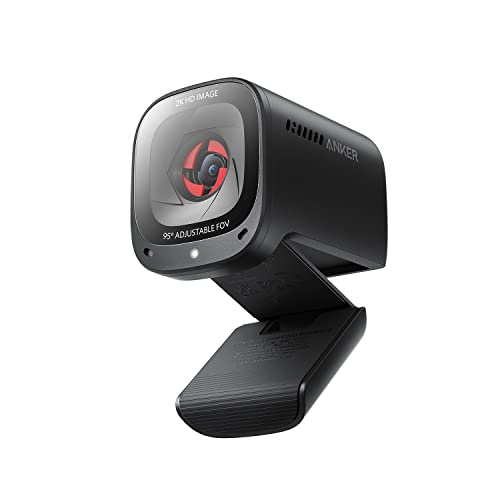
A 115 degree lens, adjustable frame rates and AI framing arrive here at a fraction of what dedicated room bars cost. Field of view can also drop to 78 or 65 degrees when a wide shot shows more clutter than intended. Owners report it is the easiest of this group to move between machines.
Pros
- Selectable field of view
- 60fps keeps motion smooth
- Works without extra software
Cons
- No speaker built in
- Plastic clip feels light

Logitech Brio 505
RightLight 4 and HDR keep faces exposed when a window sits behind the desk, the single most common complaint on shared workstations. Show Mode tilts the camera down to capture notes or a whiteboard sketch on the desk surface. It connects over USB C and mounts on almost any monitor lip.
Pros
- Excellent backlight correction
- Show Mode for desk documents
- Privacy shutter integrated
Cons
- Caps at 30fps
- No dedicated speaker

AVer CAM130
A 4K sensor and a content camera mode square up documents and boards for people who present physical material as well as talk. It is a camera only device, so it pairs with whatever speakerphone the room already has. Based on specifications, it offers the widest usable zoom range of this group.
Pros
- Wide lens with clean digital zoom
- Good for whiteboards and documents
- Solid metal build
Cons
- No microphones or speaker
- Setup software is dated

Insta360 Link 2C
A small motorised gimbal physically follows the presenter rather than cropping into the frame. Gesture control starts tracking or triggers a whiteboard view without touching the keyboard. It is the most interesting option here for anyone who moves around while presenting.
Pros
- True physical subject tracking
- Gesture shortcuts are genuinely useful
- Compact for a gimbal camera
Cons
- Narrow lens for group shots
- Tracking can overshoot fast movement
Side by side
| # | Model | Field of view | Best for | Score | Price |
|---|---|---|---|---|---|
| 1 | Logitech MeetUp Conference Camera | 120 degrees | Best overall | 9.4 | Check price |
| 2 | Poly Studio P15 | 90 degrees | Best for personal offices | 9.2 | Check price |
| 3 | Jabra PanaCast 20 | 117 degrees | Best for travel | 9.0 | Check price |
| 4 | Anker PowerConf C300 | 115, 78 or 65 degrees | Best value | 8.7 | Check price |
| 5 | Logitech Brio 505 | 90, 78 or 65 degrees | Best for hot desks | 8.5 | Check price |
| 6 | AVer CAM130 | 120 degrees | Best for hybrid classrooms | 8.3 | Check price |
| 7 | Insta360 Link 2C | Approx 79 degrees | Best for solo presenters | 8.0 | Check price |
Questions worth asking
Do I really need a 4K conference webcam?
Not usually. Most conferencing platforms compress video well below 4K, so the sensor rarely shows its full detail. A 4K sensor helps most when a camera crops or digitally zooms, because it has more pixels to work with.
How far away can conference webcam microphones pick up voices?
Built in mics on personal cameras generally cover a desk, roughly three feet. Room bars with beamforming arrays are usually rated to around eight feet. Beyond that, expansion mics or a table speakerphone work better, since room reverb starts overtaking direct sound.
What field of view do I need for a four person meeting room?
Aim for at least 110 degrees if the camera sits under a display at one end of the table. Narrower lenses force people to crowd toward the centre. A long, thin room can work better with a slightly narrower lens and good digital zoom instead of a very wide one that stretches faces at the edges.
Are all in one bars better than a separate webcam and speakerphone?
They are simpler, with one cable and one device for software to see, which cuts support headaches. Separate components let you place the microphone where voices are and upgrade parts individually. Rooms that already have working audio are usually better served by a camera only unit.
Will a conference webcam work with Zoom, Teams and Meet at once?
Almost all of these are UVC and UAC compliant, so the operating system sees them as a standard camera and audio device. That makes them platform agnostic. Advanced features such as framing presets or noise filtering may need the manufacturer software installed.
Does auto framing work well in busy rooms?
It depends on the implementation. Group framing, which finds everyone and holds a single wide shot, is generally reliable. Speaker tracking that cuts between individuals can get confused by movement near doors or reflective surfaces.
Can I mount a conference camera on a tripod?
Most include a standard quarter inch thread, either on the clip or the base. Room bars usually ship with wall mount hardware as well, since a permanent install gives a more consistent angle than a table stand.
Is USB C required for these cameras?
No. Several still use USB A and ship with an adapter or a captive cable. Cable length and whether the port supplies enough power for a bar with a speaker matter more than the connector type.
Which conference webcam is best for a solo home office?
The Poly Studio P15 packs a mic array, speaker and 4K sensor into one USB bar sized for a single person. The Anker PowerConf C300 covers the same job for less if a built in speaker is not required.
The verdict
For a shared meeting room where one device beats three, the Logitech MeetUp remains the most complete answer, pairing a genuinely wide lens with usable room audio. Personal desks are better served by the Poly Studio P15 or, when budget decides, the Anker PowerConf C300 with its selectable field of view and smooth 60fps video. Choose the Jabra PanaCast 20 when the camera has to travel.
Marcus Chen
Marcus covered consumer electronics for enthusiast tech publications for six years before joining ChoiceCrest. He specializes in translating manufacturer spec sheets into plain-language buying advice, with a focus on audio, computing accessories and smart-home gear.