Camcorders Ranked by Zoom, Sensor and Audio Inputs
Canon VIXIA HF G50 suits most buyers, with 4K UHD 30p, 20x optical reach and two SD slots for relay recording through long ceremonies. Sony FDR-AX43A holds walking shots steadier thanks to Balanced Optical SteadyShot. Panasonic HC-V800K drops to Full HD but adds a 24x Leica Dicomar lens.
Canon VIXIA HF G50 is the camcorder to buy if you film events rather than clips. It records 4K UHD 30p, reaches 20x optically, and rolls recording onto a second SD card so a ceremony never gets cut short. Its 1/2.3 inch sensor still noises up in a dim hall, which pushes low light shooters toward a larger sensor body.
Zoom numbers on camcorder listings often blend optical and digital reach, which hides what a lens actually does. We compared sensor sizes, lens ranges, stabilisation systems, microphone inputs and recording formats from manufacturer specifications. Owner reports on autofocus behaviour, battery endurance and audio noise decided the close calls.
The top picks, ranked

Canon VIXIA HF G50
A 1/2.3 inch CMOS sensor sits behind a 20x optical zoom that opens at 29.3mm equivalent. Recording tops out at 4K UHD 30p, while Full HD runs to 60p for smoother panning. Two SD slots handle relay recording, so a full ceremony spans cards without a pause.
Pros
- Relay recording continues onto the second SD card
- One manual ring switches between focus and zoom
- Carries a 3.5mm microphone input and a headphone jack
Cons
- Dim halls push the small sensor into visible noise
- Nothing records without a card, since internal memory is absent

Sony FDR-AX43A
Balanced Optical SteadyShot shifts the whole lens block, keeping walking footage usable without a gimbal. Sony fits a ZEISS Vario Sonnar T lens that reaches 26.8mm equivalent at its widest. Capture runs to 4K 30p, and the body stays light enough to carry through a travel day.
Pros
- Walking shots hold steady with no extra rig
- Wide 26.8mm end frames groups inside tight rooms
- Face tracking autofocus keeps a moving subject locked
Cons
- One card slot forces a swap partway through an event
- Menu structure feels dated beside Canon’s layout

Panasonic HC-V800K
Full HD 1080 60p is the ceiling, which keeps files small and editing cheap on older hardware. A 24x Leica Dicomar lens starts at 25mm equivalent and works with five axis hybrid stabilisation. Parents filming across a full pitch get reach without cropping in post.
Pros
- Wide 25mm end covers indoor group shots
- Smaller Full HD files edit smoothly on ageing laptops
- Microphone and headphone jacks are both fitted
Cons
- 4K capture is missing at every frame rate
- Touchscreen lags during quick menu changes
Panasonic HC-X1500
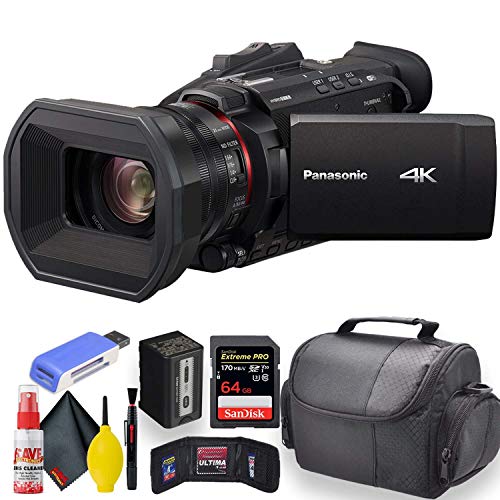
Working shooters get 4K at up to 60p, a 24x optical zoom and three separate control rings. Dual SD slots run relay or simultaneous recording, creating a backup from the first frame. Wired LAN and Wi-Fi both carry RTMP streaming, turning the body into a one box live camera.
Pros
- Zoom, focus and iris each get a dedicated ring
- Simultaneous dual card recording protects paid jobs
- RTMP streaming over Wi-Fi or LAN needs no external encoder
Cons
- XLR audio arrives only with the optional handle unit
- Bulk and weight rule it out as a family camcorder
Sony HDR-CX405
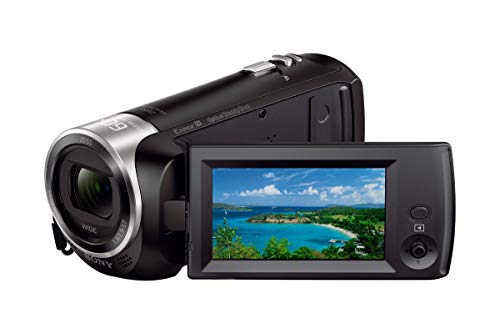
Simplicity drives this Handycam: one record button, automatic exposure, no manual rings to learn. Footage stays at Full HD 1080 60p on a single SD card. At roughly 190 grams the body suits one handed use by casual and older users.
Pros
- Roughly 190 grams stays comfortable during long holds
- 30x optical reach is unusual at entry level
- SteadyShot smooths casual walking clips
Cons
- No microphone input, so audio stays with the built in capsule
- A 1/5.8 inch sensor shows grain once light drops indoors
Canon VIXIA HF R800
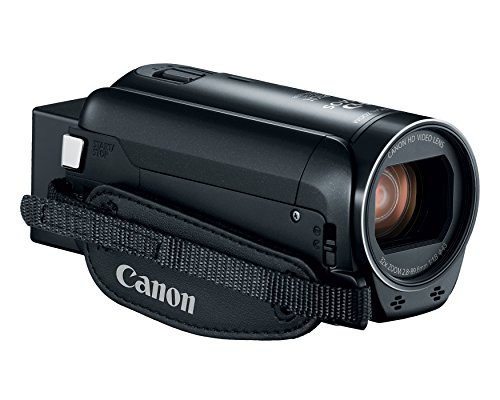
Reach carries this model: 32x optical stretches to 57x through Canon’s advanced zoom processing. Capture stays at Full HD 1080 60p, driven from a 3 inch touch panel. Highlight Priority mode protects faces under harsh gym lighting or a bright stage wash.
Pros
- Frames action across a full sized field from the stands
- A 3.5mm microphone jack appears despite the entry level position
- Common BP-727 style batteries are easy to source
Cons
- Detail softens noticeably beyond roughly 40x
- Plastic shell flexes under a firm grip

Zoom Q8n-4K
Audio hardware leads here: two combo XLR and TRS inputs sit below a detachable X/Y capsule. Video records at 4K 30p, monitored on a 2.4 inch flip out LCD. Dual gain circuitry captures a drum kit or a brass section without clipping the take.
Pros
- Phantom power runs condenser microphones directly
- Dual gain recording rescues unpredictable loud takes
- Doubles as a USB audio interface for a laptop
Cons
- Optical zoom is absent, so framing means moving the camera
- Phantom power drains the battery quickly
How to pick the right one
What to look for in a camcorder Optical zoom is the only zoom figure worth reading, since digital zoom simply crops pixels. Sensor size then decides how footage survives falling light, and consumer bodies run from 1/5.8 inch up to 1/2.3 inch. A 3.5mm microphone jack matters more than most buyers expect, because built in capsules pick up zoom motor whine. Storage planning comes last: 4K at around 60Mbps consumes roughly 1GB every two minutes.
Zoom reach versus sensor size Long lenses and large sensors pull against each other inside a compact body. Canon’s HF R800 reaches 57x partly because its 1/4.85 inch sensor is so small. Step up to the G50’s 1/2.3 inch chip and reach stops near 20x. Outdoor sport rewards reach, while dim receptions and auditoriums reward sensor area. Buyers who need both usually end up carrying two bodies rather than accepting one compromise.
Best camcorder for weddings and school recitals Auditoriums pair weak light with distance, the hardest combination for a small sensor. Canon VIXIA HF G50 handles it best in this group, since 20x reach sits in front of the largest sensor here. Relay recording across two cards also removes the card swap during vows or a valedictory speech. Sony FDR-AX43A fits a parent filming from the aisle while walking. Rule out any model lacking a microphone input when spoken audio is the point of the recording.
Sidelines, live music and streamed events Distance rules the sideline, which is why 32x optical on the Canon HF R800 covers a full field from the bleachers. Music inverts the problem: a clean audio path beats resolution every time. Zoom Q8n-4K accepts a board feed and a room microphone across two XLR inputs with phantom power. Panasonic HC-X1500 suits streamed recitals, pushing RTMP over LAN while both cards record a safety copy. For seated interviews, a wide end near 26mm keeps two people framed in a small room.
The lineup, side by side
| # | Model | Sensor | Best for | Score | Price |
|---|---|---|---|---|---|
| 1 | Canon VIXIA HF G50 | 1/2.3 inch CMOS | Best overall | 9.4 | Check price |
| 2 | Sony FDR-AX43A | 1/2.5 inch Exmor R CMOS | Best for handheld filming | 9.2 | Check price |
| 3 | Panasonic HC-V800K | 1/2.5 inch BSI MOS | Best value | 9.0 | Check price |
| 4 | Panasonic HC-X1500 | 1/2.5 inch MOS | Best for event and semi pro work | 8.8 | Check price |
| 5 | Sony HDR-CX405 | 1/5.8 inch Exmor R CMOS | Best budget | 8.6 | Check price |
| 6 | Canon VIXIA HF R800 | 1/4.85 inch CMOS | Best for school and sports sidelines | 8.3 | Check price |
| 7 | Zoom Q8n-4K | 4K 30p | Best for musicians and interviews | 8.0 | Check price |
Good to know
Are camcorders still worth buying?
Yes, when recordings run long or subjects sit far away. Phones throttle and stop during hour long events, while a camcorder runs until the battery or card fills. Optical reach past 20x has no phone equivalent.
What is the difference between optical zoom and digital zoom?
Optical zoom moves glass, so detail stays intact across the range. Digital zoom crops the sensor image and enlarges it, which softens edges. Advanced zoom modes such as Canon’s 57x sit between the two, using unused sensor area.
What is the best camcorder for beginners?
Sony HDR-CX405 asks almost nothing of a new user: one record button, automatic exposure, roughly 190 grams to hold. Move up to the Panasonic HC-V800K once manual control and a microphone jack start to matter.
Do camcorders record better video than a phone?
In bright light a recent phone often looks sharper, thanks to computational processing. Camcorders win on recording length, zoom reach, grip ergonomics and external audio. Judge by shoot length rather than pixel peeping a still frame.
4K vs Full HD camcorder: which is the better buy?
Pick 4K when you plan to reframe or crop during editing. Full HD keeps files small, fills cards slowly and edits on older machines. Families uploading straight to a phone screen rarely spot the difference.
Which camcorder works best in low light?
Canon VIXIA HF G50 leads this group on sensor area at 1/2.3 inch. Bigger sensors collect more light per pixel, which holds noise down as ISO climbs. A small LED panel on the hot shoe helps far more than any menu setting.
Can you connect an external microphone to a camcorder?
Mid range bodies usually include a 3.5mm input, among them the G50, HC-V800K and HF R800. XLR microphones need the Zoom Q8n-4K, the HC-X1500 handle unit, or an adapter box. Entry models such as the HDR-CX405 offer no input at all.
How long does a camcorder battery last while recording?
Supplied packs typically cover one to two hours of continuous capture with the screen open. Relay recording extends card capacity, not runtime. Event shooters generally carry two spares plus a wall charger.
How much storage does 4K camcorder footage need?
Budget around 1GB per two minutes at typical 4K bitrates near 60Mbps. A 128GB card therefore holds several hours. Choose UHS-I U3 or faster, because slow cards drop frames mid take.
What is the best camcorder for filming sports?
Canon VIXIA HF R800 reaches furthest for the money, covering a full field at 32x optical. Panasonic HC-V800K is the better all rounder, pairing 24x reach with five axis stabilisation for handheld pans. Both stay at Full HD, which keeps long match files manageable.
Final word
Buy the Canon VIXIA HF G50 if events fill most of your shoots, since dual card relay recording, 20x reach and real audio jacks cover weddings, recitals and travel from one body. Filming while walking changes the answer to the Sony FDR-AX43A and its Balanced Optical SteadyShot. Musicians should ignore both and take the Zoom Q8n-4K, where two XLR inputs with phantom power matter more than any lens.
Marcus Chen
Marcus covered consumer electronics for enthusiast tech publications for six years before joining ChoiceCrest. He specializes in translating manufacturer spec sheets into plain-language buying advice, with a focus on audio, computing accessories and smart-home gear.


