Seven Subwoofers That Fix Thin, Hollow Home Audio
The SVS SB-1000 Pro is the best overall subwoofer, delivering deep, controlled bass from a sealed enclosure that fits most living rooms. The SVS PB-2000 Pro suits larger rooms needing more output, and the Klipsch R-120SW covers budget home theater setups.
The SVS SB-1000 Pro is the best overall subwoofer, because its sealed enclosure produces tight, controlled bass without the boominess some ported designs introduce in smaller rooms. It has less maximum output than larger ported models, so anyone with a large open-concept living room can get deeper, louder bass from the SVS PB-2000 Pro instead.
We compared driver size, enclosure type, low-frequency extension, amplifier power, and wireless connection options using manufacturer specifications and feedback from home theater and stereo listeners.
The shortlist, ranked

SVS SB-1000 Pro
A sealed cabinet design keeps bass tight and controlled rather than loose or boomy, suiting apartments and mid-size living rooms. A 12 inch driver and a 325 watt amplifier reach surprisingly deep output despite the compact footprint.
Pros
- Sealed design produces tight, accurate bass in smaller rooms
- Compact footprint fits easily beside furniture
- App-based control allows room-specific tuning
Cons
- Maximum output trails larger ported subwoofers
- Costs more than basic budget subwoofers here

SVS PB-2000 Pro
A ported enclosure and a larger cabinet push air more efficiently than a sealed design, reaching deeper low-frequency extension at higher volumes. That extra output suits open floor plans and dedicated home theaters where sound has more room to spread out.
Pros
- Deeper low-frequency extension than sealed designs at this size
- Higher maximum output suits large or open rooms
- App control adjusts phase and crossover without a remote
Cons
- Larger cabinet takes up more floor space than sealed models
- Ported design can sound less tight in small, boxy rooms

Polk Audio HTS 12
A 12 inch driver and a front-firing port deliver noticeably more output than smaller budget subwoofers, without reaching the price of premium brands. A built-in equalizer preset switches between movie and music modes with one button.
Pros
- Strong output for the price among 12 inch subwoofers
- Movie and music EQ modes adjust tone with one button
- Reasonably compact for its driver size
Cons
- Bass control is looser than SVS’s sealed and ported models
- Build materials feel less premium than higher-end competitors

Klipsch R-120SW
A spun-copper driver finish and front-firing port keep cost down while still delivering noticeable low-end for home theater setups on a budget. Simple volume and crossover dials skip any app or remote requirement.
Pros
- Lower price than most 12 inch subwoofers in this comparison
- Simple physical controls need no app or setup menu
- Noticeable improvement over a soundbar’s built-in bass
Cons
- Less low-frequency extension than pricier sealed or ported models
- Cabinet build feels lighter duty under close inspection

Sonos Sub Mini
Designed specifically to pair wirelessly with Sonos soundbars and speakers, this subwoofer skips any cable routing across the room entirely. Dual force-canceling drivers reduce cabinet vibration despite the compact, upright design.
Pros
- Wireless pairing skips running a cable across the room
- Force-canceling drivers reduce buzz and cabinet vibration
- Compact upright design fits tighter spaces
Cons
- Only works within the Sonos ecosystem, not standard AV receivers
- Maximum output trails dedicated 12 inch home theater subwoofers

Yamaha NS-SW100
An 8 inch driver in a compact cabinet suits apartments, bedrooms or smaller home theaters where a 12 inch subwoofer would dominate the room visually and sonically. A down-firing design tucks neatly under furniture without sacrificing output for its size.
Pros
- Compact size suits small rooms and apartments well
- Down-firing design tucks under furniture easily
- Reasonable output for its small footprint
Cons
- Low-frequency extension falls short of 12 inch subwoofers
- Not suited to large rooms or dedicated theater setups
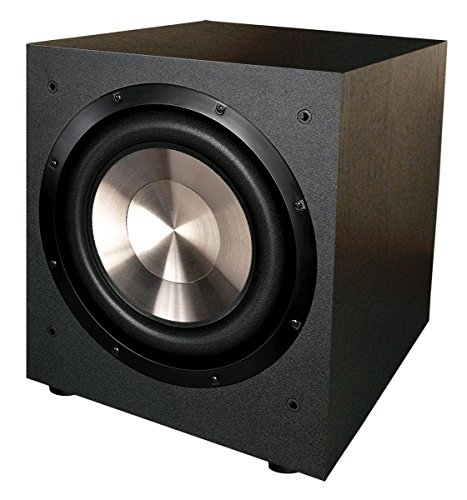
BIC America F12
A surprisingly powerful 12 inch driver and amplifier combination punches above its low price point for movie night explosions and action scenes. Basic styling and a lack of app control reflect the budget positioning, but output per dollar remains strong.
Pros
- High output relative to its low price point
- Strong choice specifically for movie and action-heavy viewing
- Simple setup with physical controls only
Cons
- Bass accuracy trails SVS and Polk at music-focused listening
- Plain cabinet styling compared to pricier competitors
The lineup, side by side
| # | Model | Driver Size | Best for | Score | Price |
|---|---|---|---|---|---|
| 1 | SVS SB-1000 Pro | 12 inches | Best Overall | 9.3 | Check price |
| 2 | SVS PB-2000 Pro | 12 inches | Best for Larger Rooms | 9.1 | Check price |
| 3 | Polk Audio HTS 12 | 12 inches | Best Value | 8.6 | Check price |
| 4 | Klipsch R-120SW | 12 inches | Best Budget | 8.2 | Check price |
| 5 | Sonos Sub Mini | Dual force-canceling drivers | Best for Wireless Sonos Systems | 8.7 | Check price |
| 6 | Yamaha NS-SW100 | 8 inches | Best for Small Rooms | 8.0 | Check price |
| 7 | BIC America F12 | 12 inches | Best Budget for Movie Nights | 8.1 | Check price |
How to choose
Sealed Versus Ported Subwoofers Explained A sealed enclosure, like the SVS SB-1000 Pro’s, produces tighter, more accurate bass that suits music and dialogue-heavy content without overwhelming a small room. A ported enclosure, like the SVS PB-2000 Pro’s, moves more air for deeper extension and higher output, better suited to action movies and larger spaces. Neither design is universally better, since the right choice depends on room size and whether music accuracy or movie impact matters more.
Matching Subwoofer Output to Room Size A compact 8 inch subwoofer like the Yamaha NS-SW100 fills a bedroom or apartment without overpowering the space, while the same unit would struggle to fill a large open-concept living room. Larger 12 inch ported designs like the BIC America F12 or Polk Audio HTS 12 push enough air for bigger rooms but can feel excessive and boomy in a small, boxy space. Measuring the room before buying prevents both underpowered and overwhelming results.
Wireless Subwoofers and Ecosystem Lock-In The Sonos Sub Mini pairs wirelessly, but only within Sonos’s own ecosystem of soundbars and speakers, so it will not connect to a standard AV receiver’s subwoofer output. Traditional wired subwoofers, including every other model here, connect to any receiver or amplifier regardless of brand. Buyers already invested in Sonos gear benefit from the wireless convenience, while everyone else gets more flexibility from a standard wired subwoofer.
Where a Budget Subwoofer Still Delivers Real Value The Klipsch R-120SW and BIC America F12 prove a budget subwoofer can still meaningfully improve a soundbar or basic speaker setup’s bass, even without the refinement of a sealed SVS design. Dialogue clarity and music accuracy take a back seat to raw output and impact on these budget picks. Anyone upgrading from no subwoofer at all notices a bigger improvement than someone comparing two already-decent subwoofers.
Frequently asked questions
Is a 12 inch subwoofer always better than an 8 inch one?
Not for every room. A 12 inch driver like the SVS PB-2000 Pro’s extends deeper and plays louder, but an 8 inch subwoofer like the Yamaha NS-SW100 suits small rooms better without overwhelming the space.
What is the difference between sealed and ported subwoofer bass?
Sealed enclosures produce tighter, more accurate bass, while ported enclosures move more air for deeper extension and higher maximum output.
Can a wireless subwoofer work with any AV receiver?
Only if it uses a universal wireless kit. The Sonos Sub Mini, for example, pairs exclusively within the Sonos ecosystem and will not connect to a standard receiver.
Do budget subwoofers sound noticeably worse than premium ones?
They trail in bass accuracy and extension, but models like the Klipsch R-120SW still meaningfully improve on a soundbar’s built-in bass for movie watching.
How much power does a home theater subwoofer need?
Amplifier power varies widely by driver size and enclosure, from around 100 watts for compact 8 inch models to 500 watts or more for large ported 12 inch designs.
Should I place a subwoofer in a corner of the room?
Corner placement often boosts bass output but can also introduce boominess. Testing a few positions along the front wall usually finds a cleaner balance.
Can one subwoofer serve both music and movie listening?
Yes, though sealed designs like the SVS SB-1000 Pro tend to suit music better, while ported designs like the PB-2000 Pro favor movie impact.
Do all subwoofers need a dedicated amplifier?
No, every subwoofer listed here is powered, meaning the amplifier is built into the subwoofer cabinet itself, unlike passive speakers.
Final word
The SVS SB-1000 Pro earns the top spot for its tight, accurate bass that suits most living rooms without overwhelming them. Anyone with a larger or open-concept room should choose the SVS PB-2000 Pro instead, since its ported design reaches deeper and louder. Budget-focused buyers upgrading from a soundbar’s built-in bass get strong value from the Klipsch R-120SW.
Marcus Chen
Marcus covered consumer electronics for enthusiast tech publications for six years before joining ChoiceCrest. He specializes in translating manufacturer spec sheets into plain-language buying advice, with a focus on audio, computing accessories and smart-home gear.


