Quiet Air Pumps Built for Small Aquariums and Habitats
Tetra Whisper 10 leads for small tanks, pairing a damped chamber with steady output near ten gallons. Pawfly MA-60 runs quietest in a bedroom. Fluval Q1 adds two independently valved outlets, which matters when bettas or shrimp need less current than a sponge filter.
Tetra Whisper 10, Pawfly MA-60 and Fluval Q1 cover almost every small tank scenario. All three move enough air for a nano setup. Noise and adjustability separate them, not raw output.
Packaging sells these pumps on gallons alone, and gallons say nothing about how a pump sounds at midnight or how it treats a long finned fish. Too much current pins a betta behind the decor. Vibration through a glass shelf can drown out the filter. We compared rated volumes, damping designs, valve control and what owners report about running noise over a year.
The shortlist, ranked
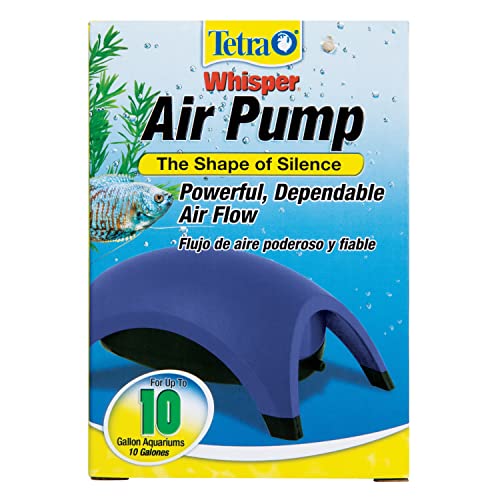
Tetra Whisper 10 Air Pump
Tetra damps the pumping chamber and adds rubber feet, so the running note stays low on a wooden shelf. Output covers tanks near ten gallons driving one airstone or a sponge filter. Diaphragms are replaceable, which keeps a tired pump out of the bin.
Pros
- Runs for years on a replaceable diaphragm
- Quiet enough for a living room shelf
- Spare parts stocked in most aquarium shops
Cons
- Fixed output with no dial
- One outlet needs a splitter for two devices
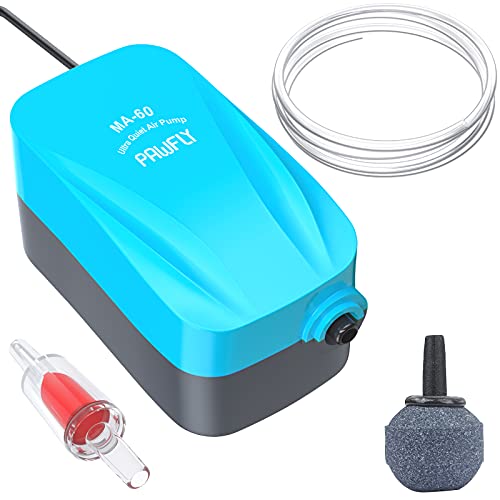
Pawfly MA-60 Aquarium Air Pump
Pawfly suspends the motor inside a small shell, cutting the buzz that most nano pumps transmit. Gentle output fits a five gallon betta tank or a shrimp bowl. Its footprint hides easily behind a stand.
Pros
- Among the quietest pumps in this group
- Slips out of sight behind a small tank
- Soft output will not blast a planted nano scape
Cons
- Runs out of pressure above ten gallons
- Fine pore airstones choke the flow

Fluval Q1 Air Pump
Two valved outlets adjust separately, so a sponge filter and a bubbler can share one pump without starving each other. Fluval spreads the pumping action across several chambers, which scatters vibration instead of concentrating it. Fine control makes this the pick for long finned fish.
Pros
- Each outlet dials in on its own
- Very little vibration reaches the shelf
- Drives a sponge filter without strain
Cons
- Bigger than a dedicated nano pump
- Service parts are harder to source locally

hygger Mini Quiet Aquarium Air Pump
A side dial winds output down to a slow trickle of bubbles. That low end matters for bettas, which tire quickly holding position in current. Rubberised housing soaks up vibration before it reaches the furniture.
Pros
- Dials down to genuinely gentle flow
- Kind to long finned species and shrimp
- Needs no foam pad underneath
Cons
- Little headroom if you upgrade tanks
- Dial setting can creep over months

Marina 50 Air Pump
Marina keeps this one plain: fixed output, one outlet, nothing to adjust. Fewer moving parts mean fewer things to fail on a first tank. Sizing suits small aquariums running a single stone.
Pros
- Cheapest sensible entry point here
- Compact enough to tuck behind glass
- Almost nothing to go wrong
Cons
- No way to reduce the flow
- Buzzes on a bare hard shelf

AQUANEAT Aquarium Air Pump
Two outlets let one unit serve a display tank and a quarantine box. Valves trim each line so the shorter run does not steal all the air. Per outlet pressure stays modest, so pair it with shallow tanks and coarse stones.
Pros
- Covers two small setups from one socket
- Compact for a dual outlet design
- Ships with airline and basic stones
Cons
- Limited pressure at each outlet
- Housing rattles without a soft mat

Eheim Air Pump 100
Eheim builds this for continuous duty, using a heavy damped housing and a low frequency running note. Output adjusts, so one unit covers a nano scape now and a bigger tank later. Owners report it fades into the background of a living room.
Pros
- Built for years of nonstop running
- Low, smooth running note
- Output adjusts across a useful range
Cons
- Costs more than nano rivals with similar output
- Takes up more shelf space
The lineup, side by side
| # | Model | Rated for | Best for | Score | Price |
|---|---|---|---|---|---|
| 1 | Tetra Whisper 10 Air Pump | Up to about 10 gallons | Best overall | 9.4 | Check price |
| 2 | Pawfly MA-60 Aquarium Air Pump | Small nano tanks | Best for quiet running | 9.2 | Check price |
| 3 | Fluval Q1 Air Pump | Small to medium tanks | Best output control | 9.0 | Check price |
| 4 | hygger Mini Quiet Aquarium Air Pump | Nano and small tanks | Best for bettas | 8.8 | Check price |
| 5 | Marina 50 Air Pump | Small tanks | Best value | 8.6 | Check price |
| 6 | AQUANEAT Aquarium Air Pump | Two small tanks | Best for two tanks at once | 8.3 | Check price |
| 7 | Eheim Air Pump 100 | Small to medium tanks | Best build quality | 8.0 | Check price |
How to pick the right one
What to look for in a small aquarium air pump Four things decide the purchase. Rated volume tells you roughly how much air is on tap. Outlet count sets whether one pump can feed a sponge filter and a second device. Adjustability, whether a built in dial or an inline valve, lets you trim flow after the tank is running. Last, check whether the maker sells a replacement diaphragm, because that part hardens long before the motor gives up.
How much airflow does a nano tank actually need? Very little. A five gallon tank with one coarse stone needs a fraction of what a ten gallon sponge filter demands. Water depth adds resistance too, so a tall six gallon cube is harder work than a shallow ten gallon. Buy roughly to the rated volume and add a valve rather than buying two sizes up. Excess air has to go somewhere, and in a nano tank it goes into current your fish cannot escape.
Which pump suits a betta, shrimp or nano scape? Gentle species want a slow bubble stream, not a rolling boil. Adjustable models such as the hygger Mini or Fluval Q1 reach a genuinely low setting. Shrimp tanks benefit from an airstone sponge filter, which gives biological filtration and oxygen with almost no flow. Watch behaviour after a change: fish parked in a back corner, or a betta fighting to stay level, means the output is still too high.
How do you stop an air pump buzzing on a shelf? Resonance causes most complaints, not the motor itself. Set the pump on folded cloth, foam or a mouse mat, or hang it from a hook by its cord. Position matters for safety as well. Mount the pump above the water line where possible, and fit a one way check valve on every airline so a power cut cannot siphon tank water back down the tube.
Good to know
Does a small tank need an air pump at all?
Not always. Filter outflow that ripples the surface already handles gas exchange. Add a pump for warm rooms, heavy stocking, planted tanks at night, or any setup running a sponge filter.
Do bettas need an air pump?
No. Bettas gulp air at the surface using a labyrinth organ. If you run one anyway, keep bubbles slow, because steady current makes swimming and resting exhausting for them.
Why is my aquarium air pump so noisy?
Three usual causes: vibration passing into a hard shelf, a diaphragm that has hardened with age, or a clogged airstone forcing the pump against extra resistance. Isolate it on something soft first, then inspect the stone.
How do I reduce airflow that is too strong?
Fit an inline control valve on the airline. Swapping to a coarser stone also drops resistance and softens the stream. Pumps with an output dial, such as the hygger Mini, let you skip the extra part.
Can one small pump run two tanks?
Yes, with a dual outlet model like the AQUANEAT or Fluval Q1 and two shallow tanks. Splitting a single outlet works poorly, since air rushes down whichever line offers least resistance.
How long do small air pumps last?
Owners report roughly two years of continuous running before bubbles weaken, which normally means a hardened diaphragm rather than a dead motor. Better built units such as the Eheim run considerably longer.
Should the pump sit above or below the tank?
Above the water line is safest. Where it has to sit lower, fit a check valve and loop the airline above the rim before it drops into the water.
Is a sponge filter better than an airstone?
For shrimp and betta tanks, usually yes. A sponge filter turns the same air supply into biological filtration and gentle circulation, while a bare stone only makes bubbles.
Do airstones need replacing?
Yes. Mineral scale and biofilm block the pores, which chokes output and strains the diaphragm. Soaking buys some time, but replacement stones cost little and work better.
What size airline tubing do these pumps use?
Standard aquarium airline of about 3/16 inch inside diameter fits every pump here. Replace tubing once it yellows and stiffens, because old line splits at the barbs and leaks air.
The verdict
Tetra Whisper 10 is the sensible default for a small tank, quiet on a shelf and serviceable when the diaphragm hardens. Move to the Pawfly MA-60 when the tank shares a bedroom and silence outranks output. Keepers of bettas, shrimp or other gentle species should choose the Fluval Q1 for per outlet flow control.
Olivia Hartley
Olivia spent several years working at an animal shelter and a pet-supply retailer before joining the editorial team. She researches pet gear with an emphasis on safety, comfort and the fine print that owners often miss.


