Which Health Supplies Suit Small Pets Beyond Birds?
Nekton-S Multivitamin takes first place, listing its vitamins, amino acids and trace elements instead of hiding behind a blend name. Zoo Med AvianSun 5.0 UVB Compact Fluorescent Lamp covers the lighting gap no powder can fill. Penn-Plax Cuttlebone supplies calcium and beak wear for almost nothing.
Own a budgie, cockatiel or similar small companion bird? Nekton-S Multivitamin addresses the most common dietary gap and is the sensible first buy. Zoo Med AvianSun 5.0 UVB Compact Fluorescent Lamp handles what no supplement reaches, and Penn-Plax Cuttlebone delivers calcium plus beak conditioning cheaply.
Shopping this category gets confusing fast, since much of it is marketed at parrots many times a budgie’s weight and dosing guidance stays vague. We compared stated compositions, delivery methods and what published avian care guidance says about small bird requirements, then ranked the seven below. None of this substitutes for an avian vet, and a bird showing any sign of illness needs one now.
The top picks, ranked

Nekton-S Multivitamin Supplement for Birds
Fine powder carrying vitamins, amino acids and trace elements, sprinkled over soft food or dissolved in drinking water. Few supplements in this category state their composition this clearly instead of listing a proprietary blend. Owners report the food route works better day to day, since water dosing means mixing a fresh solution every morning.
Pros
- States its composition rather than a vague blend name
- Dose scales down to budgie sized birds
- Works over food or in the water dish
Cons
- Water solution needs remaking daily
- Powder clumps if the tub is stored somewhere damp

Zoo Med AvianSun 5.0 UVB Compact Fluorescent Lamp
Compact fluorescent bulb producing UVA and UVB for caged birds kept indoors, where window glass filters out the wavelengths they need. Standard screw fitting makes mounting simple, though Zoo Med recommends a deep dome to reflect full output downward. Based on specifications, UVB output falls off well before the lamp stops lighting, so replacing on schedule is the whole point.
Pros
- Covers something no powder or drop can replicate
- Screws into standard fixtures without an adapter
- UVA also supports colour vision and natural behaviour
Cons
- Needs replacing on schedule while still lighting
- Full output depends on a suitable deep dome fixture

Kaytee Forti-Diet Pro Health Cockatiel Food
Fortified seed and pellet blend built for cockatiel beak size, carrying added vitamins, omega fatty acids and probiotics. Getting the base diet right does more for a bird than any supplement layered over a poor one. Owners report birds pick favourites from any mixed blend, so smaller portions served more often limit that habit.
Pros
- Clear improvement on plain seed as a daily base
- Sized correctly for cockatiel beaks
- Widely stocked, so restocking never becomes a hunt
Cons
- Birds can still eat around the pellets
- Mixed blends deliver less consistent nutrition than full pellets

Penn-Plax Cuttlebone Bird Treat
Natural cuttlebone that clips to the cage bars, supplying calcium and a surface for a bird to grind its beak against. Oldest item in the category and still among the most useful, especially for laying hens. Owners report swapping it out once it turns heavily worn or soiled, rather than leaving one up for months.
Pros
- One cuttlebone lasts weeks in a single cage
- Handles beak wear alongside calcium intake
- Birds take to it with no training needed
Cons
- Some birds ignore it completely
- Needs replacing once droppings soil the surface
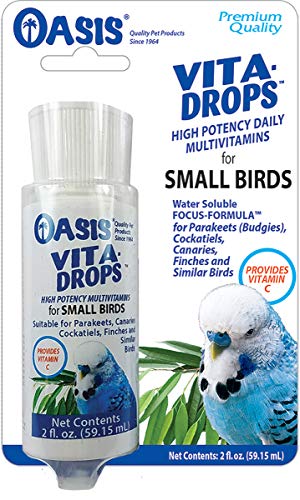
Oasis Vita-Drops Multivitamin for Birds
Liquid concentrate dosed by the drop into drinking water, aimed at birds that refuse anything sprinkled on food. Dosing takes seconds, but treated water encourages bacterial growth and has to be changed daily. Owners report it as the path of least resistance with genuinely fussy birds.
Pros
- Reaches birds that reject powdered supplements
- Drop based dosing takes seconds
- A small bottle covers months of use
Cons
- Treated water must be replaced every day
- Actual intake is impossible to measure

Poop-Off Bird Poop Remover
Enzyme cleaner formulated for dried droppings on cage bars, perches and surrounding walls, where household sprays are either useless or unsafe near birds. Cage hygiene counts as a health input rather than a cosmetic one, since bacteria and mould start on soiled perches. Owners report it softens hardened deposits that would otherwise need scraping, which protects the cage coating.
Pros
- Lifts dried deposits without scraping
- Formulated for use around birds when directions are followed
- Saves cage coatings from abrasive scrubbing
Cons
- Soak time is required, so nothing is instant
- Scent is noticeable to sensitive noses
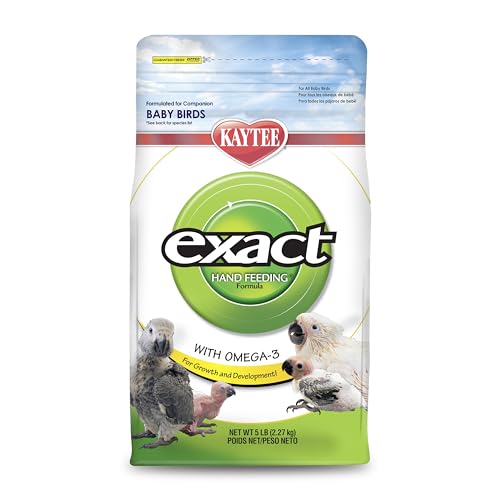
Kaytee Exact Hand Feeding Formula for Baby Birds
Powdered formula for hand rearing chicks, mixed with warm water to a stated consistency and served at a specific temperature. Avian care guidance also lists it as a supportive feed for birds struggling to eat, though that use belongs under vet direction. Owners report that mixing temperature and consistency matter far more than which brand sits on the shelf.
Pros
- Widely stocked and thoroughly documented
- Mixes smooth without lumps blocking a syringe
- Worth keeping on hand for emergencies
Cons
- Demands careful temperature and consistency control
- Assisted feeding of an unwell bird should be vet directed
Side by side
| # | Model | Form | Best for | Score | Price |
|---|---|---|---|---|---|
| 1 | Nekton-S Multivitamin Supplement for Birds | Fine powder | Best overall | 9.4 | Check price |
| 2 | Zoo Med AvianSun 5.0 UVB Compact Fluorescent Lamp | Compact fluorescent, screw fitting | Best for indoor birds | 9.2 | Check price |
| 3 | Kaytee Forti-Diet Pro Health Cockatiel Food | Fortified seed and pellet blend | Best fortified daily food | 9.0 | Check price |
| 4 | Penn-Plax Cuttlebone Bird Treat | Natural cuttlebone | Best budget calcium | 8.8 | Check price |
| 5 | Oasis Vita-Drops Multivitamin for Birds | Liquid concentrate | Best liquid option | 8.6 | Check price |
| 6 | Poop-Off Bird Poop Remover | Enzyme based cleaner | Best for cage hygiene | 8.3 | Check price |
| 7 | Kaytee Exact Hand Feeding Formula for Baby Birds | Powder, mixed with warm water | Best for hand rearing | 8.0 | Check price |
What matters most
What does a small bird actually need beyond food? Start with the base diet, because a seed only ration is the single biggest health issue in small companion birds. Seed runs high in fat and short on vitamin A, vitamin D and calcium. A fortified blend or formulated pellet, plus appropriate fresh vegetables, closes most of that gap on its own. Supplements top up a reasonable diet rather than rescuing a poor one. Drops in the water will not fix a bird living on sunflower seed. Sort the food first, then decide what genuinely needs adding.
Why indoor birds need a UVB lamp Birds synthesise vitamin D3 using ultraviolet wavelengths and rely on UV vision to see the world in normal colour. Ordinary window glass filters nearly all of that out, so a cage in a sunny window gets warmth without the useful part. An avian UVB lamp mounted at the manufacturer’s stated distance fixes it. Replace the lamp on schedule, since output drops long before the bulb dies. Supervised time outdoors in a secure cage also helps, provided shade and shelter are available.
Food dosing versus water dosing: which works better? Powder over moistened food tells you roughly what the bird consumed and keeps the dose out of a warm dish all day. Water dosing is easier and suits birds that reject supplemented food, but vitamins in water feed bacteria, so treated water needs replacing daily and the dish needs proper scrubbing. Pick one method and stick with it. Running both at once risks doubling fat soluble vitamins such as A and D, which is a genuine overdose route rather than a theoretical one.
How to spot a sick bird before it becomes an emergency Clean dishes, clean perches and a clean tray prevent more problems than any supplement resolves. Beyond that, daily observation is your earliest warning, because birds conceal illness by instinct until it is advanced. Watch droppings, posture, appetite and breathing every morning. Keep a small kit ready: enzyme cleaner, spare dishes and the phone number of an avian vet. A bird sitting fluffed on the cage floor, bobbing its tail or breathing with effort needs a vet appointment, not a change of supplement.
Good to know
Does my budgie really need a vitamin supplement?
Diet decides it. A bird eating a formulated pellet diet with fresh vegetables usually needs little extra, since pellets already carry the vitamins. Seed based diets leave gaps that a multivitamin helps close. Ask an avian vet if you are unsure, because over supplementing a pellet fed bird is also possible.
Can I put vitamins in the drinking water permanently?
No. Change treated water daily, both because vitamins degrade in the dish and because they encourage bacterial growth. Many owners alternate treated and plain water instead of dosing every day. Follow the label instructions for the specific product rather than guessing at a schedule.
How often should a cuttlebone be replaced?
Swap it once it is worn thin, soiled with droppings, or showing any damp or mouldy patch. Some birds finish one in a few weeks while others barely touch theirs. Mounting it away from directly beneath a perch keeps it clean considerably longer.
Is a UVB lamp safe to leave on all day?
Follow the manufacturer’s guidance on distance and duration, which usually means a few hours daily rather than continuous exposure. Position it so the bird can move into shade by choice, and give proper dark hours for sleep. Never substitute a reptile basking lamp for an avian UVB lamp.
Can I give my bird human vitamin supplements?
No. Human doses target a body hundreds of times heavier, and several ingredients are unsuitable for birds outright. Use products formulated for birds and follow the stated dose for your bird’s size. Follow your vet instead if they advise otherwise for a specific condition.
What signs mean I should see a vet rather than adjust supplements?
Sitting fluffed on the cage floor, tail bobbing, any change in breathing, persistent changes in dropping colour or consistency, loss of appetite, or discharge from eyes or nostrils. Birds hide illness until it is advanced, so these signs mean act today rather than watch and wait.
Do millet sprays and treats count as health supplies?
They earn their place for appetite, taming and enrichment, but they are treats rather than nutrition. Millet is highly palatable, and a bird with constant access will eat it in preference to better food. Offer limited amounts instead of leaving a spray clipped in the cage.
How should I store powdered bird supplements?
Keep the container sealed, dry and out of direct sunlight, and use the scoop rather than damp fingers. Potency declines once opened, so buy a size you will finish within the stated period instead of the largest tub. Writing the opening date on the lid removes the guesswork later.
Which supplies should a new bird owner buy first?
A species appropriate base diet, a cuttlebone and clean water dishes cover the essentials on day one. Add a UVB lamp if the cage sits indoors year round. Hold off on multiple supplements until you know what the diet actually lacks, and register with an avian vet before you need one urgently.
The verdict
Nekton-S Multivitamin is the one supplement worth buying if you want a single product that meaningfully addresses a small bird’s dietary gaps. Zoo Med AvianSun 5.0 UVB Compact Fluorescent Lamp remains the item most owners never think about, despite glass blocking the wavelengths birds need. Clip on a Penn-Plax Cuttlebone for calcium and beak wear, and sort the base diet first, because nothing on this list rescues a bird living on seed alone.
Olivia Hartley
Olivia spent several years working at an animal shelter and a pet-supply retailer before joining the editorial team. She researches pet gear with an emphasis on safety, comfort and the fine print that owners often miss.