Is a Stationary Bike Good for Knee Rehab?
A stationary bike is one of the most commonly recommended tools in knee rehabilitation because it moves the joint through a controlled, low-impact range of motion without the body’s full weight loading through the knee the way walking or running does, though the seat height, resistance level, and timing in a recovery program all need to match the specific injury or surgery involved.
Why low impact matters for an injured knee
Unlike walking, running, or most gym machines, pedaling a stationary bike does not require the knee to absorb body weight with each movement, since the seat supports most of the rider’s weight throughout the pedal stroke. That removes a major source of joint stress while still moving the knee through flexion and extension, which is exactly what many healing knees need.
How seat height changes the demand on the knee
A seat set too low forces deeper knee flexion at the top of the pedal stroke, which can aggravate certain injuries, particularly patellar issues, while a seat set appropriately higher keeps the knee closer to a gentler range of motion. Physical therapists often adjust seat height specifically to control how much flexion the knee experiences during rehab.
What type of knee issue responds well to cycling
General post-surgical stiffness, mild to moderate osteoarthritis, and recovery after many ligament procedures once cleared by a surgeon all tend to respond well to controlled cycling, since it restores range of motion and builds surrounding muscle strength without repetitive impact loading.
When cycling may not be the right early choice
Immediately after certain surgeries, or with specific injuries like a meniscus tear not yet stable enough for rotational movement, a doctor or physical therapist may delay cycling until the joint reaches a particular healing milestone, since even low-impact pedaling still involves some rotational and flexion stress.
Resistance level matters as much as motion itself
Very light resistance in early rehab phases focuses purely on restoring range of motion and blood flow without building load, while gradually increasing resistance in later phases helps rebuild the quadriceps and hamstring strength that stabilizes the knee joint long-term, so resistance progression is typically a deliberate, staged part of a rehab plan rather than something to increase on your own schedule.
Recumbent versus upright bikes for rehab specifically
Recumbent bikes, with their reclined seated position and back support, place less direct stress on the knee and lower back and are often preferred in early rehab stages, while upright bikes, closer to a standard road bike position, are commonly introduced later as strength and tolerance improve.
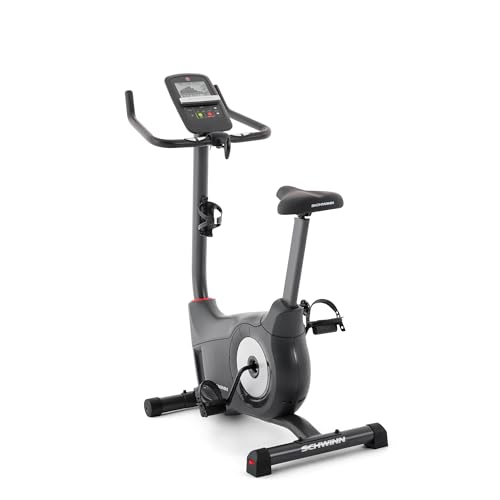
Schwinn 170 Upright Bike
A home upright exercise bike with adjustable resistance and seat height, commonly used for general cardio and later-stage rehab cycling.
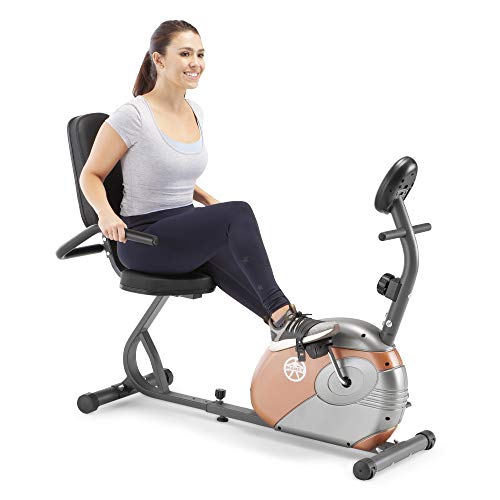
Marcy Recumbent Exercise Bike ME-709
A recumbent bike with a reclined, supported seating position often favored for gentler early-stage knee rehab sessions.
Common questions
How soon after knee surgery can you typically start using a stationary bike?
This varies significantly by surgery type and surgeon, some post-surgical protocols introduce light stationary cycling within the first couple of weeks, while others wait several weeks, so the specific surgeon’s timeline should always take priority over a general guideline.
Should I ask a doctor before starting bike rehab on my own?
Yes, especially after surgery or with an acute injury, since the right timing and resistance level depend on the specific procedure or injury, and starting too early or with too much resistance can set recovery back.
Does seat height really make a meaningful difference for knee pain?
Yes, seat height directly controls how much the knee bends at the top of each pedal stroke, and even a small adjustment can meaningfully change comfort and strain for someone with sensitive patellar or ligament issues.
Is a recumbent bike better than an upright for a bad knee?
Often yes in early rehab stages, since the reclined, supported position of a recumbent bike reduces strain on both the knee and lower back compared to the more upright, weight-forward position of a standard bike.
Can stationary biking make a knee injury worse?
It can, if resistance or duration is increased too quickly, or if the seat height is set incorrectly for the specific injury, which is why professional guidance matters more in the early stages than general cycling advice.
How much resistance should someone in early rehab use?
Very light resistance, often just enough to keep the pedals turning smoothly without strain, is typical in early rehab phases, with resistance increased gradually only as strength and comfort improve over subsequent weeks.
Is pain during cycling a sign to stop immediately?
Sharp or worsening pain during cycling is a signal to stop and reassess, while mild, dull discomfort that fades quickly after stopping is more commonly tolerated in supervised rehab programs, though any persistent pain should be discussed with a provider.
Can biking help with knee osteoarthritis specifically?
Yes, cycling is frequently recommended for osteoarthritis specifically because it moves the joint through its range of motion and strengthens supporting muscles without the repetitive impact that walking or running places on an arthritic knee.
Does cycling strengthen the muscles around the knee, not just the joint itself?
Yes, consistent pedaling against resistance builds quadriceps and hamstring strength over time, and stronger muscles around the knee joint help stabilize and support it, which is a key part of most knee rehab goals beyond just the surgery itself.
How long should a typical rehab cycling session last?
Early rehab sessions are often short, sometimes just five to ten minutes at a time, gradually extending to twenty or thirty minutes as tolerance and strength improve over the course of a program.
Is it normal to feel some stiffness the day after starting bike rehab?
Mild stiffness or fatigue the day after a new activity is common as the joint and surrounding muscles adapt, though it should generally improve rather than worsen with each subsequent session.
Can a stationary bike replace physical therapy exercises entirely?
No, cycling is typically one component within a broader rehab program that usually also includes targeted strengthening, stretching, and balance work specific to the injury, rather than a complete standalone treatment.
Does pedaling backward have any specific benefit for knee rehab?
Some rehab protocols use backward pedaling specifically because it can engage the quadriceps differently and place slightly different stress through the knee, though this is typically introduced deliberately by a therapist rather than attempted on your own.
Is a stationary bike safe for someone with a meniscus tear?
It depends on how stable the tear is and whether it has been surgically repaired, since the slight rotational component in pedaling can aggravate an unstable meniscus tear, which is why clearance from a doctor matters specifically for this injury.
How often per week should knee rehab cycling be done?
Many rehab programs suggest cycling several times per week, often three to five sessions, though frequency is usually set based on the individual’s specific recovery timeline rather than a fixed universal number.
Can older adults safely use a stationary bike for knee rehab?
Yes, stationary biking is generally considered one of the safer cardio options for older adults with knee concerns, due to its seated, low-impact, controlled nature, though resistance and duration should still be matched to individual fitness level.
Does cadence, meaning pedaling speed, matter for rehab purposes?
Yes, a smooth, moderate cadence is typically preferred over very slow, high-resistance pedaling in early rehab, since slow pedaling against heavy resistance places more strain through the knee joint per revolution.
Where this leaves you
A stationary bike earns its place in knee rehab because it lets the joint move without bearing full body weight, which is exactly the combination most healing knees need. The details, seat height, resistance, and timing after injury or surgery, matter more than the simple fact of using a bike, so following specific guidance rather than general assumptions makes the difference between helpful and counterproductive.
Derek Holt
Derek has a background coaching recreational and amateur athletes and has worked the sales floor at specialty fitness retailers. He focuses on equipment durability, ergonomics and realistic use cases rather than marketing claims.


