Knee Sleeves for Squats, Metcons and Daily Walks
Rehband 7051 sets the benchmark for heavy squatting with 7mm SBR neoprene and a side-specific contoured cut. Gymreapers 7mm brings similar density and ships two sleeves per order. SBD is the only option here built to IPF length and thickness rules for competition.
Rehband 7051 belongs on the legs of anyone squatting near a max. Dense 7mm SBR neoprene stores rebound out of the hole and holds joint warmth between sets. Its contoured, left and right specific cut stops the fabric bunching behind the knee at depth. One catch trips up new buyers: each listing covers a single sleeve, so order two. Runners and metcon athletes need thinner material and a different fit.
Two unrelated products share the name knee sleeve. Neoprene at 5mm or 7mm adds warmth and elastic rebound under a loaded barbell. Knit compression sleeves target proprioception and mild swelling for walking, running and desk recovery. We compared thickness, seam type, published federation approvals and each brand’s own sizing chart. Owner reports on slippage, odour and seam splitting after months of use settled the close calls.
What we recommend

Rehband 7051 Knee Sleeve
Anatomical shaping keeps the 7051 flat behind the knee at full depth, where straight-cut sleeves fold. Dense 7mm SBR neoprene warms the joint between sets and gives a genuine push out of the bottom position. Each listing covers one sleeve, and the first fortnight of break-in is tight enough to notice.
Pros
- Contoured cut avoids bunching at squat depth
- Dense neoprene holds joint warmth across long sessions
- Stitching survives years of heavy barbell work
Cons
- Sold as a single sleeve, so two orders are needed
- Break-in period is genuinely uncomfortable

Gymreapers 7mm Knee Sleeves
Gymreapers meets the same 7mm neoprene standard and ships two sleeves per order. Flatlock seams run the full length and resist the split that ends most cheap sleeves. Fit sits looser than Rehband at the same labelled size, which is why owners chasing maximum rebound size down.
Pros
- Two sleeves per order kits out both knees
- Flatlock seams resist splitting along the stitch line
- Size range extends well past typical large options
Cons
- Runs looser than Rehband at the same labelled size
- Absent from some federation approved equipment sheets

SBD Knee Sleeves
Built to the 7mm thickness and 30cm length IPF rules specify, SBD appears on the federation’s approved equipment sheet that officials check at meets. Stiffer material than anything else here returns the strongest rebound under maximal loads. Pulling them on once your legs are warm takes real effort, and sizing leaves little margin either way.
Pros
- Matches IPF length and thickness limits for meets
- Stiffest material in this group, so rebound is highest
- Quality control stays consistent between pairs
Cons
- Hard work to pull on over warm legs
- Stiffness is overkill for general gym training

Bear KompleX Knee Sleeves
A 5mm version moves through burpees, box jumps and wall balls without fighting the knee. Material stays flexible across a long metcon while still holding warmth and light compression. Squat support falls away against 7mm, so dedicated powerlifters should buy into the thicker tier instead.
Pros
- Flexes enough for jumping and running intervals
- Vents more heat than 7mm across long workouts
- Slides on and off quickly between movements
Cons
- Rebound under a maximal squat drops noticeably
- Thinner material scuffs faster against rig surfaces
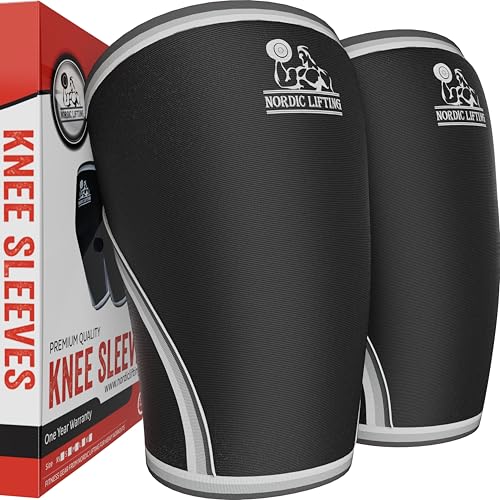
Nordic Lifting Knee Sleeves
Nordic Lifting lands in the middle of this group: 5mm neoprene, two sleeves per order, straight cut. Compression feels firm without the punishing break-in of a competition sleeve, which suits barbell and machine sessions. Owners report long service from a pair, with the seams named as the usual first wear point.
Pros
- Comfortable enough to leave on for a whole session
- Two sleeves per order suits a first set of sleeves
- Moderate compression carries across squats and leg press
Cons
- Straight cut folds behind the knee at full depth
- Not built for competition equipment checks

POWERLIX Knee Compression Sleeve
Knit nylon and spandex put this in a different category from neoprene lifting sleeves. A silicone gel strip at the cuff stops the slide down the calf during walking or light gym work. Joint awareness and mild swelling control are the real benefits here; squat rebound is not on offer.
Pros
- Thin enough to wear under trousers all day
- Silicone strip holds position through a long walk
- Knit breathes where neoprene traps sweat
Cons
- No rebound or support under heavy load
- Elastic slackens sooner than neoprene does

CAMBIVO Knee Compression Sleeve
Ventilated knit panels target long-duration activity where heat builds around the joint. Two sleeves arrive per pack, with graduated compression tuned to the mild end of the scale. Hikers and runners use them for warmth and joint awareness on descents rather than for load support.
Pros
- Ventilated knit runs cooler over long distances
- Two sleeves included in every pack
- Slim profile fits under running tights
Cons
- Mild compression feels light on a swollen joint
- Cuff can roll during repeated deep knee bends
Compared at a glance
| # | Model | Thickness | Best for | Score | Price |
|---|---|---|---|---|---|
| 1 | Rehband 7051 Knee Sleeve | 7 mm SBR neoprene | Best overall | 9.4 | Check price |
| 2 | Gymreapers 7mm Knee Sleeves | 7 mm neoprene | Best value | 9.2 | Check price |
| 3 | SBD Knee Sleeves | 7 mm | Best for powerlifting competition | 9.0 | Check price |
| 4 | Bear KompleX Knee Sleeves | 5 mm neoprene | Best for CrossFit workouts | 8.8 | Check price |
| 5 | Nordic Lifting Knee Sleeves | 5 mm neoprene | Best for general strength training | 8.6 | Check price |
| 6 | POWERLIX Knee Compression Sleeve | Nylon and spandex knit | Best budget compression | 8.3 | Check price |
| 7 | CAMBIVO Knee Compression Sleeve | Breathable knit with ventilated panels | Best for running and hiking | 8.0 | Check price |
Before you buy
What to look for in a knee sleeve Thickness decides the category before anything else. Neoprene at 7mm adds warmth and elastic rebound for maximal lifts. Drop to 5mm and movement improves while heat build-up falls. Knit sleeves supply proprioception and no meaningful support at all. Check the quantity on the listing, because Rehband 7051 and POWERLIX both ship one sleeve. Seam type comes next: flatlock or reinforced stitching resists the split that kills budget sleeves. Read each brand’s own size chart last, since conventions differ sharply between manufacturers.
Sizing a sleeve to your leg Brands size from a thigh or calf circumference measured a set distance from the kneecap. Shoe size and trouser size tell you nothing useful. A correctly fitted 7mm sleeve fights you on the way up the leg and leaves a temporary mark. That resistance is exactly what produces rebound. Knit compression should feel snug without tingling, numbness or colour change below the knee. Stuck between sizes, lifters chasing support size down. Anyone wearing sleeves for hours at a desk sizes up.
Best knee sleeves for squats, CrossFit and running Match material to the movement you repeat most. Heavy low-bar squatting rewards 7mm density, which puts Rehband 7051 and Gymreapers at the top of this list. Mixed modal work involves jumping and sprinting, where Bear KompleX at 5mm flexes better and vents more heat. Running and hiking need neither; a knit sleeve such as CAMBIVO warms the joint without shortening stride. Wearing stiff 7mm neoprene for cardio is the most common mismatch we see. It usually ends with both sleeves bunched around the ankles by the second round.
Competition rules, hygiene and when to skip sleeves IPF caps sleeves at 7mm thickness and 30cm length, then checks brands against an approved sheet. That rule is why SBD turns up on so many platforms. Other federations set their own limits, so verify before buying to compete. On hygiene, neoprene soaks up sweat and sours quickly. Hand wash cool, rinse thoroughly, then hang inside out; tumble dryers degrade the foam and the glued seams. One honest limit deserves stating plainly: a sleeve manages warmth and confidence, it does not stabilise a damaged ligament. Swelling, a knee that gives way or pain that persists needs a clinician, and a hinged brace is a separate product for a separate problem.
Questions worth asking
What do knee sleeves actually do?
Thick neoprene warms the joint, applies compression and stores a little elastic energy that assists out of the bottom of a squat. Knit sleeves sharpen joint position awareness and help manage mild swelling. Neither one stabilises a damaged ligament the way a hinged brace does.
Is 5mm or 7mm better for knee sleeves?
Seven millimetre neoprene returns more rebound and warmth, which suits heavy squatting and powerlifting. At 5mm, the sleeve moves better for jumping, higher reps and long conditioning work. Pick by the movement you repeat most rather than assuming thicker always wins.
How tight should knee sleeves be?
A lifting sleeve should be a struggle to pull up the leg and should leave a temporary mark after training. Compression sleeves feel snug but never cause tingling, numbness or colour change below the knee. Loose sleeves slide down and do almost nothing.
Which knee sleeves are IPF approved?
SBD sits on the IPF approved equipment list and is built to the 7mm thickness and 30cm length the rules specify. Approved lists get revised periodically. Check the current version for your federation before entering a meet.
Knee sleeves vs knee wraps: what is the difference?
Sleeves pull on and stay on for a whole session, giving warmth and modest rebound. Wraps are long elastic strips wound tight before a single attempt, then removed. Wraps add far more carryover on a squat but restrict circulation and are banned in raw divisions.
Can you wear knee sleeves for running?
Neoprene lifting sleeves trap heat and shorten stride, so they are a poor fit for distance work. A thin knit sleeve such as the CAMBIVO is designed for it and adds warmth without bulk. Neither addresses whatever is causing the pain.
Do knee sleeves help with knee pain?
Many owners report less discomfort from the warmth and compression, particularly with patellofemoral irritation. Relief is symptomatic rather than curative. Pain that persists, swells or makes the knee give way needs assessment by a clinician instead of more equipment.
How do you wash neoprene knee sleeves without the smell?
Hand wash in cool water with mild soap, rinse until the water runs clear, then hang inside out. Skip hot water and the tumble dryer, since heat breaks down neoprene and the glued seams. Drying fully between sessions is what actually stops the odour.
Are knee sleeves sold in pairs or as singles?
Packaging varies and listings rarely make it obvious. Rehband 7051 and POWERLIX ship as single sleeves. Gymreapers, SBD, Bear KompleX, Nordic Lifting and CAMBIVO all arrive as pairs, so confirm the quantity before comparing options.
What are the best knee sleeves for beginners?
Nordic Lifting at 5mm suits a first pair, since compression is firm without a punishing break-in and two sleeves come per order. Lifters already squatting heavy should skip ahead to 7mm. Anyone buying for walking or recovery wants knit fabric, not neoprene.
Our take
Rehband 7051 takes the recommendation for heavy squatting on shape and durability, as long as you accept that two orders make a pair. Gymreapers 7mm is the sensible swap when you want both sleeves together with most of that density. Competitors under IPF rules should buy SBD and nothing else, while walkers, runners and hikers should ignore the neoprene tier and take the CAMBIVO knit sleeve.
Derek Holt
Derek has a background coaching recreational and amateur athletes and has worked the sales floor at specialty fitness retailers. He focuses on equipment durability, ergonomics and realistic use cases rather than marketing claims.


