Is a Food Dehydrator Worth It for a Home Kitchen?
A food dehydrator is genuinely worth it for households that regularly preserve fruit, make jerky, or want shelf stable snacks without added preservatives, since it does that specific job better than an oven can. For someone who would use it only a handful of times a year, the counter space and cost usually aren’t justified when a low oven setting can approximate the same result for occasional use.
What a dehydrator actually does better than an oven
A dehydrator maintains a low, steady temperature, typically in the 95 to 165 degree Fahrenheit range, with a fan constantly circulating air across multiple stacked trays at once. An oven’s lowest setting is often still hotter than ideal for dehydrating, and ovens don’t circulate air as evenly across several trays, leading to uneven drying unless you rotate trays manually throughout a long process.
Where a dehydrator earns its space
People who dry their own fruit, make jerky regularly, preserve garden vegetables in bulk, or make dog treats at home tend to use a dehydrator often enough that the appliance pays for itself in both food cost savings and freed up oven time, since drying runs can take six to twelve hours or longer and would otherwise tie up the oven the whole time.
Why it sits unused in a lot of kitchens
A dehydrator is a single purpose appliance that takes up meaningful counter or storage space, and someone who dries food only occasionally, maybe to use up a surplus of fruit once or twice a year, often finds the oven’s low setting adequate enough that the dedicated machine doesn’t get regular use proportional to the space it occupies.
Jerky specifically is where dehydrators have a clear edge
Jerky needs a sustained low temperature over many hours to dry meat safely and evenly without cooking it through like a roast would, and a dedicated dehydrator with even airflow across multiple trays handles a large batch far more consistently than trying to prop an oven door and monitor it for half a day.
The cost comparison most people skip
Buying dried fruit, jerky, or dehydrated vegetables at the store adds up quickly per pound compared to drying the same amount at home from fresh or bulk ingredients, so for someone who already eats a lot of dried snacks, a dehydrator can pay for itself within a reasonably short stretch of regular use.
What to consider before buying one
Available storage space when it’s not in use, how often you realistically expect to dry food rather than how often you imagine you will, and whether you have a reliable source of fruit, meat, or vegetables worth preserving in volume are the practical questions that determine whether a dehydrator becomes a regularly used tool or a cabinet occupant.
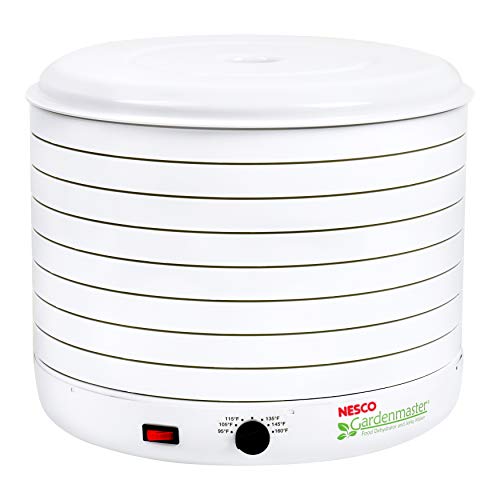
Nesco FD-1018A Snackmaster
A stackable tray dehydrator with adjustable trays, a common entry point for home jerky making and fruit drying without a large upfront cost.

Excalibur 3926TB Food Dehydrator
A larger box style dehydrator with horizontal airflow across multiple full size trays, often chosen by people drying food in bigger batches regularly.
Questions worth asking
Can I dehydrate food in a regular oven instead of buying a dehydrator?
Yes, for occasional use, setting an oven to its lowest temperature with the door slightly propped can approximate dehydrating, though it heats less evenly across multiple trays and ties up the oven for hours.
How long does it typically take to dehydrate fruit?
Most fruit takes anywhere from six to twelve hours depending on thickness and water content, with denser fruit like apple slices generally taking longer than something thinner like banana chips.
Is homemade jerky actually safe if made in a dehydrator?
Yes, as long as the meat reaches and holds a safe internal temperature during the process, which most dehydrator jerky instructions account for by recommending a pre-heat step or specific temperature setting for meat.
Does dehydrated food need to be refrigerated afterward?
Properly dried food with enough moisture removed is generally shelf stable at room temperature in an airtight container, though refrigeration or freezing extends shelf life further, especially in humid climates.
How much counter or storage space does a typical dehydrator take up?
Stackable tray models are often similar in footprint to a stand mixer, while larger box style units with more trays take up noticeably more space, closer to a small microwave.
Can vegetables be dehydrated the same way as fruit?
Yes, though many vegetables benefit from a quick blanching step before drying to preserve color and texture better than drying them raw straight from fresh.
Is a dehydrator worth it just for making dog treats at home?
If you go through a meaningful amount of treats regularly, yes, since dehydrated meat treats avoid the preservatives in many store bought options, but for occasional treat making a low oven setting can work almost as well.
Do dehydrators use a lot of electricity given how long they run?
They use relatively low wattage per hour since most rely on a fan and modest heating element rather than a large heating coil, but the long run times, sometimes eight hours or more, do add up to a noticeable amount of total energy over a full cycle.
Can I over-dry food in a dehydrator?
Yes, leaving food in too long past the point of removing enough moisture makes it overly brittle or tough, so checking at the shorter end of a recommended time range and extending as needed works better than guessing long.
Does a more expensive dehydrator dry food meaningfully better than a cheap one?
More expensive models often have more even airflow, better temperature control, and quieter fans, which matters for consistency across a full load of trays, though a basic model can still produce acceptable results for occasional use.
How often does a dehydrator actually need to be used to be worth owning?
There’s no fixed number, but people who use it at least monthly for preserving produce, making snacks, or drying herbs tend to feel it earns its space, while occasional annual use often doesn’t justify the storage tradeoff.
Can a dehydrator be used for anything besides fruit, vegetables, and jerky?
Yes, dehydrators are also commonly used for drying herbs, making fruit leather, dehydrating yogurt into bark style snacks, and drying flowers for crafts.
Is there a difference between stackable tray dehydrators and box style dehydrators in actual results?
Stackable tray models with a fan at the bottom or top can dry unevenly between trays unless rotated, while box style models with horizontal rear mounted fans tend to dry more evenly across all trays without rotation.
Does buying a dehydrator actually save money compared to store bought dried snacks?
For regular users of dried fruit or jerky, yes, since store bought versions carry a significant markup per pound compared to drying the same quantity at home from fresh or bulk ingredients.
Can a dehydrator be used to make your own dried herb blends from a garden?
Yes, this is a common and practical use, since a dehydrator dries herbs evenly and gently enough to preserve flavor better than air drying in many home environments.
Does buying a dehydrator make sense for someone who hunts or fishes regularly?
Often yes, since home processed jerky and dried fish are common uses for people with a regular, bulk source of meat or fish worth preserving beyond what the freezer alone can handle.
Is it worth buying a dehydrator with a built in thermostat versus a basic fixed temperature model?
For more precise results across different foods, yes, since a thermostat lets you match temperature to what’s being dried, while a fixed temperature model works but with less flexibility for delicate items.
Final word
The honest answer depends entirely on how often you’d realistically use it, not on the appliance itself. Regular preservers and jerky makers get real value out of a dedicated dehydrator, while occasional users are often just as well served by their oven’s lowest setting.
Dana Whitfield
Dana spent eight years buying and merchandising for a regional kitchenware retailer before moving into editorial work. She has handled thousands of SKUs across cookware, small appliances and kitchen organization, and focuses on the practical differences that matter once a product is actually in daily use.