Glass Sourdough Starter Jars Worth Keeping on the Counter
The Ball Wide Mouth Mason Jar fits most starters well, giving a wide opening for stirring without a specialty price tag. Bakers wanting a decorative counter jar do better with the Weck Tulip Jar, while anyone shopping on a budget fits well with the IKEA Korken jar.
The Ball Wide Mouth Mason Jar leads this list because its wide opening makes stirring flour and water into a starter easy without scraping dough against narrow glass walls. Its main limitation is a metal lid not built for venting, which means it needs loosening during an active rise.
We compared mouth width, glass thickness and lid design across product listings and baker feedback rather than keeping a starter in each jar ourselves.
Before you buy
What to look for in a sourdough starter jar Mouth width decides how easy stirring and feeding are, with a wide mouth outperforming a narrow-neck jar every time. Lid type matters during an active rise, since a sealed metal lid needs loosening while a cork or loose glass lid vents on its own. Glass thickness affects how well a jar handles years of repeated feeding cycles without clouding or cracking.
Everyday mason jars versus specialty fermentation jars A standard wide mouth mason jar, like Ball’s or Bernardin’s, covers daily feeding needs without any specialty features. A jar built specifically for fermentation, such as Le Parfait’s wire bail design, gives more control over how tightly the seal closes. Decorative jars, like Weck’s tulip shape, work just as well functionally but suit a baker who wants the jar visible on the counter.
Tracking rise and managing feeding schedules Printed measurement markings, found on jars like Kilner’s, remove the need for a rubber band marker to track rise height. A clear, straight-sided jar, such as Anchor Hocking’s, makes spotting bubbles and rise just as easy without built-in markings. Budget jars like IKEA’s Korken skip extra features but still let a baker see activity clearly through plain glass.
Choosing a jar for backup starters or storage Buying a few lower-cost jars, like the IKEA Korken, makes keeping a backup starter as insurance more affordable than using premium jars for every batch. Straight-sided jars, such as Anchor Hocking’s, stack and store more efficiently on a crowded shelf than tapered shapes. A wire bail jar like Le Parfait’s can switch between a loose vent and a tighter seal depending on whether a starter is active or resting.
What we recommend

Ball Wide Mouth Mason Jar
A 32 ounce size gives a starter room to rise and bubble well above the resting line without overflowing. The wide mouth opening matches the width of most kitchen spoons and spatulas, so stirring in fresh flour takes one smooth motion. Thick, dishwasher-safe glass holds up to years of repeated sourdough use without clouding.
Pros
- Wide mouth opening makes stirring in flour simple
- Thick glass resists clouding after years of repeated use
- Widely available, making replacement jars easy to find
Cons
- Metal lid is not vented, so it needs loosening during an active rise
- Standard lid can rust over time if moisture collects under the ring

Weck Tulip Jar
A tulip-shaped body tapers inward near the top, a design choice that looks more like a piece of counter decor than a plain cylinder jar. The glass lid rests loosely rather than sealing, letting gas escape naturally during fermentation. German-made glass construction has a long history in European kitchens for fermenting and preserving.
Pros
- Tulip shape looks decorative enough to leave out on the counter
- Loose glass lid avoids trapping fermentation pressure
- Long-established glass jar brand with consistent quality
Cons
- Tapered shape narrows near the top, slightly limiting stirring room
- Costs more per jar than standard mason jar options

Bernardin Wide Mouth Mason Jar
This jar matches the Ball jar closely in shape and capacity, offered under a brand more common on Canadian store shelves. The wide mouth opening gives the same easy stirring access without a specialty import jar’s higher cost. Standard two-piece lids fit the same way as other mason jar brands, keeping replacement rings easy to find.
Pros
- Easy to find on Canadian store shelves compared to imported jars
- Wide mouth matches the convenience of other mason jar brands
- Lid and ring replacements are widely available
Cons
- Less available in some regions outside Canada
- Shares the same unvented lid limitation as other mason jars
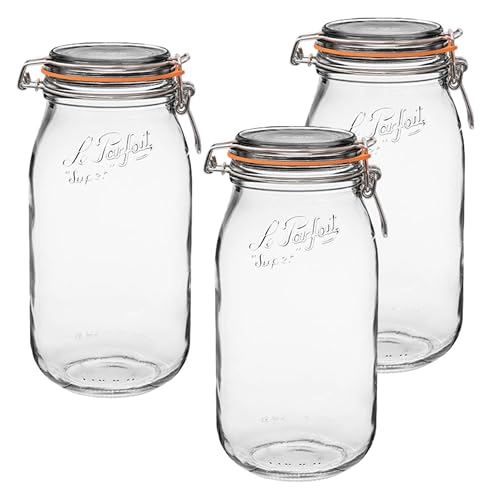
Le Parfait Jar
A wire bail closure with a rubber gasket gives a tighter seal option than a standard metal lid, useful when a baker wants to rest the seal partly open. Thick French-made glass is built with fermentation and preserving in mind, not just general food storage. The wide mouth opening on larger sizes accommodates stirring without trouble.
Pros
- Wire bail closure offers more control over how tightly the jar seals
- Thick glass is built specifically with fermentation use in mind
- Rubber gasket can be left loose to vent or clipped to seal
Cons
- Wire bail mechanism adds more parts than a simple screw lid
- Higher cost than standard mason jars of similar size

Kilner Wide Mouth Jar
Printed measurement markings on the glass let a baker track rise height without reaching for a ruler or rubber band. The wide mouth design matches typical mason jar openings, keeping stirring easy. A clip-top lid with a rubber seal gives the option of a tighter closure when needed for short-term storage.
Pros
- Printed markings make tracking starter rise height simple
- Clip-top lid option allows a tighter seal when wanted
- Wide mouth keeps stirring and scraping easy
Cons
- Clip-top seal is not ideal left closed during an active rise
- Costs more than a plain mason jar without markings

IKEA Korken Jar
A cork-topped lid can rest loosely on the jar, letting gas escape during fermentation without any adjustment needed. Lower cost than specialty fermentation jars makes this an easy jar to buy in multiples for backup starters. The simple cylindrical shape has no decorative shaping, keeping the focus on function.
Pros
- Lower cost makes buying multiples for backups easy
- Cork lid rests loosely, venting gas without adjustment
- Simple shape is easy to clean between feedings
Cons
- Cork lid can absorb odor over repeated sourdough use
- No measurement markings or specialty fermentation features

Anchor Hocking Heritage Jar
A straight-sided shape without a tapered shoulder fits closely beside other jars on a crowded shelf. Thick glass construction from a long-running American glassware brand holds up to repeated sourdough feeding cycles. The wide mouth opening keeps the same stirring convenience found on other jars in this list.
Pros
- Straight sides fit tightly next to other jars on a shelf
- Thick glass from an established American glassware brand
- Wide mouth keeps stirring and feeding simple
Cons
- Standard metal lid is not vented for an active rise
- Plainer look than decorative tulip or tapered jar shapes
How they compare
| # | Model | Material | Best for | Score | Price |
|---|---|---|---|---|---|
| 1 | Ball Wide Mouth Mason Jar | Tempered glass | Best Overall | 9.0 | Check price |
| 2 | Weck Tulip Jar | Glass | Best Decorative Pick | 8.8 | Check price |
| 3 | Bernardin Wide Mouth Mason Jar | Tempered glass | Best for Canadian Buyers | 8.6 | Check price |
| 4 | Le Parfait Jar | Thick glass | Best for Fermentation Durability | 8.5 | Check price |
| 5 | Kilner Wide Mouth Jar | Glass | Best for Visual Rise Tracking | 8.4 | Check price |
| 6 | IKEA Korken Jar | Glass | Best Budget Pick | 8.2 | Check price |
| 7 | Anchor Hocking Heritage Jar | Glass | Best for Stackable Storage | 8.3 | Check price |
Questions worth asking
What is the best glass jar for a sourdough starter?
The Ball Wide Mouth Mason Jar works well overall thanks to its wide opening and widely available replacement lids.
Should a sourdough starter jar be sealed tightly?
No, a tightly sealed lid can trap fermentation gas, so most bakers loosen a metal lid or use a loose-fitting cork or glass lid.
What jar is best for tracking how much a starter has risen?
A jar with printed measurement markings, like the Kilner wide mouth jar, makes tracking rise height simple without a rubber band.
Is a wide mouth jar necessary for a sourdough starter?
A wide mouth makes stirring in flour and water much easier, though a narrow jar can technically still hold a starter.
Can a wire bail jar like Le Parfait work for sourdough?
Yes, the rubber gasket can be left loose to vent gas or clipped down for a tighter seal during short-term storage.
What is a budget-friendly glass jar option for a starter?
The IKEA Korken jar offers a simple glass jar with a cork lid at a lower cost than specialty fermentation jars.
Do decorative jars like Weck’s tulip jar work as well as plain mason jars?
Yes, the tulip shape functions the same as a plain jar while adding a more decorative look for the counter.
How many starter jars should a baker keep on hand?
Many bakers keep at least two, using a second lower-cost jar as a backup starter in case the main batch fails.
The verdict
For most daily feeding routines, the Ball Wide Mouth Mason Jar remains the simplest choice thanks to its wide opening and easy-to-find replacement lids. Bakers who want a jar worth leaving out on the counter should choose the Weck Tulip Jar instead, accepting its higher cost for the decorative shape. Anyone building a backup starter collection can skip premium jars and pick the IKEA Korken for its lower cost per jar.
Dana Whitfield
Dana spent eight years buying and merchandising for a regional kitchenware retailer before moving into editorial work. She has handled thousands of SKUs across cookware, small appliances and kitchen organization, and focuses on the practical differences that matter once a product is actually in daily use.


