Cut-Resistant Gloves Worth Wearing at the Mandoline
NoCry’s Premium Cut Resistant Gloves lead this list thanks to Level 5 food-grade protection and a fit designed for fine motor control at a mandoline. Dowellife’s Level 8 pair suits anyone who wants maximum reinforcement, while Schwer’s SlicePro gloves fit buyers with sensitive skin who need to avoid embedded glass fiber.
NoCry’s gloves lead because their Level 5 food-grade rating balances strong cut protection with enough dexterity to guide vegetables across a mandoline blade. Their main limitation is that Level 5 protection sits below the highest-rated options for buyers who want extra margin.
We compared published ANSI or EN cut-resistance ratings, materials like stainless steel thread or glass fiber, and fit across each glove, along with owner feedback on grip and comfort during extended slicing sessions.
The best picks, ranked

NoCry Premium Cut Resistant Gloves
NoCry’s gloves carry a Level 5 cut-resistance rating and are certified 100 percent food safe for direct contact with produce during mandoline use. The knit construction stays flexible enough for precise grip while still resisting slices from a mandoline blade. They are marketed for both oyster shucking and mandoline slicing, which signals a fit meant for fine control tasks.
Pros
- Level 5 rating covers typical mandoline blade risk
- Food-safe certification suits direct contact with produce
- Flexible knit keeps grip precise during slicing
Cons
- Lower cut level than the highest-rated reinforced gloves
- Single pair means no backup if one glove wears out first

Dowellife Level 8 Reinforced Cut Resistant Gloves
Dowellife reinforces its gloves with stainless steel thread woven into a thicker anti-cutting fiber, reaching a Level 8 rating well above standard kitchen gloves. The thicker build suits buyers who prioritize protection over fine dexterity. Food-grade materials keep it safe for direct contact with vegetables during slicing.
Pros
- Level 8 rating exceeds most standard kitchen glove protection
- Stainless steel thread adds reinforcement beyond basic fiber
- Food-grade build keeps it safe for direct produce contact
Cons
- Thicker construction reduces fine dexterity compared to thinner gloves
- Higher protection level is more than many light-duty slicing tasks require
ChefsGrade Cut Resistant Safety Glove, One Glove
This single glove is built with a Level 5 EN388 rating and embedded stainless steel wire for reinforcement. Selling as one glove suits mandoline use, where typically only the hand guiding food needs protection. The soft, flexible build keeps the other hand free to operate the mandoline itself.
Pros
- Single-glove format avoids paying for an unused second glove
- Stainless steel wire adds reinforcement over plain fiber knit
- Flexible fit keeps the guiding hand dexterous
Cons
- No backup glove if the first one wears out
- Not useful for tasks requiring protection on both hands

ChefsGrade Cut Resistant Safety Gloves, Two Gloves
This two-glove version uses the same Level 5 EN388 rating and stainless steel wire reinforcement as the single-glove listing, but covers both hands. A matching pair suits tasks beyond the mandoline, like general knife prep or oyster shucking. Buying both gloves together typically costs less than two single purchases.
Pros
- Matching pair covers both hands for broader kitchen use
- Buying as a pair costs less per glove than single purchases
- Same Level 5 protection as the single-glove version
Cons
- Mandoline use alone usually only needs one protected hand
- Still Level 5, which some buyers may want to exceed

Schwer SlicePro Cut Resistant Gloves PR1501
Schwer’s SlicePro gloves skip glass fiber in favor of a different reinforced fiber blend, which reduces irritation for buyers sensitive to glass particles. The ANSI-rated construction targets food-grade tasks like mandoline slicing, oyster shucking, and fish fillet work. Reinforcement focuses on durability across repeated kitchen use.
Pros
- No glass fiber reduces irritation risk for sensitive skin
- 10X reinforcement targets durability for repeated use
- Food-grade build suits direct produce contact
Cons
- Avoiding glass fiber can mean slightly less rigidity than glass-reinforced gloves
- Sizing runs differently across glove brands, so checking a size chart matters

HANDLANDY Cut Resistant Gloves
HANDLANDY’s gloves are built for general food-grade safety tasks, including meat cutting and mandoline slicing, at a more accessible price point than premium reinforced options. The pair covers both hands for broader kitchen prep beyond just the mandoline. Construction prioritizes everyday durability over maximum cut-level ratings.
Pros
- Lower cost than premium reinforced glove brands
- Pair covers both hands for varied kitchen tasks
- Food-grade build suits direct contact with produce and meat
Cons
- Cut-resistance rating is less documented than ANSI or EN certified competitors
- Less reinforcement than Level 8 options for heavy-duty use
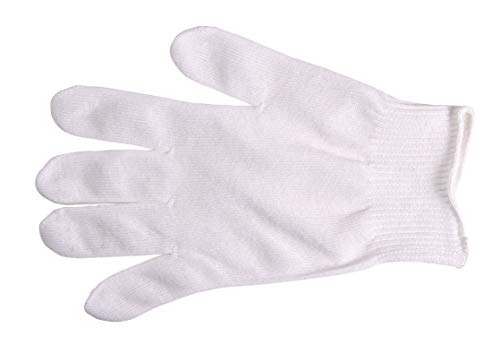
Mercer Culinary Cut-Resistant Glove
Mercer Culinary built its reputation on professional kitchen tools, and its cut-resistant glove extends that focus to hand protection for commercial prep work. The glove is designed for repeated daily use in restaurant settings, not just occasional home mandoline slicing. Its construction targets durability under frequent washing and heavy prep volume.
Pros
- Built by a brand focused on professional kitchen durability
- Suits high-volume prep better than lighter home-use gloves
- Holds up to frequent washing between shifts
Cons
- Costs more than basic home-use gloves from less specialized brands
- Commercial-grade durability is more than occasional home cooks need
What to look for
What to look for in a mandoline safety glove Cut-resistance level, whether ANSI or EN rated, is the main safety metric to compare. Food-grade certification matters since the glove touches produce directly. Fit affects how much control a cook retains while guiding food across the blade.
Gloves built for maximum protection Dowellife’s Level 8 glove and Mercer Culinary’s commercial-grade build both prioritize reinforcement and durability over fine dexterity. These suit cooks who slice frequently or professionally, where protection margin matters more than glove flexibility.
Single glove versus matching pairs A mandoline typically only needs one hand protected, which is why ChefsGrade sells both a single glove and a two-glove pair. Buyers who only use a mandoline can save money with the single-glove option, while those doing broader knife work benefit from a matching pair.
Gloves for sensitive skin or budget priorities Schwer’s SlicePro avoids glass fiber reinforcement for buyers prone to irritation. HANDLANDY targets a lower price point for cooks who want basic food-grade protection without paying for the highest cut-resistance ratings.
Compared at a glance
| # | Model | Cut Level | Best for | Score | Price |
|---|---|---|---|---|---|
| 1 | NoCry Premium Cut Resistant Gloves | Level 5 | Best Overall | 9.0 | Check price |
| 2 | Dowellife Level 8 Reinforced Cut Resistant Gloves | Level 8 | Best for Maximum Protection | 8.8 | Check price |
| 3 | ChefsGrade Cut Resistant Safety Glove, One Glove | Level 5 (EN388) | Best for Single-Hand Mandoline Use | 8.3 | Check price |
| 4 | ChefsGrade Cut Resistant Safety Gloves, Two Gloves | Level 5 (EN388) | Best Value Pair | 8.2 | Check price |
| 5 | Schwer SlicePro Cut Resistant Gloves PR1501 | ANSI rated | Best for Sensitive Skin | 8.1 | Check price |
| 6 | HANDLANDY Cut Resistant Gloves | Food grade | Best Budget Pick | 7.9 | Check price |
| 7 | Mercer Culinary Cut-Resistant Glove | Professional culinary equipment | Best for Professional Kitchen Use | 8.4 | Check price |
Common questions
What cut-resistance level is safe for mandoline slicing?
Level 5 gloves, like NoCry’s or ChefsGrade’s, are commonly used for mandoline work, while Level 8 options like Dowellife’s add extra margin for frequent or heavy use.
Do mandoline gloves need to be food grade?
Yes, since the glove makes direct contact with produce during slicing, food-grade certification matters for safe kitchen use.
Should I buy one glove or a pair for mandoline use?
A single glove, like ChefsGrade’s one-glove listing, covers the hand guiding food, while a pair suits broader kitchen tasks beyond the mandoline.
What does an ANSI or EN cut level rating mean?
These are standardized testing scales that measure how much force a blade needs to cut through the glove material, with higher numbers indicating stronger resistance.
Can cut-resistant gloves cause skin irritation?
Gloves reinforced with glass fiber can irritate sensitive skin, which is why options like Schwer’s SlicePro avoid glass fiber in their construction.
How long do cut-resistant gloves typically last?
Lifespan depends on frequency of use and washing, with reinforced gloves from brands like Mercer Culinary built for more frequent commercial-level use.
Are stainless steel thread gloves stronger than fiber-only gloves?
Gloves reinforced with stainless steel thread, like Dowellife’s or ChefsGrade’s, generally resist cuts better than fiber-only knit gloves at the same thickness.
Do cut-resistant gloves reduce dexterity when using a mandoline?
Thicker, higher cut-level gloves reduce fine motor control somewhat, which is why lighter Level 5 options like NoCry’s balance protection with usable grip.
Can the same gloves be used for oyster shucking and mandoline work?
Yes, several gloves on this list, including NoCry’s and ChefsGrade’s, are marketed for both tasks since they share similar fine-control, food-grade requirements.
Our take
NoCry’s Premium Cut Resistant Gloves are the right choice for most home cooks, balancing solid Level 5 protection with enough dexterity for controlled mandoline slicing. Anyone slicing frequently or wanting extra safety margin should choose Dowellife’s Level 8 gloves instead. Cooks with sensitive skin who react to glass fiber reinforcement get a better fit from Schwer’s SlicePro gloves.
Dana Whitfield
Dana spent eight years buying and merchandising for a regional kitchenware retailer before moving into editorial work. She has handled thousands of SKUs across cookware, small appliances and kitchen organization, and focuses on the practical differences that matter once a product is actually in daily use.

