Is a 4K Webcam Worth It for Video Calls?
For most everyday video calls on platforms like Zoom, Teams or Google Meet, no, since those services typically compress and cap video well below 4K regardless of what camera is sending it, which means a good 1080p webcam looks nearly identical to the people you are talking to. A 4K webcam becomes genuinely worth it mainly for recording video, streaming, or situations where you are cropping or zooming into part of the frame digitally.
What video call platforms actually transmit
Zoom, Teams, Google Meet and similar platforms compress outgoing video heavily to keep calls stable on varying internet connections, and most cap resolution at 1080p or lower regardless of the source camera’s capability. This means the extra detail a 4K sensor captures is thrown away before the other person ever sees it on a typical video call.
Where 4K sensors still provide a real benefit
Even when the final call is capped at 1080p, a 4K sensor captures more light and detail at the source, which can produce a noticeably sharper and better exposed 1080p output after compression than a cheaper native 1080p sensor would, particularly in average or dim room lighting.
Digital zoom and cropping is where resolution really pays off
If you plan to digitally zoom in, crop to a tighter framing, or use software like a virtual presenter mode that crops around you as you move, starting from a 4K source gives that cropped output far more detail to work with than cropping a native 1080p image, which would look visibly soft when enlarged.
Recording and content creation change the calculation
For recorded content like tutorials, webinars saved for later viewing, or online videos, a 4K webcam produces files with meaningfully more detail than 1080p, and viewers watching at full resolution on a good monitor will notice that difference in a way video call participants on compressed Zoom video never will.
What actually improves video call quality more than resolution
Lighting and lens quality typically matter more for how good you look on a call than sensor resolution does. A well lit face through a mediocre 1080p lens frequently looks better to call participants than a poorly lit face through an expensive 4K sensor, since lighting problems are visible regardless of resolution while resolution gains get compressed away.

Logitech Brio 4K Webcam
A widely used 4K capable webcam often chosen for its strong low light performance and HDR support even when most calls cap the output well below its native resolution.
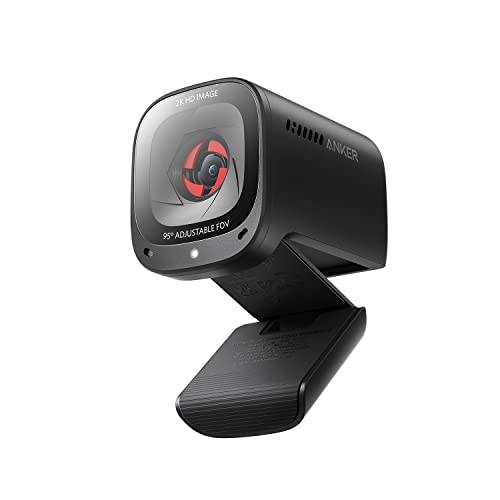
Anker PowerConf C300
A compact 1080p webcam with auto framing features, included here as a contrast showing how a non-4K camera can still perform well for standard video calls.
Good to know
Does Zoom even support 4K video calls?
Zoom has limited support for higher resolution in specific paid tiers and settings, but the vast majority of everyday calls are transmitted well below 4K regardless of the camera capturing the feed.
Will a 4K webcam make me look better on a standard video call than a good 1080p one?
The difference is usually small to the other participants since the call platform compresses both down to a similar delivered resolution, though a 4K sensor’s better light gathering can still produce a marginally cleaner image in some lighting conditions.
Does a 4K webcam need more bandwidth even if the call caps resolution?
Not necessarily, since most webcam software and the call platform itself handle encoding before sending, meaning your uploaded bandwidth use is governed by the platform’s settings rather than the camera’s native resolution alone.
Is a 4K webcam better for Twitch or streaming than for Zoom?
Yes, streaming platforms and recorded content are far more likely to actually preserve and display higher resolution to viewers than a typical video conferencing call does.
Can my computer struggle to process 4K webcam footage during a call?
Yes, encoding 4K video in real time is more demanding on a computer’s processor than 1080p, and older or budget laptops can show more lag or dropped frames running a 4K webcam at full resolution during a call.
Does field of view matter more than resolution for a good webcam setup?
For most single person video calls, yes, an appropriately framed shot at a lower resolution usually looks more professional than an oddly cropped or distant shot at a higher resolution.
Is autofocus more important than resolution for webcams?
For most users, reliable autofocus that keeps your face sharp as you move slightly matters more day to day than raw sensor resolution, since a blurry 4K image looks worse than a sharp 1080p one.
Do 4K webcams generally cost significantly more than 1080p models?
Yes, 4K capable webcams with good lenses and sensors are typically priced higher than comparable 1080p models, which is part of why the actual use case matters before deciding the upgrade is worth it.
Can I digitally zoom into a 1080p webcam feed without losing quality?
Zooming into a 1080p image reduces effective resolution quickly and looks noticeably softer, which is specifically where a higher resolution source like 4K gives you more room before quality visibly drops.
Does lighting matter more than webcam resolution for video calls?
In most feedback from people reviewing their own call appearance, lighting improvements make a more noticeable difference than resolution upgrades, since poor lighting is visible at any resolution while resolution gains are often compressed away.
Will a 4K webcam work fine on an older computer without a fast processor?
It can still work, often by running at a lower resolution mode or relying on the webcam’s own hardware encoding if it has any, but performance may suffer if the computer must software encode the full 4K feed in real time.
Is there a visible quality difference between 4K and 1080p webcams on a large external monitor during a call?
Since video calls compress and cap resolution regardless of monitor size, the call feed itself will not reveal more detail on a larger monitor, though your own camera preview before compression might show a visible difference.
Do virtual backgrounds work better with a 4K webcam?
Background removal and virtual backgrounds rely more on good edge detection and lighting contrast than raw resolution, so a 4K sensor does not inherently improve virtual background quality on its own.
Should podcasters recording video choose a 4K webcam over 1080p?
For video podcasts intended to be published and watched at full quality later, yes, since a 4K source gives more flexibility for cropping, color correction and final output quality than starting from 1080p.
Does a 4K webcam’s microphone quality differ from 1080p models?
Microphone quality is a separate consideration tied to the specific model’s built-in components, not resolution category, so a 4K webcam is not automatically better or worse for audio than a 1080p one from the same brand.
Is it worth waiting for a sale to buy a 4K webcam if I mainly do video calls?
If video calls are genuinely your main use case, a well reviewed 1080p webcam with good lighting performance often delivers a better practical result for the money than stretching the budget toward 4K for a benefit the call platform will mostly discard.
Can I switch a 4K webcam down to a lower resolution mode to save processing power on calls?
Yes, most 4K webcams let you manually select a lower output resolution like 1080p in their settings software, which reduces the processing load on your computer during calls while still letting you switch back to full resolution for recording later.
Does a 4K webcam make a bigger difference for people with glasses or reflective surfaces nearby?
Not specifically, glare and reflection issues come down to lighting placement and angle relative to the camera rather than sensor resolution, so a 4K webcam does not inherently reduce glare any better than a well-positioned 1080p one would.
Where this leaves you
Resolution is the wrong first upgrade for most people’s video call setup. Lighting and a reliable 1080p sensor solve the actual visible problems on a typical call, and 4K earns its cost specifically when you are recording, streaming, or cropping footage rather than just talking to a Zoom window.
Marcus Chen
Marcus covered consumer electronics for enthusiast tech publications for six years before joining ChoiceCrest. He specializes in translating manufacturer spec sheets into plain-language buying advice, with a focus on audio, computing accessories and smart-home gear.


