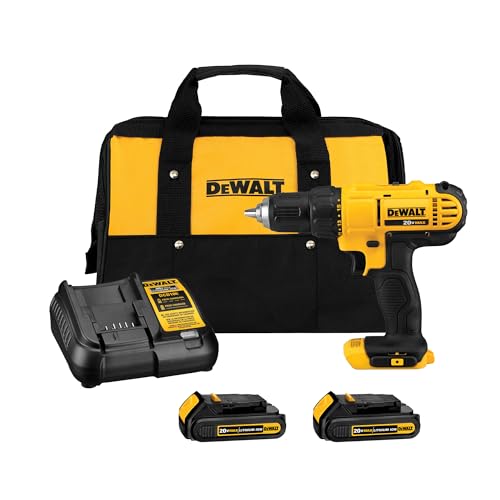
How Does a Right Angle Drill Reach Spaces a Regular Drill Can’t?
A right angle drill places the chuck at a 90 degree angle to the motor housing instead of in a straight line with it, using an internal gearbox to redirect the spinning motion sideways. That bend shortens the overall length the tool needs in front of the work, which is what lets it fit between wall studs, inside cabinets, or under floor joists where a standard inline drill’s longer body and motor housing simply will not fit. The tradeoff is deliberate rather than a limitation of the technology, since the same compact head that enables tight-space access could not also house a larger, higher-torque motor in that same footprint.
Why a standard drill’s shape is the actual limitation
A regular drill’s motor sits directly behind the chuck in a straight line, which means the tool needs enough open space in front of and behind the bit to accommodate the full body length. In a stud bay, floor joist cavity, or tight cabinet corner, that straight-line length is usually the thing that will not fit, not the bit or chuck itself. This is also why experienced framers often plan hole locations in advance around where a standard drill could realistically be positioned, rather than assuming any drill can reach any point in the stud bay.
How the right angle gearbox changes that geometry
Inside a right angle drill’s head, a set of bevel gears redirects the motor’s rotation ninety degrees before it reaches the chuck, so the motor housing extends backward away from the work rather than directly in line with the bit. This moves the bulk of the tool’s length out of the tight space entirely, leaving only the compact head and chuck needing to fit into the confined area. Some right angle drills also offer a shorter overall head length than others specifically to squeeze into even narrower gaps, which is a spec worth comparing for anyone working in unusually tight older framing.
Why this matters specifically for electricians and plumbers
Running wire or pipe through pre-drilled holes in studs or joists, where the drill has to operate in the narrow gap between framing members, is one of the most common reasons right angle drills exist as a category, since a standard drill physically cannot be positioned to drill those holes in many framing layouts. New construction electrical rough-in work in particular tends to require dozens of repeated holes across a single job, which is where the time savings from not having to reposition awkwardly add up quickly.
What gets traded away for that compact head
Right angle drills typically have less torque and a lower top speed than a comparable inline drill, since the gearbox that redirects rotation also absorbs some power in the process. They are built for access and repeated holes in tight framing, not for heavy-duty mixed general use. This torque tradeoff becomes most noticeable with larger diameter self-feed bits in dense lumber like engineered joists, where a lower-torque right angle drill can stall more easily than a full-size inline model.
Why chuck size and bit type matter more on a right angle drill
Many right angle drills use a smaller chuck size than a general-purpose drill, and some use a quick-change bit system specifically designed for repeated stud and joist drilling with spade bits or self-feed bits, rather than the broader bit compatibility a standard drill offers. Some trade-specific right angle drills also include a clutch or torque-limiting feature aimed specifically at reducing bit binding injuries during repeated framing work.
How the right angle design also helps outside of framing work
Beyond stud and joist drilling, the same compact head geometry is useful for driving fasteners in tight automotive engine bays, cabinetry corners, or any confined space where even a compact standard drill’s inline length is still too long to maneuver. Mechanics working in cramped engine bays often reach for the same tool for the identical reason electricians do, since the problem of simply not having room for a standard drill’s length is not unique to framing.

Milwaukee 1680-20 Right Angle Drill
A corded right angle drill built for repeated hole drilling through wall studs and floor joists in tight framing cavities.

DEWALT DCD444B Right Angle Drill
A cordless right angle drill aimed at electricians and plumbers who need access in confined framing without a power cord.
Questions worth asking
Can a right angle drill be used for general drilling and driving tasks?
It can, but its reduced torque and speed compared to a standard drill make it a less practical everyday choice outside of tight-space work.
Why do electricians specifically prefer right angle drills?
Running wire through studs and joists in tight framing bays is a routine electrical task, and a standard drill often physically cannot be positioned to drill those holes.
Does a right angle drill use the same bits as a regular drill?
Many do accept standard bits, though some models use a specific quick-change system designed around spade or self-feed bits common in framing work.
Is a right angle drill more expensive than a standard drill?
Generally yes, since the internal gearbox adds manufacturing complexity, though prices vary widely by brand and whether it is corded or cordless.
Can a right angle drill drill through metal studs as well as wood?
Yes, with the appropriate bit for metal, right angle drills are commonly used on both metal and wood stud framing.
Why does a right angle drill feel less powerful than a standard drill of similar size?
Some torque is absorbed by the internal bevel gears that redirect rotation ninety degrees, which is a tradeoff for the compact head shape.
Is a cordless right angle drill as capable as a corded one?
Modern cordless models have closed much of the gap, though a corded right angle drill still often holds an edge for sustained heavy use without battery concerns.
Can you use a right angle drill as your only drill?
It is possible but not ideal, since its design tradeoffs make it less versatile for general tasks compared to a standard inline drill.
Does a right angle drill help with plumbing work as well as electrical?
Yes, plumbers use the same tight-framing access benefit for drilling holes to run pipe through studs and joists.
Is there a risk of kickback with a right angle drill?
Yes, especially with large spade or self-feed bits binding in dense wood, which is why many right angle drills include a side handle for control.
Can a right angle drill chuck accept larger diameter bits than a standard drill?
It depends on the model, but many are specifically built to accept the larger spade and self-feed bits common in framing work.
Why do some right angle drills have a side handle while others do not?
A side handle helps control the torque reaction when a large bit binds in material, and higher-torque models are more likely to include one.
Is a right angle drill necessary for a typical home DIYer?
Not usually, unless the DIYer is doing framing-adjacent work like running wire or pipe through studs, in which case it becomes genuinely useful.
Does the right angle design make the drill harder to control?
It can feel different to hold at first since the weight balance shifts, but most users adjust quickly given the tool’s intended tight-space use.
Can a right angle drill attachment be added to a standard drill instead of buying a dedicated tool?
Yes, right angle attachments exist for standard drills and offer some of the same access benefit, though they typically sacrifice even more torque and rigidity compared to a purpose-built right angle drill.
Final word
The right angle shape is not a gimmick, it is a direct solution to a specific geometry problem that a standard drill cannot solve no matter how skilled the user is. For framing-adjacent trades it earns a permanent spot in the tool bag, while for general use it remains a specialty tool rather than a replacement for a standard drill. For the specific geometry problem it solves, nothing else in a typical tool bag comes close, which is exactly why trades that regularly face that problem treat it as essential rather than optional.
Jake Monroe
Jake worked as a residential contractor for over a decade before shifting to full-time writing. He evaluates power tools, hand tools and workshop gear through the lens of someone who has actually used them on job sites, not just read the box.
You might also need
GLUIT Heavy Duty Adhesive Wall Hooks: Can 22 Pounds Really Stick Without Drilling?
Why Does a Socket Wrench Click When You Reach Full Torque?
Belt Sander or Orbital Sander: How to Pick the Right One